Spaghetti alla Puttanesca Recipe, Easy Italian Dinner in 45 Minutes
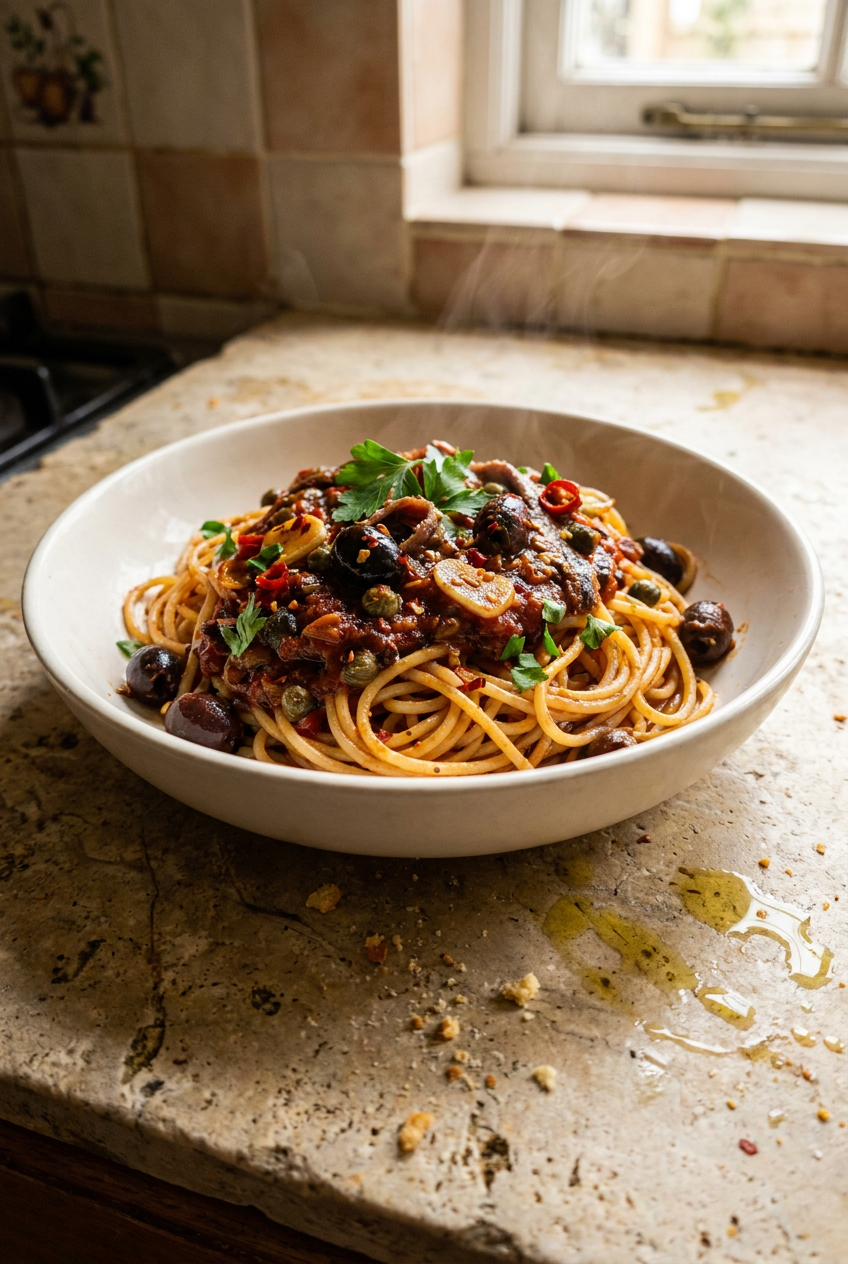
Table of Contents
- Spaghetti alla Puttanesca: A Bold, Briny, and Spicy Tomato Sauce That Comes Together in Minutes
- Why You Will Love This Spaghetti alla Puttanesca Recipe
- Your Simple Ingredients for the Perfect Spaghetti alla Puttanesca
- How to Make Perfect Spaghetti alla Puttanesca
- Pro Tips and Easy Variations for Your Spaghetti alla Puttanesca
- Serving Suggestions for a Perfect Dinner
- Nutrition Information
- Storage and Make-Ahead Instructions
- Your Spaghetti alla Puttanesca Questions Answered
- More Incredible Italian Recipes to Try
- The Story Behind This Spaghetti alla Puttanesca
- Pin This Spaghetti alla Puttanesca Recipe for Later
Spaghetti alla Puttanesca: A Bold, Briny, and Spicy Tomato Sauce That Comes Together in Minutes
The first time I made spaghetti alla puttanesca I was twenty-two, standing barefoot in a tiny apartment kitchen, staring at a nearly empty pantry. There was a tin of anchovies I had bought for some forgotten experiment, a jar of olives from my grandmother’s care package, capers that had been hiding behind the mustard for months, and a can of tomatoes that seemed to glow with possibility. What emerged from that desperation was a sauce so loud and brash and impossibly good that I immediately called my mother to describe it. She laughed and said, “That’s the beauty of a true spaghetti alla puttanesca recipe—it’s never about what you are missing, only about what you have.” That moment taught me more about Italian cooking than any cookbook ever could: deeply flavored, soulful food does not require a long list of fresh ingredients or hours of simmering. Sometimes it just requires a little courage and a very good can of tomatoes.
What makes this spaghetti alla puttanesca recipe stand out from dozens of versions you might have tried is the way we coax every bit of flavor from those humble pantry staples. We do not just toss anchovies into oil and hope for the best. Instead, we melt them into a warm bath of olive oil with thinly sliced garlic until they dissolve entirely, building a savory, almost invisible foundation that never reads as “fishy.” The red pepper flakes bloom briefly in that infused oil, the capers and olives go in with the tomatoes so they can soften and release their brine into the sauce, and a vigilant splash of starchy pasta water at the end pulls everything into a glossy, clingy coating. The whole dish feels like a masterclass in timing and restraint: you need only about ten minutes of active work, but within those minutes you are layering sensations—umami, salt, gentle heat, sweet tomato, and a fresh parsley finish that keeps everything bright. This is not a sauce to be rushed, but it is astonishingly fast, and that combination is what makes it a weeknight lifesaver.
I truly believe this spaghetti alla puttanesca recipe belongs in the regular rotation of anyone who loves bold flavors but does not have endless time to cook. It is equally perfect for a solo Tuesday dinner when you need something that feels like a full, restaurant-worthy plate of pasta without leaving the house, and for a casual dinner party where you want to impress without stress. The sauce can be made while the water comes to a boil and the pasta cooks, so the entire meal lands on the table in under 45 minutes. Serve it with a glass of something red and a simple arugula salad, and you have a meal that feels both comforting and a little bit decadent. If you are a fan of our Moroccan chicken tagine for its deep, layered spice, you will recognize the same principle at work here: a handful of pantry ingredients transformed through technique into something far greater than the sum of its parts.
Why You Will Love This Spaghetti alla Puttanesca Recipe
- It comes together with ingredients you likely already have. Anchovies, canned tomatoes, olives, capers, garlic, and dried pasta are all kitchen stalwarts that rarely require a special trip to the store. You can pull off this dish on a whim, even on the busiest of evenings.
- The flavor punches way above its prep time. In about fifteen minutes of active work you build a sauce that tastes like it simmered all afternoon. The anchovies and garlic create a savory depth that tricks everyone into thinking you spent hours in the kitchen.
- It is naturally bold without being heavy. Unlike cream-based or long-simmered meat sauces, puttanesca feels lively and bright. The brininess from olives and capers and the warmth from red pepper flakes hit every corner of your palate, leaving you satisfied but never weighed down.
- You can easily customize it to your pantry. Out of one type of olive? Use another. Need a vegan version? We have a foolproof swap that still delivers complex, savory flavor. This spaghetti alla puttanesca recipe bends to what you have while remaining unmistakably itself.
- It teaches a fundamental Italian cooking technique. Learning to melt anchovies into oil and bloom chili flakes properly is a skill that will elevate so many other sauces and dishes. Once you nail it here, you will find yourself applying it to everything from simple aglio e olio to braised vegetables.
- Leftovers are even better the next day. The sauce continues to develop in the fridge, the flavors melding into an even richer, more unified whole. A quick reheat with a splash of water and you have an instant lunch that feels like a gift.
Your Simple Ingredients for the Perfect Spaghetti alla Puttanesca
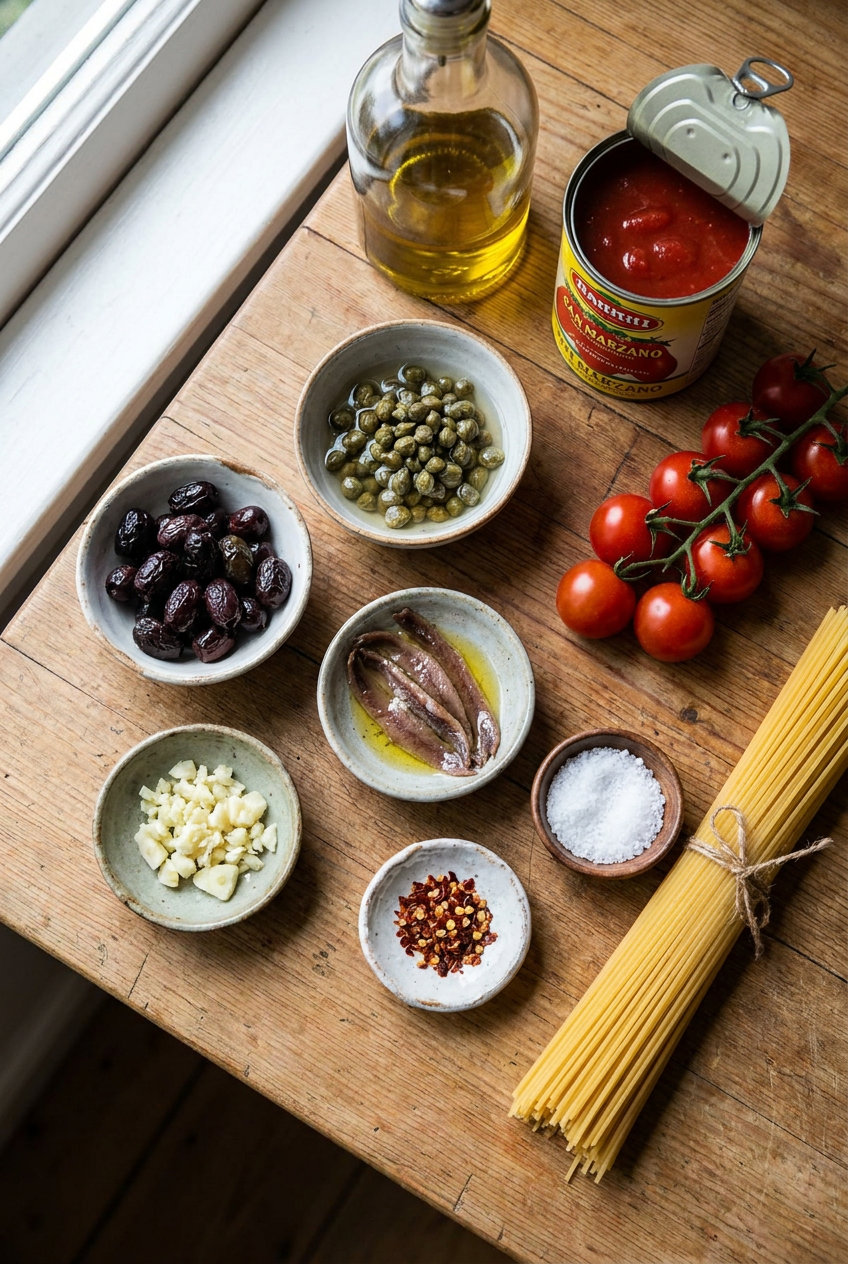
Main Ingredients
- 1 pound spaghetti, or linguine
- 3 tablespoons extra-virgin olive oil, plus more for drizzling
- 4 cloves garlic, thinly sliced
- 4 to 6 anchovy fillets, oil-packed, drained
- 1/2 teaspoon red pepper flakes, adjust to taste
- 1 can (28 ounces) crushed tomatoes, preferably San Marzano
- 1/2 cup Kalamata olives, pitted and halved
- 3 tablespoons capers, drained and rinsed if salt-packed
- 1/4 cup fresh flat-leaf parsley, chopped
- Salt and black pepper to taste
Ingredient Notes
Spaghetti. Long, thin strands are traditional because they allow the chunky, slippery sauce to cling in every crevice, but linguine or even bucatini work beautifully. Look for a bronze-die extruded dried pasta if you can; its rougher surface grabs the sauce better. When cooking, salt the water generously until it tastes like the sea—this is your only chance to season the pasta itself, and it makes a huge difference in the final dish.
Extra-virgin olive oil. This is not just a cooking medium; it carries the initial aromatics and finishes the dish with a fruity, peppery note. Use a good-quality oil that you enjoy the taste of raw, because its flavor will shine through. If you only have a milder olive oil, that is fine too, but a robust, grassy oil adds another layer of flavor.
Anchovies. The true backbone of an authentic spaghetti alla puttanesca recipe. They dissolve into the warm oil, leaving behind a deep savory richness with no overt fishiness. Look for oil-packed anchovies in glass jars or tins; they should be plump and silvery, not dry or mushy. If you are truly averse, you can substitute with a tablespoon of white miso paste or a drizzle of soy sauce for a similar umami hit, though the character will shift slightly.
Red pepper flakes. This dish should have a pleasant tingle of heat, not a scorching burn. Start with half a teaspoon and taste as you go; you can always add more at the table. If your flakes have been sitting in the cupboard for years, they may have lost potency, so adjust accordingly. Fresh, vibrant flakes make a noticeable difference.
Crushed tomatoes. San Marzano tomatoes are the ideal here for their natural sweetness and low acidity, which balances the briny ingredients perfectly. Crushed rather than diced or whole gives the sauce a slightly chunky but cohesive texture. If you only have whole peeled tomatoes, simply crush them by hand or with a spoon as they cook. Avoid tomatoes with added herbs or seasonings, you want pure tomato flavor as a canvas.
Olives and capers. I use Kalamata olives for their meaty texture and rich, almost wine-like brininess. Gaeta olives from Italy are another excellent choice, smaller and slightly more tangy. Avoid bland, canned black olives, which have no place in this dish. Capers bring a sharp, floral pop; if you buy salt-packed capers, rinse them thoroughly and even soak briefly in water to tame their intensity, then drain before using.
How to Make Perfect Spaghetti alla Puttanesca
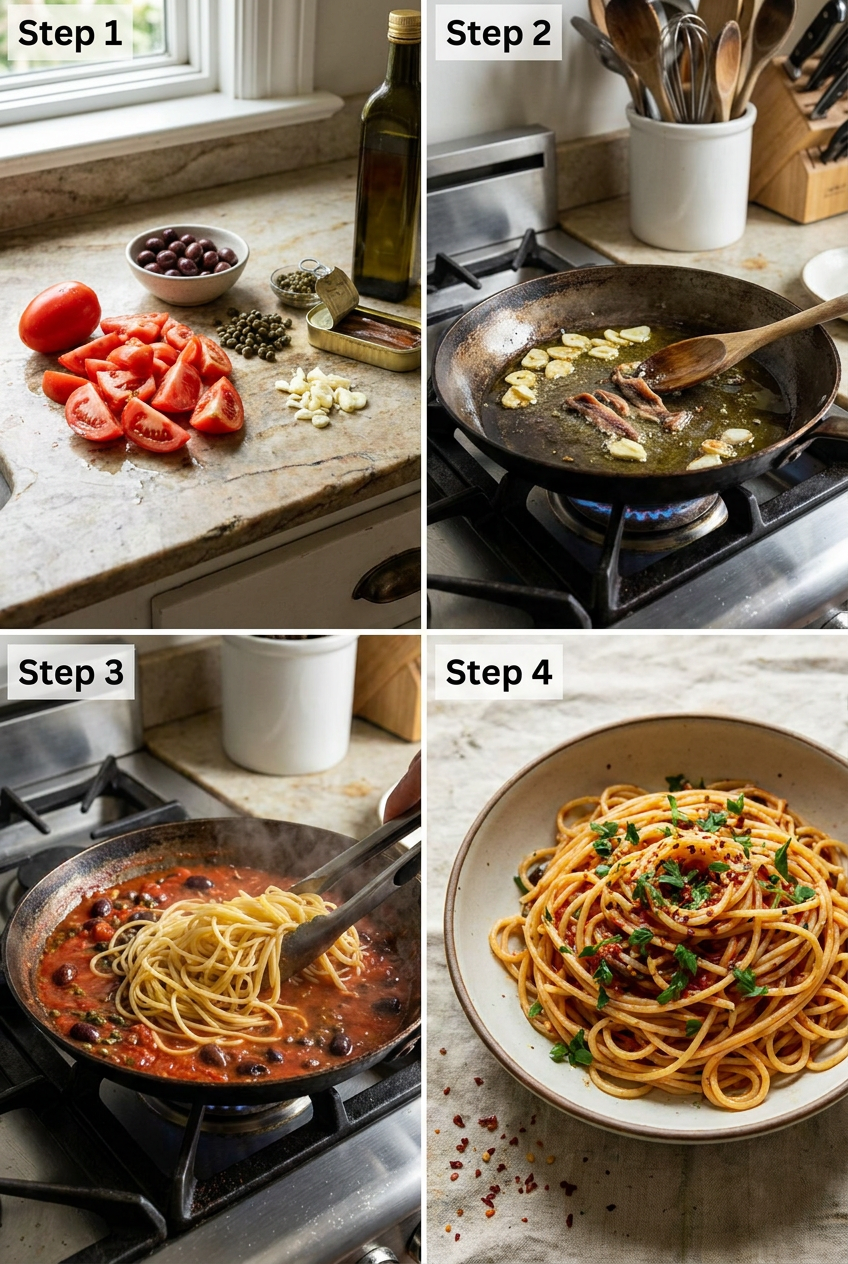
Phase 1: Get the Pasta Going
Step 1: Cook the Pasta. Fill a large pot with at least 5 quarts of water and bring it to a rolling boil. Add a generous handful of salt—about 1 tablespoon—once the water is boiling. Drop in the spaghetti and stir immediately to prevent sticking. Cook according to the package timing for al dente, usually around 9 to 10 minutes. You are looking for a tender noodle that still offers a slight resistance when bitten. About two minutes before the pasta is done, scoop out a full cup of the starchy pasta water and set it aside. This liquid is liquid gold; it will emulsify the sauce later, helping the oil and tomato cling to each strand. Drain the pasta but do not rinse it—the starch on the surface is exactly what you want.
Pro tip: The starchy pasta water is key to a silky sauce, so don’t forget to save some. Set the cup right next to your skillet so you never forget to use it.
Phase 2: Build the Aromatic Foundation
Step 2: Sauté the Aromatics. While the pasta cooks, place a large skillet over medium heat and pour in the olive oil. Once the oil shimmers but is not smoking, add the thinly sliced garlic and the anchovy fillets. Use a wooden spoon to stir and gently press the anchovies against the bottom of the pan. In about two minutes, the garlic will turn pale gold and the anchovies will disintegrate into the oil, leaving behind only a golden, intensely fragrant base. This is the moment when your kitchen will start to smell like a trattoria. Sprinkle in the red pepper flakes and stir for about 30 seconds, just until they bloom and become fragrant—any longer and they risk turning bitter. The oil should now be infused with a deep, savory heat.
Pro tip: Use a wooden spoon to break up anchovies; they melt into the oil for a deep, savory base. If the garlic starts browing too quickly, lower the heat; burnt garlic will ruin the sauce.
Phase 3: Simmer the Sauce
Step 3: Build the Sauce. Pour the crushed tomatoes directly into the skillet, then add the halved olives and drained capers. Give everything a thorough stir and bring the sauce to a gentle simmer. You will see small bubbles breaking the surface, not a violent boil. Let it cook uncovered for 10 to 15 minutes, stirring every few minutes to prevent scorching. The sauce will thicken slightly and the colors will deepen from bright red to a richer, darker hue. Taste the sauce now—this is your chance to adjust. Add a pinch of salt if needed, but go carefully; the olives, capers, and anchovies are already bringing plenty of saltiness. Crack in some black pepper and stir again. If the sauce seems too tight or oily, add a splash of the reserved pasta water, which will loosen it and start the emulsification process early.
Pro tip: If the sauce reduces too quickly, add a splash of the reserved pasta water to loosen. Letting the olives and capers cook in the tomatoes softens their sharp edges, so this simmer time is crucial for a balanced flavor.
Phase 4: Marry Pasta and Sauce
Step 4: Toss and Finish. Add the drained spaghetti straight into the skillet with the sauce. Use tongs to toss everything together, lifting and turning the pasta so the sauce coats every strand. This is where the magic happens. As you toss, gradually add a few splashes of pasta water—start with about a quarter cup and go from there. The starch in the water will bind the olive oil and tomato, creating a glossy, velvety cloak. Keep tossing until the pasta looks shiny and the sauce no longer pools at the bottom of the pan. Remove the skillet from the heat and stir in most of the fresh parsley, reserving a little for garnish. For an extra layer of richness, you can swirl in a tablespoon of cold butter or an extra drizzle of olive oil off the heat, but it is absolutely not required.
Pro tip: For a richer finish, swirl in a tablespoon of cold butter or extra olive oil off the heat. Tossing vigorously also helps to slightly cool the pasta, which keeps it silky rather than clumpy. A technique I love from our fluffy Japanese souffle pancakes is that gentle, airy movement, though here we use tongs instead of a whisk—the same principle of incorporating just enough air for perfect texture applies.
Phase 5: Serve with Love
Step 5: Serve. Transfer the pasta to a warm serving bowl—run the bowl under hot water for a minute, then wipe it dry before adding the pasta. This simple step keeps the dish hot for longer at the table. Scatter the remaining parsley over the top, drizzle with a final thread of olive oil, and serve immediately. Set a small dish of extra red pepper flakes on the side for those who like more heat, and maybe some grated cheese if you must, though traditionally cheese is not used with seafood-based sauces. The dish is best enjoyed right away, while the sauce is still glistening and the pasta is at its peak.
Pro tip: Warm the bowl with hot water first to keep the pasta hot longer. Serve family-style with a big spoon and fork for twirling, and encourage everyone to mix again before plating to redistribute the olives and capers.
Pro Tips and Easy Variations for Your Spaghetti alla Puttanesca
Pro Tips
- Cook the anchovies until they dissolve completely into the oil. This builds a rich umami base without any fishy chunks. Take your time over medium heat, mashing gently; the fillets should literally disappear, leaving only a deeply savory flavor in the oil. The transformation is a small miracle of chemistry and patience.
- Use good-quality canned crushed tomatoes, ideally San Marzano. Their natural sweetness and lower acidity balance the salty, briny elements beautifully. If possible, taste the tomatoes straight from the can before adding; they should be bright and jammy, not tinny or watery. That quality translates directly into the final sauce.
- Taste the sauce before adding any salt. Capers, olives, and anchovies contribute a lot of natural salinity, and it is easy to overdo it. I often find I need no extra salt at all, just a few grinds of black pepper. If you do add salt, do it pinch by pinch.
- Keep your pasta water at a gentle boil, not a raging one. This ensures the starch stays suspended rather than being broken down too violently. That starch is what gives you the creamy emulsion at the end, so treat it like the precious ingredient it is.
- Do not let the garlic brown too much. Pale gold is perfect; darker than that and the flavor turns acrid, which will permeate the whole sauce. If you see the garlic heading toward deep brown, immediately remove the pan from the heat and add a small splash of water to cool it down, then continue.
Delicious Variations
- Vegan Puttanesca. Omit the anchovies and stir in 1 tablespoon of white miso paste or a splash of soy sauce at the same step. The miso adds a fermented depth that mimics the missing umami, and the sauce remains wholly plant-based. You will still get all the punchy, briny character from the olives and capers.
- Tuna Puttanesca. For a heartier, protein-packed dinner, add a drained 5-ounce can of olive-oil-packed tuna when you toss the pasta with the sauce. Fold it in gently to keep some chunks intact. This turns the dish into a satisfying one-bowl meal that feels both rustic and substantial.
- Fresh Tomato Summer Version. In peak tomato season, replace the canned crushed tomatoes with about 4 cups of chopped ripe plum tomatoes. Simmer them a bit longer—closer to 20 minutes—until they break down into a chunky sauce. The result is sweeter, fresher, and perfect for an alfresco dinner.
- Spicy Arrabbiata-Puttanesca Hybrid. Double the red pepper flakes and add a whole dried chili pepper to the oil along with the garlic. Remove it before serving. This variation is for true heat lovers and pairs incredibly well with a glass of chilled red wine.
- Puttanesca with Greens. Stir in a couple handfuls of baby spinach or roughly chopped arugula at the very end, just until wilted. It adds color, a touch of bitterness, and makes you feel virtuous about your greens intake. If you love bright, citrusy notes, you might also enjoy our blueberry lemon ricotta pancakes for a completely different but equally vibrant meal.
Serving Suggestions for a Perfect Dinner
This spaghetti alla puttanesca recipe is a complete star on its own, but a few simple sides can turn it into a memorable dinner spread. A peppery arugula salad dressed with nothing more than fresh lemon juice, a generous glug of fruity olive oil, and a pinch of salt cuts through the richness of the sauce beautifully. Some crusty bread, warmed in the oven and rubbed with a cut garlic clove, is perfect for sopping up every last bit of sauce at the bottom of the bowl. As for drinks, a medium-bodied Italian red like Chianti Classico or a Montepulciano d’Abruzzo is classic: the acidity complements the tomatoes and the tannins stand up to the olives and capers. If you prefer white, a crisp Vermentino or a dry Fiano works surprisingly well, picking up the herbal notes of the parsley and the briny pop of the capers.
This dish shines on weeknights when you need a quick, soul-satisfying meal that feels like an occasion, but it is equally at home for a casual dinner with friends. You can easily scale the recipe up for a crowd: simply double the ingredients and use two large skillets or one very wide pan to ensure the sauce reduces properly. If you are planning a full Italian-inspired menu, start with a simple antipasto of marinated artichokes and a wedge of aged pecorino, and serve the puttanesca as a first course followed by a simple grilled fish or chicken. Whatever way you serve it, remember to warm the bowls and remind everyone to twirl with enthusiasm—this is a dish meant to be enjoyed loudly and with great joy.
Nutrition Information
(Approximate per serving, 4 servings total) Calories: 460, Fat: 16g, Carbohydrates: 62g, Protein: 15g, Fiber: 5g, Sugar: 8g, Sodium: 720mg. Nutritional values are estimates only and will vary based on exact ingredients and portions.
Storage and Make-Ahead Instructions
- Refrigerator: Store leftover spaghetti alla puttanesca in an airtight container for up to 4 days. The pasta will absorb some sauce as it sits, but it will still be delicious; you might want to add a tiny drizzle of olive oil before reheating to refresh it.
- Freezer: It is best to freeze only the sauce, not the cooked pasta. The sauce freezes beautifully for up to 3 months in a freezer-safe container or zip-top bag. Thaw overnight in the fridge, then reheat gently while you cook fresh pasta for the best texture.
- Reheating: Reheat gently in a skillet with a splash of water or extra olive oil, stirring frequently, until warmed through. You can also microwave a single portion covered for about 2 minutes, stirring halfway. The key is to reintroduce a little moisture so the sauce regains its silkiness.
- Make-Ahead: The sauce can be made entirely in advance up to 3 days ahead. Prepare it through Step 3, let it cool, and refrigerate in a sealed container. When you are ready to eat, reheat the sauce while you boil pasta, then toss together. You can also pre-mince garlic, halve olives, and chop parsley the day before to make the cooking process even faster.
Your Spaghetti alla Puttanesca Questions Answered
Can I make puttanesca without anchovies?
Yes, though they provide irreplaceable umami. Substitute with 1 tablespoon of white miso paste, a splash of soy sauce, or simply omit for a vegan version—the olives and capers still pack plenty of flavor. The depth will be slightly different, but the dish remains bold and briny.
What kind of olives work best?
Kalamata or Gaeta olives are ideal; both are meaty, briny, and traditional. Avoid bland, canned black olives, which lack the rich flavor needed. If you have oil-cured olives, they can be used but are more intense, so you might reduce the quantity slightly.
How do I keep the dish from being too salty?
Rinse capers and olives briefly if they’re very salt-packed, use low-sodium canned tomatoes, and always taste before adding extra salt—the anchovies add plenty. You can also add a small piece of raw potato to the sauce as it simmers (then remove it) to absorb excess salt, though careful tasting is usually enough.
Can I use fresh tomatoes instead of canned?
Absolutely. Use about 4 cups of chopped ripe plum tomatoes in peak season, and simmer the sauce a little longer—closer to 20 minutes—until they break down. The sauce will be sweeter and lighter, perfect for summer.
Is this dish supposed to be spicy?
There should be a gentle warmth from the red pepper flakes, but it is adjustable. Start with half a teaspoon and add more at the end if desired. Some puttanesca lovers enjoy a real kick, while others prefer just a subtle background heat.
Can I add cheese to spaghetti alla puttanesca?
Traditionally, cheese is not added to seafood-based sauces in Italian cuisine, but many people enjoy a sprinkle of grated Pecorino Romano or Parmesan. It adds a salty, tangy note that works well with the briny flavors, so do it if you like it—just know it’s not strictly canonical.
How do I prevent the garlic from burning?
Slice the garlic thinly and evenly, and keep the heat at medium rather than high. Stir it constantly once it hits the oil, and add the red pepper flakes just as it turns pale gold. If it starts to darken too quickly, remove the pan from the heat immediately.
Can I use another type of pasta?
Yes, linguine, bucatini, or even penne are excellent choices. Long noodles are traditional because they capture the chunky sauce well, but a short, ridged pasta like rigatoni will also hold the bits of olive and caper in every bite.
What if my sauce is too thick or too thin?
If too thick, add pasta water a tablespoon at a time until the desired consistency is reached. If too thin, let it simmer uncovered for a few more minutes. The sauce should coat the back of a spoon without running off immediately.
How far in advance can I make this sauce?
You can prepare the sauce up to 3 days in advance and store it in the refrigerator. The flavors actually improve overnight, making it a fantastic make-ahead option for a dinner party. Just reheat gently and toss with freshly cooked pasta.
More Incredible Italian Recipes to Try
If this spaghetti alla puttanesca recipe has you dreaming of southern Italian dinners, you are in for a treat. The bright, punchy flavors of the Mediterranean shine in so many classic dishes that use similar pantry-friendly ingredients. For another quick pasta that feels like a warm hug, a simple spaghetti aglio e olio with parsley and lemon is a minimalist masterpiece. Or try pasta alla Norma, a Sicilian dish that pairs fried eggplant with tomato and ricotta salata—its silky, savory character hits many of the same comfort notes as our recipe, but with a creamy, smoky dimension.
Beyond pasta, explore the gentle sweetness of a properly made Italian fish stew, like brodetto, where saffron and tomatoes mingle with seafood in a fragrant broth. You might also love the ease of Moroccan chicken tagine for a different but equally soulful stewed dish. And if you are in the mood for something completely different but still grounded in simple, transformative technique, our blueberry lemon ricotta pancakes offer a sweet counterpoint that celebrates the same principle: ordinary ingredients turned into something extraordinary with a little care.
The Story Behind This Spaghetti alla Puttanesca
The origins of puttanesca are as colorful and disputed as the sauce itself. Most food historians agree that it emerged in mid-20th-century Naples or possibly on the Amalfi Coast, where anchovies, capers, and olives were abundant staples of the local pantry. One often-repeated tale suggests that the name derives from the Italian word “puttana,” and that the sauce was a quick, slapdash meal prepared by women of the night between clients. Another theory argues that it was simply a “whore’s style” sauce, meaning a dish thrown together from whatever was at hand with bold, loud flavors. Either way, the spirit of the recipe is unmistakable: unapologetically intense, resourceful, and completely unfussy.
Over the decades, spaghetti alla puttanesca has traveled far beyond Italy, becoming a beloved weeknight staple in kitchens around the world. Chefs and home cooks alike have embraced its genius: a sauce that requires no fresh meat, no delicate herbs, and no long simmering, yet delivers a complexity that rivals far more laborious ragu. I love that this dish has never been tamed or gentrified into something bland. It remains wild, salty, and a little rebellious—just as it should be. Every time I make it, I feel connected to that lineage of clever cooks who knew how to spin gold from nothing, and I hope you feel that too.
Pin This Spaghetti alla Puttanesca Recipe for Later
Love this recipe? Save it to your favorite Pinterest board so you can find it again easily. Share it with friends and family who would enjoy making it too.
I truly hope this spaghetti alla puttanesca recipe becomes a trusted favorite in your home, the kind of dish you turn to when you need dinner to be fast, affordable, and unforgettable all at once. Please leave a comment below and let me know how it turned out for you, or if you tried one of the variations—I always love hearing what you have created in your own kitchen.
Spaghetti alla Puttanesca
Ingredients
Method
- Bring a large pot of generously salted water to a boil. Add spaghetti and cook until al dente according to package directions. Reserve 1 cup of pasta water before draining.
- While pasta cooks, heat olive oil in a large skillet over medium heat. Add garlic and anchovies, cooking until garlic is golden and anchovies dissolve, about 2 minutes. Stir in red pepper flakes for 30 seconds.
- Pour in crushed tomatoes, olives, and capers. Bring to a simmer and cook for 10–15 minutes, stirring occasionally, until the sauce thickens slightly. Season with a pinch of salt (careful, toppings are salty) and black pepper.
- Add the drained spaghetti to the sauce and toss vigorously with tongs, adding a few splashes of pasta water as needed to create a glossy coat. Remove from heat and stir in most of the parsley.
- Transfer to a warm serving bowl, scatter remaining parsley, and drizzle with olive oil. Serve immediately, with extra red pepper flakes on the side.
Disclosure: This post may contain affiliate links. If you purchase through our links we may earn a small commission at no extra cost to you.
If you made this Spaghetti alla Puttanesca, please leave a comment below and let me know how it turned out.