Authentic Spaghetti Carbonara alla Romana Recipe, Easy Italian Dinner in 35 Minutes
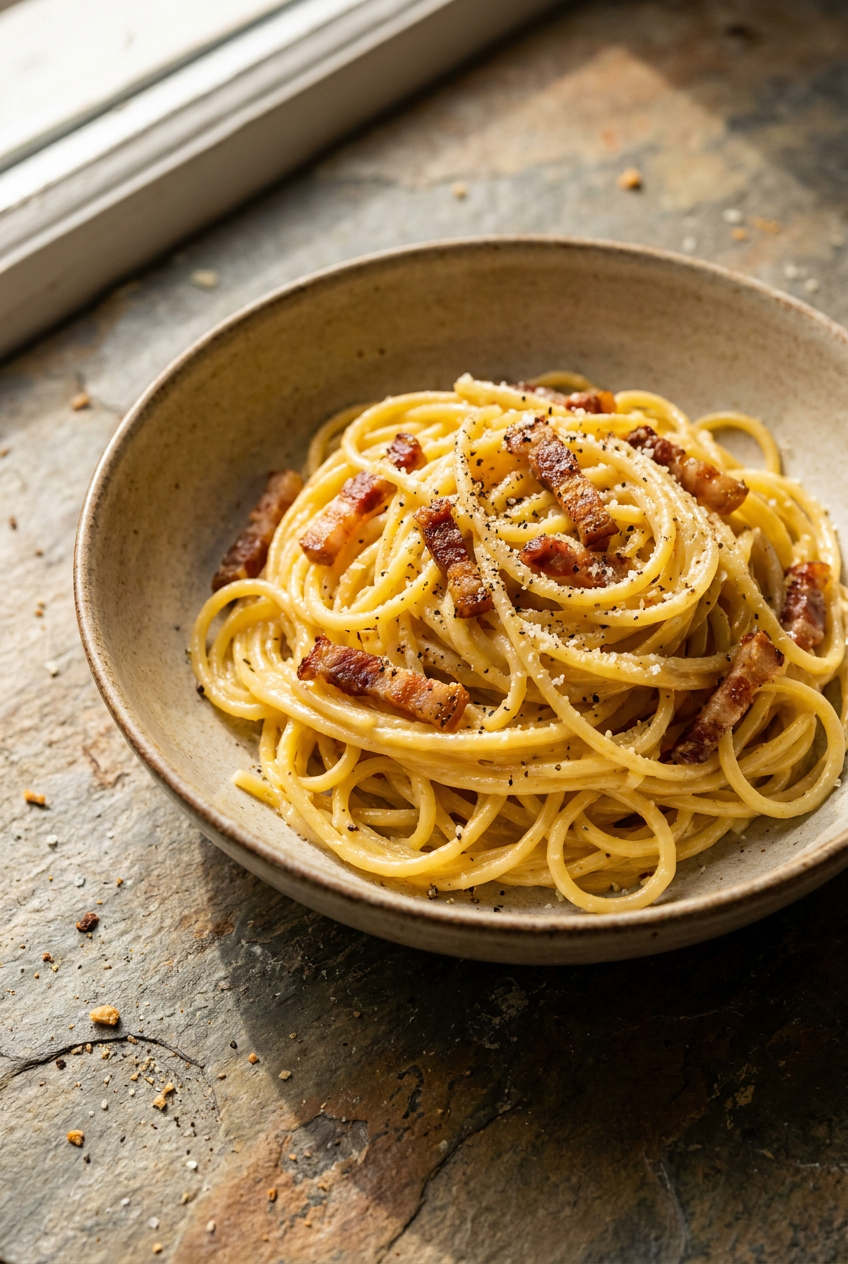
Table of Contents
- Authentic Spaghetti Carbonara alla Romana: The Real Roman Classic—Silky, Peppery, and Unapologetically Rich with No Cream in Sight
- Why You Will Love This Authentic Spaghetti Carbonara alla Romana Recipe
- Your Simple Ingredients for the Perfect Authentic Spaghetti Carbonara alla Romana
- How to Make Perfect Spaghetti Carbonara
- Pro Tips and Easy Variations for Your Carbonara
- Serving Suggestions for a Perfect Dinner
- Nutrition Information
- Storage and Make-Ahead Instructions
- Your Carbonara Questions Answered
- More Incredible Italian Recipes to Try
- The Story Behind This Recipe
- Pin This Recipe for Later
Authentic Spaghetti Carbonara alla Romana: The Real Roman Classic—Silky, Peppery, and Unapologetically Rich with No Cream in Sight
I still remember the first forkful of genuine spaghetti carbonara I ever had, in a tiny trattoria tucked behind Piazza Navona, the kind of place where the menu was a chalkboard and the owner’s nonna occasionally peered out from the kitchen. The pasta glistened, each strand cloaked in a pale gold sauce that tasted of nothing but egg, sharp cheese, cured pork, and a generous crackle of black pepper. It was a quiet masterpiece of texture and restraint. Until that moment, every carbonara I had known was heavy with cream and littered with bits of bacon. This was something else entirely: a humble Roman supper that felt like a secret handshake among those who understand that less, done perfectly, is always more. It took me years of practice, many near-scrambled eggs, and a lot of reading to finally be able to recreate that exact silky, peppery magic at home. If you’ve ever struggled with the nerve-wracking process of nailing the perfect fluffy Japanese souffle pancakes, you know the kind of gentle heat control and patience I’m talking about. Carbonara demands that same steady hand, but once you learn the rhythm, it becomes a dish you will crave and cook on a loop.
What truly sets this recipe apart is the uncompromising commitment to a handful of exceptional ingredients and a technique that refuses shortcuts. There is no garlic, no onion, no parsley, and certainly no cream. The sauce’s creaminess comes entirely from an emulsion of egg yolks, whole eggs, finely grated Pecorino Romano, and the starchy water the pasta cooks in. The pork is guanciale, a cured cheek, not pancetta or bacon, whose fat renders into a fragrant, deeply savory base. By cooking the pork slowly from a cold pan and then marrying everything off the heat, you build a sauce that is at once rich and ethereal. Every step is designed to protect the eggs from scrambling, coaxing them instead into a custard-like coating that clings to every strand of spaghetti. This is the authentic spaghetti carbonara alla romana recipe that Roman cooks swear by, and I am so thrilled to walk you through it with all the detail you need to succeed on your first try.
This recipe is for anyone who loves deeply satisfying food that feels special but comes together fast. It is ideal for a weeknight when you need dinner on the table in about 35 minutes but want something that tastes like a restaurant experience. It is also the ultimate dish for a cozy date night at home, a meal you can make together while sipping a crisp white wine. Because the ingredient list is so lean, it is also a wonderful introduction to Italian cooking for those who want to understand how technique, not complexity, creates incredible flavor. Whether you are new to carbonara or someone who has had a few scrambled disasters and wants redemption, I promise this guide will help you master the art of a flawless Roman carbonara.
Why You Will Love This Authentic Spaghetti Carbonara alla Romana Recipe
- Incredibly fast and efficient. From start to finish you are looking at about 35 minutes for a complete, deeply satisfying dinner. Most of that time is hands-off while the water boils and the guanciale slowly renders into crisp perfection.
- A celebration of simple ingredients. This recipe uses only five main components, each one playing a crucial role. When you see how egg, cheese, pork, pepper, and pasta transform into a luxurious sauce, you’ll feel like you’ve discovered a cooking magic trick.
- Rich and creamy without a drop of cream. The silkiness comes purely from the emulsion you create by tossing hot pasta with the egg mixture and starchy water. It’s a revelation the first time you taste it, and it makes the dish feel indulgent while staying true to its roots.
- Unapologetically bold flavor. Guanciale brings a herbal, porky depth you cannot get from bacon, while Pecorino Romano adds a sharp, salty bite. Coarsely cracked black pepper ties everything together with a gentle heat that lingers pleasantly.
- Impressive enough for guests, easy enough for Tuesday. The dish looks and tastes wildly sophisticated, yet the method is something you can pull off after a long day. A bowl of this carbonara, served immediately, makes anyone feel like they are sitting at a Roman kitchen table.
- A forgiving process once you know the trick. By controlling the heat and using the reserved pasta water, you get a wide window of success. The recipe includes clear visual and temperature cues so you can cook confidently and say goodbye to the fear of scrambled eggs forever.
Your Simple Ingredients for the Perfect Authentic Spaghetti Carbonara alla Romana
- Pasta
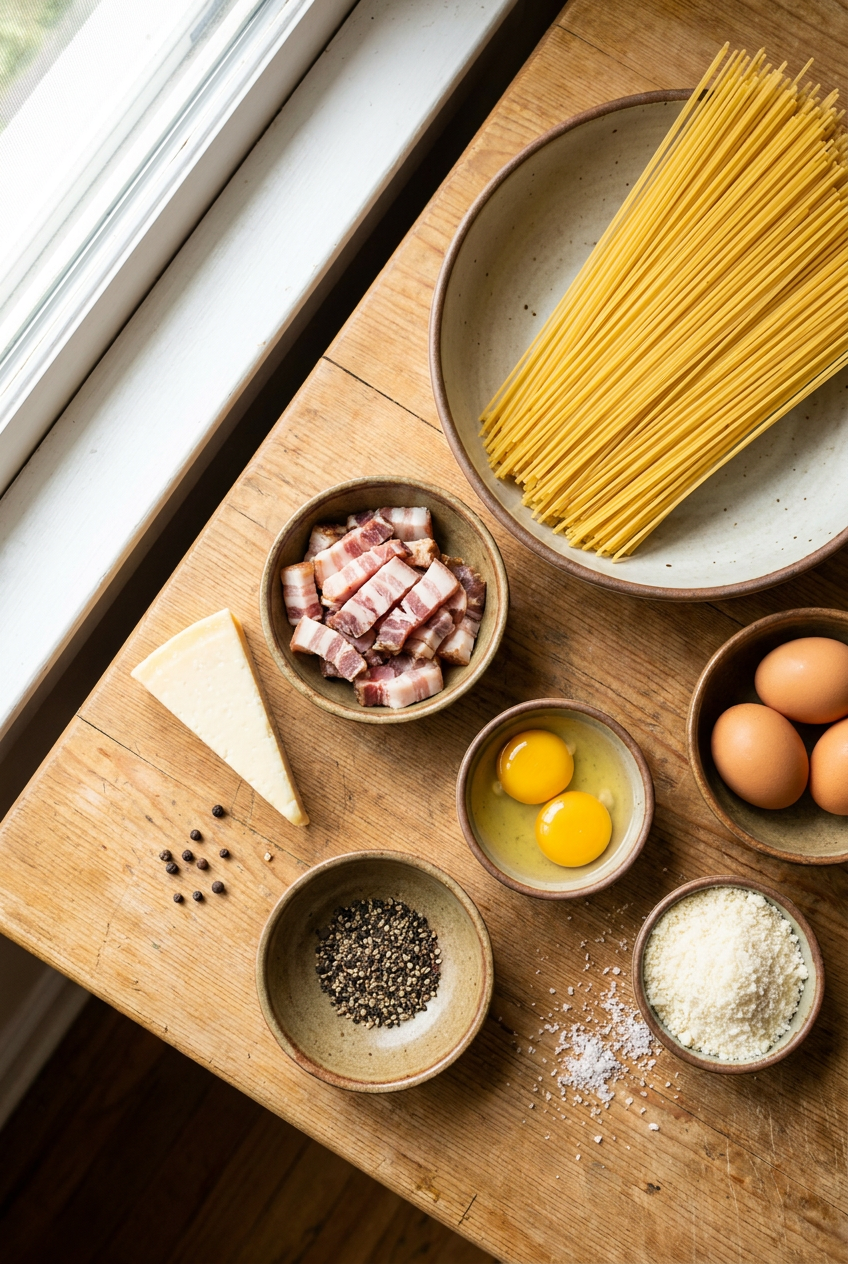
- 400 g spaghetti (or bucatini)
- Meat
- 200 g guanciale (rind removed, cut into thin batons)
- Sauce
- 4 large egg yolks (at room temperature)
- 2 large whole eggs (at room temperature)
- 150 g Pecorino Romano (finely grated, plus extra for serving)
- 2 tsp freshly cracked black pepper (plus more to taste)
Ingredient Notes
Guanciale is the defining pork element in an authentic spaghetti carbonara alla romana recipe. It comes from the pork cheek, cured with salt, pepper, and sometimes herbs, and it delivers an incredibly rich, unctuous mouthfeel with a subtle herbal, almost floral note. When shopping, look for pieces that are well-marbled with a firm fat cap; the fat should be white or pale pink. Avoid guanciale that feels slimy or has off odors. Slice away the thick rind and peppery exterior, then cut the meat into batons about the size of a small finger. If you absolutely cannot find guanciale, pancetta is the next best thing, though it will be leaner and milder. Ordinary bacon will introduce smokiness and change the character significantly, so try to track down the real deal at an Italian deli or specialty food store.
Pecorino Romano is non-negotiable for that sharp, salty backbone. Made from sheep’s milk, it has a granular texture and a tang that cuts through the richness of the eggs and pork fat. Buy a wedge and grate it yourself on the fine side of a box grater or a microplane just before using; pre-grated cheese often contains starches that interfere with the sauce’s silkiness. Do not replace it entirely with Parmesan, which is sweeter and nuttier. If you must, a 50/50 blend of Pecorino and Parmigiano Reggiano works, but pure Pecorino is the soul of the dish.
Eggs form the base of the creamy sauce, and using them at room temperature is essential. Cold eggs are more likely to seize or cook unevenly when they meet the hot pasta. Take your eggs out of the fridge at least an hour before you start, or place them in a bowl of warm tap water for 10 minutes in a hurry. The combination of whole eggs and extra yolks adds both structure and richness. For food safety, this recipe aims to bring the mixture to 160°F (71°C), which gently cooks the eggs while keeping them silky. Using pasteurized eggs adds an extra layer of safety without changing the texture.
Black pepper might seem secondary, but in carbonara it stars. Coarsely crack whole peppercorns in a mortar and pestle or a spice grinder. The heat and fragrance bloom when you toast the pepper lightly in the residual pork fat, deepening its flavor. Pre-ground pepper from a tin will lack the punch and texture this dish demands.
How to Make Perfect Spaghetti Carbonara
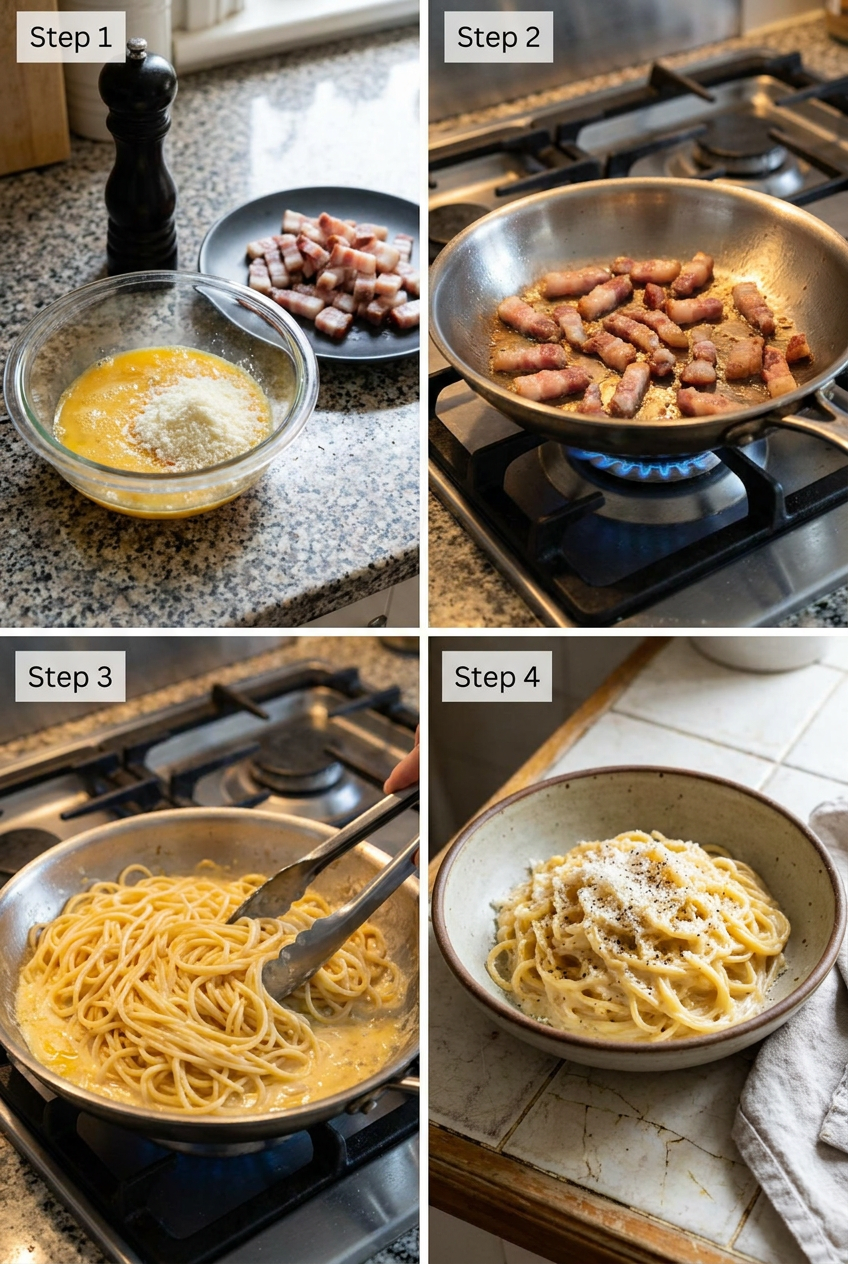
Phase 1: Prepare the Components
Step 1: Cook the Pasta. Fill your largest pot with water—at least 5 quarts—and bring it to a rolling boil. Generously salt the water; it should taste like the sea. How much salt? About 1½ tablespoons for this amount of water. The pasta absorbs the salted water, so this is your chance to season the entire dish from within. Drop in the spaghetti and stir immediately to prevent sticking. Set a timer for 1 minute less than the package’s recommended al dente time. The pasta will finish cooking in the skillet, so it needs to be slightly underdone at this stage. Just before draining, scoop out at least 2 cups of the cloudy, starchy pasta water and set it aside. Drain the spaghetti well but do not rinse it—the starch clinging to the strands is liquid gold for the sauce.
Step 2: Render the Guanciale. While the pasta water comes to a boil, place the guanciale batons in a large, cold skillet. Set the pan over medium heat and let the pork slowly release its fat. This is a meditative moment: you will hear the gentle sizzle build, and the kitchen will fill with an aroma that is at once porky, herbal, and deeply savory. Stir occasionally with a wooden spoon, encouraging the pieces to cook evenly. After 8 to 10 minutes, the guanciale should be crisp on the outside, still a bit tender within, and surrounded by pools of clear golden fat. The internal temperature of the meat should reach 145°F (63°C). Turn off the heat but leave the skillet on the warm burner so the fat stays hot.
Phase 2: Build the Sauce
Step 3: Make the Egg Mixture. In a large heatproof bowl, whisk together the egg yolks, whole eggs, finely grated Pecorino Romano, and the freshly cracked black pepper. Whisk until the mixture is completely smooth, pale yellow, and slightly thickened. This bowl should be wide enough to eventually toss with all the pasta, and you want it ready right next to the stove because the next steps move fast. The cheese will give the mixture a grainy look at first, but keep whisking and it will become uniform.
Step 4: Temper and Toss. This is the moment of truth, and it works beautifully if you stay off the heat. Transfer the drained, hot spaghetti directly from the colander into the skillet with the guanciale and its rendered fat. Toss the pasta vigorously with tongs or two spoons, making sure every strand gets coated in the shiny pork fat. Let the pasta sit in the skillet for about 30 seconds to release some steam. Now, with the skillet still off the burner, pour the egg and cheese mixture over the pasta. Immediately begin tossing and lifting the pasta, using the residual heat to turn the raw egg into a creamy sauce. As you toss, slowly drizzle in about 1/4 cup of the reserved starchy pasta water, a splash at a time. You will see the sauce transform from thin and separate to glossy and emulsified. If you have an instant-read thermometer, check that the mixture reaches 160°F (71°C) for food safety while remaining perfectly creamy. If it needs more heat, add another small splash of hot pasta water and keep tossing. The final sauce should coat each strand like heavy silk, pooling just slightly at the bottom of the bowl but never soupy. Much like achieving the deep, layered tenderness in a Moroccan chicken tagine, the secret here is patient, gentle heat rather than direct flame.
Step 5: Plate and Finish. Immediately divide the carbonara among four warmed bowls. The warmth of the bowl helps keep the sauce at the ideal temperature for those first few bites. Finish each portion with a generous snowfall of freshly grated Pecorino Romano and an extra grinding of black pepper. Serve right away, with forks that can twirl up the slippery strands. The pepper should be so plentiful that it speckles the pale sauce deeply. Do not let this sit; the texture is at its peak the moment it leaves the pan.
Pro Tips and Easy Variations for Your Carbonara
Pro Tips
- Start with a cold pan for the guanciale. Adding the pork to a cold skillet and slowly raising the heat lets the fat render out completely before the meat browns. This gives you crisp, golden pieces and a generous amount of liquid gold to coat the pasta.
- Reserve more pasta water than you think you need. The starchy water is your safety net. It loosens the sauce and helps cook the eggs gently. You can always add more, but you cannot recreate it once it is dumped down the drain. Two cups is a good minimum.
- Use room-temperature eggs and a warm bowl. As with achieving the delicate lift in blueberry lemon ricotta pancakes, temperature matters enormously. Room-temperature eggs blend more smoothly and are far less likely to scramble. Even better, place the mixing bowl over the pot of pasta water for a minute to take the chill off before adding the eggs.
- Move fast but stay off the flame. The residual heat in the pasta, the skillet, and the rendered fat is all you need to cook the eggs. Direct heat is the enemy of a silky carbonara. Once you pour the egg mixture, toss like your dinner depends on it, adding pasta water as needed.
- Taste and adjust at the very end. Pecorino and guanciale are both salty, so you likely won’t need additional salt. But do taste once the sauce has formed and add more black pepper or a tiny pinch of salt if you feel it needs it.
Delicious Variations
- Smoky Twist. Substitute pancetta for guanciale and add a generous pinch of smoked paprika to the egg mixture. The paprika nods to the smoky notes you would miss from the guanciale and creates a lovely depth without overpowering the dish.
- Vegetarian Carbonara. Swap the guanciale for pan-fried cremini mushrooms cooked in olive oil and butter until deeply browned. Use a sharp aged vegetarian cheese like Piave in place of Pecorino Romano. The mushrooms bring meaty texture, and the Piave echoes the salty, granular bite.
- Bucatini Carbonara. Use bucatini instead of spaghetti for an even more luxurious mouthful. The hollow center traps the sauce inside, making each bite extra creamy. Cook the bucatini exactly the same way; it may need an extra minute.
- Extra Egg Yolk Version. For the richest possible sauce, use 6 egg yolks and no whole eggs. This produces a thicker, more intensely golden sauce that is almost custard-like. Serve in smaller portions as a decadent starter.
Serving Suggestions for a Perfect Dinner
This carbonara is the star of the table and needs little more than a simple, bright side to balance its richness. I love to serve it with a handful of peppery arugula tossed with a squeeze of lemon and a drizzle of grassy olive oil. The sharp, clean flavors cut right through the pork fat and cheese, giving your palate a little reset between bites. For drinks, a crisp dry white such as Frascati or a dry rosé chilled well is wonderful. The wine’s acidity uplifts the dish without competing with its deep umami character. As you plate, warm the bowls in a low oven or by filling them with hot water for a minute, then drying them. The heat keeps the carbonara luscious from the first twirl to the last.
This recipe shines on occasions that call for something sumptuous yet unfussy. It is perfect for a romantic dinner at home, a birthday meal for a pasta-loving friend, or a late-night supper after a long week. Scaling up for a crowd requires patience: you can double the ingredients but you will need to work in batches, because crowding the skillet cools the pasta too quickly and risks a scrambled sauce. If you want to make it a complete meal, set out a platter of antipasti like marinated artichokes, olives, and thin-sliced prosciutto, then let the carbonara follow as the deeply satisfying centerpiece.
Nutrition Information
(Approximate per serving, 4 servings total) Calories: 550, Fat: 30g, Carbohydrates: 48g, Protein: 25g, Fiber: 2g, Sodium: 820mg. Nutritional values are estimates only.
Storage and Make-Ahead Instructions
- Refrigerator: Carbonara is best eaten the moment it is made. If you have leftovers, transfer them to an airtight container and refrigerate for up to 1 day. The sauce will thicken and lose some creaminess, and the pasta will become softer. Expect a texture more like a firm pasta cake than the original silky dish.
- Freezer: Freezing is not recommended. The egg-based sauce will break and become gritty upon thawing, and the guanciale will lose its crispness entirely.
- Reheating: Place leftovers in a skillet over the lowest possible heat. Add a splash of water and stir gently and continuously until warmed through. The goal is to revive the emulsion without scrambling the eggs further. Alternatively, a quick zap in the microwave at 50% power, with stops to stir every 20 seconds, can work in a pinch, but the stovetop method gives you more control.
- Make-Ahead: You can cut the guanciale into batons and grate the Pecorino Romano up to a day ahead. Store them separately in the fridge in airtight containers. Bring the eggs to room temperature before using. Prepping these components makes the final assembly remarkably fast and stress-free.
Your Authentic Spaghetti Carbonara alla Romana Questions Answered
Why does my sauce scramble?
The most common reason is that the pan or pasta is too hot when the egg mixture is added. Always remove the skillet from the heat entirely before combining, and rely on the residual warmth plus splashes of hot pasta water to gently bring the eggs up to a safe temperature. A thermometer can help, but a visual cue is key: the sauce should look glossy and flow like heavy cream, never look like tiny curds.
Can I use Parmesan instead of Pecorino?
While some non-Roman recipes substitute, Pecorino Romano’s distinct saltiness and granular texture are critical for the authentic flavor profile. Parmesan is sweeter and softer, which changes the dish’s backbone. If you are in a pinch, a 50/50 blend of Pecorino and Parmigiano Reggiano is an acceptable compromise, but all Pecorino is the true Roman way.
My carbonara turned out dry. What went wrong?
You likely did not add enough starchy pasta water. The water acts as the binding liquid that creates the emulsion, so the sauce needs that moisture to become creamy. Add the water gradually, a tablespoon or two at a time, while tossing continuously. If the pasta looks dry or clumpy, add more warm water until you reach a sauce that coats the spaghetti and leaves a slight pool in the bottom of the bowl.
Is it safe to eat partially cooked eggs?
This recipe gently cooks the egg mixture to 160°F (71°C), which is the temperature at which eggs are considered safe while still retaining their velvety texture. Using an instant-read thermometer is the best way to be sure. You can also choose pasteurized eggs for an added safety layer without affecting the final taste.
Can I make this dish gluten-free?
Yes, use a high-quality gluten-free spaghetti that is known for holding its texture well. Cook it exactly as directed, but be especially careful not to overcook, as many gluten-free pastas become mushy quickly. The sauce itself is naturally gluten-free because Pecorino and eggs contain no gluten.
What if I cannot find guanciale?
Pancetta is the best substitute, though it is leaner and less intensely flavored. Look for pancetta that is cut from the belly and cured, not smoked. Avoid smoked bacon unless you are intentionally making a smoky variation, as its flavor will dominate the delicate egg-and-cheese sauce.
How can I double the recipe for a larger group?
Doubling carbonara is tricky because adding too much pasta to one skillet cools it down too fast. It is better to cook two separate batches back to back using the same skillet, or use two skillets simultaneously. Keep the cooked pasta warm in a low oven while you finish the second batch, then serve immediately.
What is the best pasta shape for carbonara?
Spaghetti is the classic, offering the perfect surface area for the sauce to cling. Bucatini, with its hole running through the center, is a beloved alternative that holds even more sauce inside. Rigatoni or mezze maniche can work, but long strands are traditional and provide the most elegant, twirlable texture.
More Incredible Italian Recipes to Try
If this silky, deeply savory Roman classic captured your heart, you will adore exploring other Italian dishes that celebrate minimal ingredients transformed through thoughtful technique. A simple cacio e pepe uses only Pecorino, pepper, and pasta water to create a creamy sauce that feels like carbonara’s stripped-down cousin. Or dive into a classic Amatriciana, which brings tomatoes into the guanciale and Pecorino equation for a bright, spicy red sauce that clings to bucatini. For something completely different yet equally rooted in tradition, a slow-cooked osso buco with gremolata offers a fork-tender tenderness that echoes the patient, rewarding philosophy of Italian home cooking.
Lovers of this
Authentic Spaghetti Carbonara alla Romana
Ingredients
Method
- Bring a large pot of generously salted water to a boil. Cook the spaghetti until al dente, about 1 minute less than the package says. Reserve at least 2 cups of starchy pasta water before draining.
- While the pasta cooks, add the guanciale to a cold large skillet, then set over medium heat. Cook, stirring occasionally, until the fat renders and the meat is crisp and golden, about 8–10 minutes, and the guanciale reaches an internal temperature of 145°F (63°C). Turn off the heat but leave the skillet on the burner.
- In a large bowl, whisk together the egg yolks, whole eggs, grated Pecorino, and black pepper until smooth and pale.
- Working quickly, transfer the drained hot pasta directly into the skillet with the guanciale (off the heat). Toss well to coat. Pour the egg mixture over the pasta and toss vigorously, adding a splash of reserved pasta water at a time until a creamy, silky sauce forms—about 1/4 cup in total. For food safety, the egg mixture should reach 160°F (71°C); use an instant-read thermometer to check. If the temperature is too low, continue tossing and add more hot pasta water as needed. The pasta should be glossy, not soupy.
- Divide immediately among warmed bowls. Crown each with a blizzard of freshly grated Pecorino and more cracked black pepper. Serve right away.
Disclosure: This post may contain affiliate links. If you purchase through our links we may earn a small commission at no extra cost to you.
If you made this Authentic Spaghetti Carbonara alla Romana, please leave a comment below and let me know how it turned out.