Sicilian Pasta alla Norma Recipe, Easy Italian Dinner in 45 Minutes
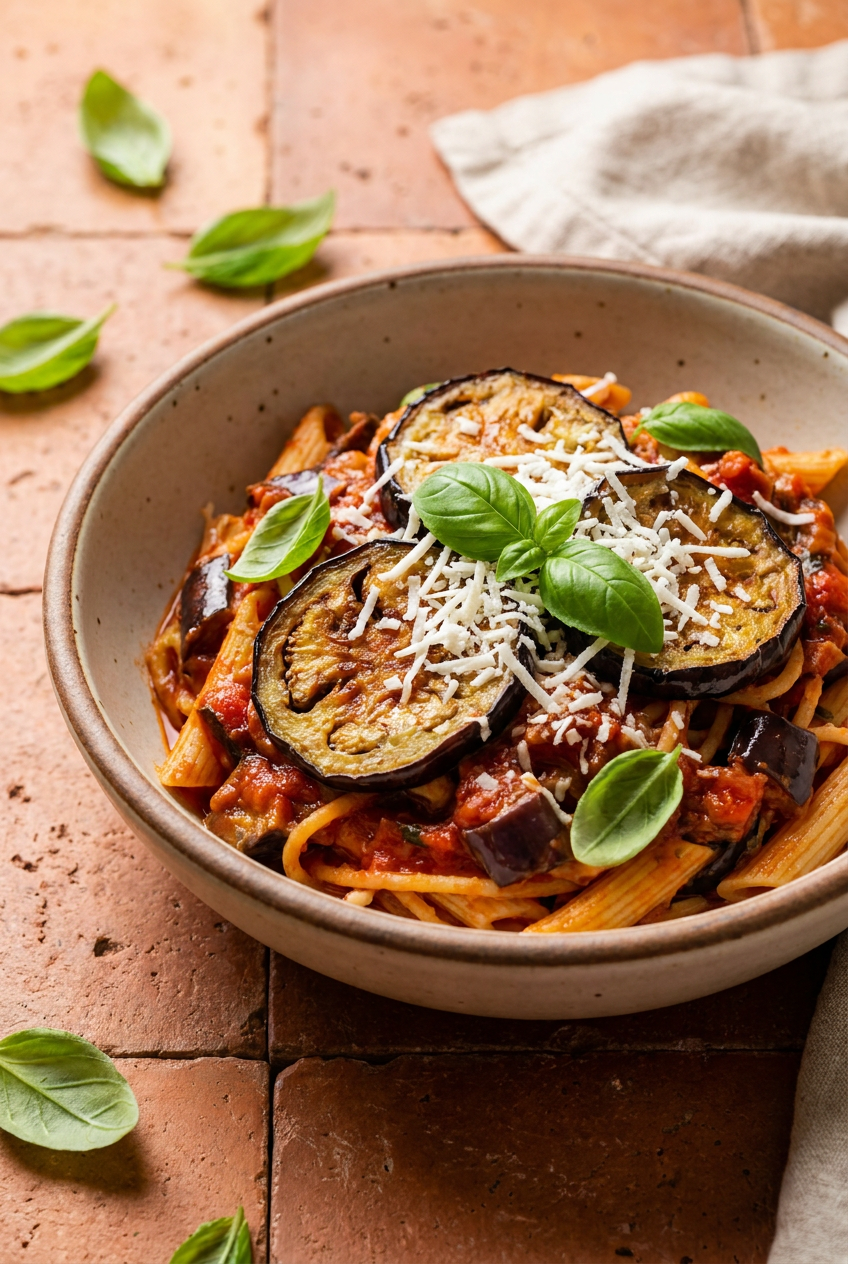
Table of Contents
- Sicilian Pasta alla Norma: A sun-drenched Sicilian masterpiece of crispy eggplant, rich tomato sauce, and salty ricotta salata
- Why You Will Love This Sicilian Pasta alla Norma Recipe
- Your Simple Ingredients for the Perfect Sicilian Pasta alla Norma
- How to Make Perfect Sicilian Pasta alla Norma
- Pro Tips and Easy Variations for Your Sicilian Pasta alla Norma
- Serving Suggestions for a Perfect Dinner
- Nutrition Information
- Storage and Make-Ahead Instructions
- Your Sicilian Pasta alla Norma Questions Answered
- More Incredible Italian Recipes to Try
- The Story Behind This Recipe
- Pin This Recipe for Later
Sicilian Pasta alla Norma: A sun-drenched Sicilian masterpiece of crispy eggplant, rich tomato sauce, and salty ricotta salata
This Sicilian pasta alla Norma recipe is the meal that instantly transports me back to a tiny sun-baked trattoria in Catania, where the eggplant was so silky and the sauce so deeply sweet it felt like tasting the island’s volcanic soil itself. I can still picture the old nonna who emerged from the kitchen, dusted in flour, placing that steaming dish in front of me with a quiet pride that said everything. I had ordered Pasta alla Norma on a whim, and from the first forkful—crisp-edged cubes of eggplant tangled with perfectly al dente rigatoni, all lifted by the unmistakable salty tang of ricotta salata—I knew I would spend years trying to recreate that moment at home. This recipe is the closest I’ve come, and I truly hope it brings a little bit of that Sicilian sunshine to your table.
What makes this particular homemade Sicilian Pasta alla Norma stand out is the fierce attention to each simple element. The eggplant is salted, dried, and pan-fried in batches to ensure it stays crisp outside and creamy inside rather than becoming a greasy sponge. The sauce leans entirely on the quality of hand-crushed San Marzano tomatoes, reduced quickly to preserve their bright, jammy character. And then there’s the ricotta salata—an aged, pressed ricotta that’s salty and firm—which we fold in at the very last moment so it melts into a savoury, creamy veil and also finish each plate with a snow of extra on top. There’s no cream, no mozzarella, no shortcut that masks the true flavours; this is a dish built on patience with produce, and every bite proves why that matters.
I wrote this best Sicilian Pasta alla Norma recipe for anyone who loves a deeply satisfying meatless meal that never feels like it’s missing something. It’s the perfect weeknight dinner when you have a little extra time to let eggplant transform, yet elegant enough to serve for a relaxed dinner party with friends and a bottle of Sicilian red. And if you adore the pillowy tenderness of something like fluffy Japanese souffle pancakes, you will understand why I’m obsessed with achieving that same gentle, airy texture inside the eggplant cubes here. This recipe is for Sunday lunches, for quiet evenings when you want to cook something that feels like a hug, and for the days when you crave a taste of southern Italy without a plane ticket.
Why You Will Love This Sicilian Pasta alla Norma Recipe
- Authentic flavour without fuss. This easy Sicilian Pasta alla Norma relies on just a handful of quality ingredients, so the taste of sunny tomatoes, garlic, and basil truly shines. You won’t find complicated steps, just honest Italian cooking that tastes like it came from a farmhouse kitchen.
- Perfectly crispy eggplant every time. Salting and drying the eggplant cubes before frying creates a delicate barrier that prevents them from drinking up too much oil. The result is golden, tender bites with a whisper of crispness at the edges that hold their shape in the sauce.
- A sauce you’ll want to make on repeat. The quick-simmered San Marzano tomatoes develop a rich, almost buttery sweetness in under 15 minutes. It’s a versatile base you’ll memorize and start spooning over everything from grilled fish to eggs.
- That ricotta salata finish is unforgettable. This salty, crumbly cheese melts slightly upon contact, creating tiny pockets of creamy sharpness. It’s the signature move that transforms a simple pasta into something truly special, and you’ll find yourself grating extra over every bowl.
- Completely satisfying and naturally vegetarian. Hearty eggplant and al dente pasta make this a filling Italian Dinner recipe that even dedicated meat lovers request. You can serve it as a main course with a simple salad and walk away from the table perfectly content.
- Meal prep friendly. The components can be made ahead and stored separately, so on busy nights all you have to do is boil pasta and assemble. I often fry the eggplant a day in advance and keep the sauce ready in the fridge for a 15-minute dinner.
Your Simple Ingredients for the Perfect Sicilian Pasta alla Norma
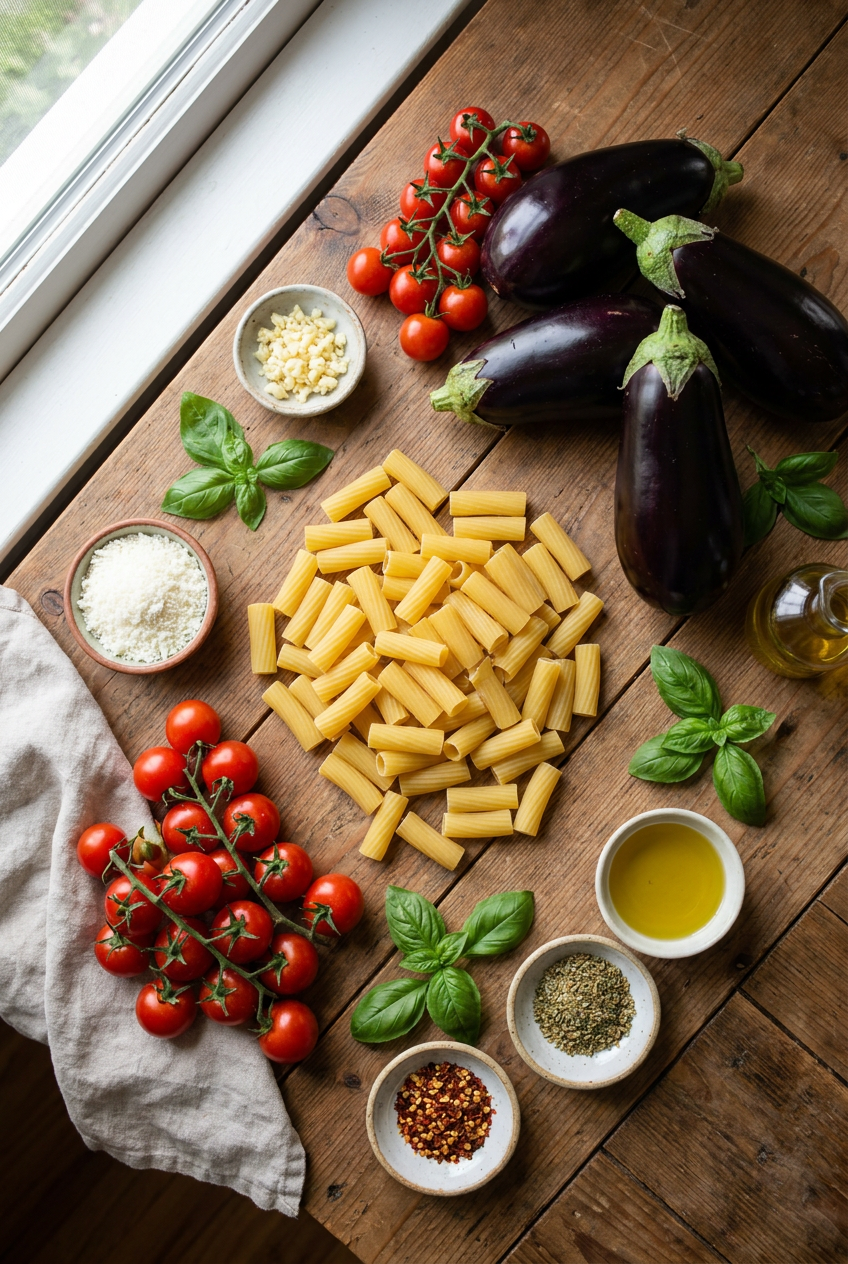
Main Ingredients
- 1 lb rigatoni or penne pasta (dried)
- 1 large globe eggplant (about 1 lb, cut into 1/2-inch cubes)
- 3 tbsp extra-virgin olive oil (divided, plus more for drizzling)
- 3 cloves garlic (thinly sliced)
- 1 can (28 oz) whole peeled San Marzano tomatoes (crushed by hand)
- 1/2 tsp red pepper flakes (optional)
- 1/2 cup fresh basil leaves (torn, plus more for garnish)
- 1/2 cup ricotta salata cheese (grated, plus extra for serving)
- Sea salt and black pepper to taste
Ingredient Notes
Eggplant. A firm, heavy globe eggplant with smooth, unblemished skin is your best bet here. The large eggplant yields fewer seeds and a creamier texture once cooked. If you can only find smaller Italian or graffiti eggplants, they will work beautifully too; just be sure to cut them evenly so they cook at the same rate. Salting is non-negotiable—it draws out any bitterness and collapses the spongy cell structure so the cubes fry instead of steam. If you’re in a rush, you can skip the full 10-minute rest, but even 5 minutes with a thorough pat-dry makes a real difference.
San Marzano Tomatoes. These whole peeled tomatoes, grown in the volcanic soil near Naples, are prized for their low acidity and naturally sweet, concentrated flavour. Crushing them by hand into the pan creates a delightfully rustic sauce with irregular chunks that cling to the pasta. If you must substitute, look for a high-quality brand of whole peeled plum tomatoes, and crush them yourself; diced tomatoes from a can tend to be firmer and less flavourful. A splash of good red wine vinegar at the end can help balance the sweetness if your tomatoes are very sweet.
Ricotta Salata. This is not the fresh, creamy ricotta you spoon onto toast. Ricotta salata is a firm, salted, aged version that’s dry enough to grate. Its salty, slightly nutty tang is the signature finish of Pasta alla Norma, cutting through the rich sauce and fried eggplant beautifully. If you absolutely cannot find it, aged Pecorino Romano is the closest stand-in, offering a similar salty bite and crumbly texture. A mild, dry feta can also work in a pinch but will be tangier and less milky. Whatever you use, grate it on the finest side of a box grater so it practically dissolves into the hot pasta.
Pasta Shape. Rigatoni or penne with their ridges and hollow centres are ideal for capturing the chunky sauce and little eggplant nuggets in every bite. Short, sturdy shapes hold up to tossing without breaking. In a pinch, dried spaghetti or bucatini work too, though the dish becomes a bit messier to twirl. Gluten-free pasta performs well here as long as you cook it very al dente so it doesn’t turn mushy when finishing in the sauce.
Extra-Virgin Olive Oil. Use a fruity but not overly peppery oil for frying the eggplant and finishing the dish. A Sicilian olive oil, if you can source one, adds an authentic layer of grassy brightness. Avoid using a very delicate finishing oil for the cooking steps; a mid-range everyday extra-virgin is perfect.
How to Make Perfect Sicilian Pasta alla Norma
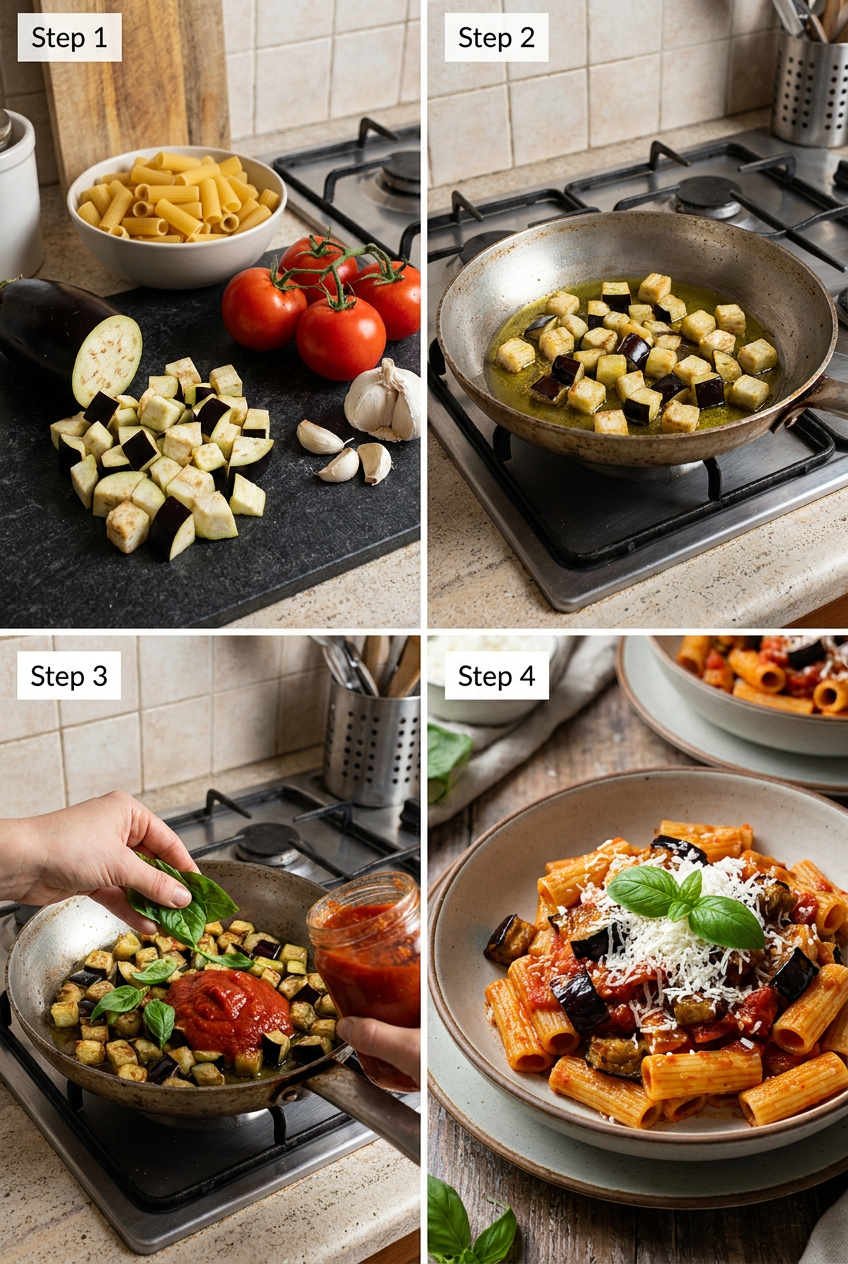
Phase 1: Salt and crisp the eggplant
Toss the eggplant cubes with 1 teaspoon of sea salt in a colander set over the sink or a bowl. Let them drain for at least 10 minutes; you’ll notice tiny beads of moisture forming on the surface. This step is the secret to avoiding the dreaded oily eggplant. After draining, pat the cubes completely dry with paper towels or a clean kitchen cloth—press gently to absorb all the surface moisture. Heat 2 tablespoons of olive oil in a large skillet over medium-high heat until it shimmers but does not smoke. Add the eggplant in a single layer and let it cook undisturbed for 4-5 minutes. You’ll hear a steady sizzle and smell the earthy fragrance as the bottoms turn deep golden. Then toss and continue cooking for another 5-6 minutes, stirring only occasionally, until the eggplant is tender, creamy inside, and crisped at the edges. Transfer the fried eggplant to a plate lined with a paper towel. Don’t crowd the pan; if your skillet seems packed, work in two batches—crowding lowers the temperature and creates steam, which is the enemy of crispness.
Phase 2: Build the sauce
In the same skillet, add the remaining 1 tablespoon of olive oil along with the thinly sliced garlic. Stir it around for about 30 seconds until it becomes fragrant and just barely turns golden at the edges—be careful not to let it brown or the sauce will pick up bitterness. Immediately open the can of tomatoes and, using clean hands, crush each whole tomato directly into the pan, letting the juices and pulp fall in. This rustic crushing yields irregular pieces that give the sauce soul. Add the red pepper flakes if you enjoy a gentle warmth, along with a good pinch of salt. Stir everything together, then raise the heat to medium-high and let the sauce simmer vigorously for 10 minutes, stirring often with a wooden spoon. You’re looking for a visibly thickened, slightly reduced sauce that pulls away from the sides of the pan when stirred. It should taste concentrated and sweet, with no raw tomato edge. If it reduces too much, a splash of that reserved pasta water can loosen it back up, but 10 minutes usually does the trick beautifully.
Phase 3: Boil the pasta
While the sauce simmers, bring a large pot of water to a rolling boil and salt it generously—the water should taste like the sea. Cook your rigatoni or penne until it is 1 minute less than the package’s al dente time. This undercooking is crucial because the pasta will finish absorbing flavour from the hot sauce later. Before draining, scoop out a full cup of the starchy pasta water using a heatproof measuring cup or ladle. That starchy water is your insurance policy for a silky, cohesive sauce. Drain the pasta but do not rinse it—the natural starch on the surface helps the sauce cling.
Phase 4: Marry pasta and sauce
Add the drained pasta directly into the bubbling tomato sauce along with about half of the reserved pasta water. Toss everything together over medium heat, letting the pasta absorb the liquid and the sauce thicken around it. Keep tossing for about 2 minutes, adding a splash more pasta water if the mixture starts to look dry or tight. You’ll know it’s ready when the sauce glides over the pasta in a glossy, even coat and no watery puddle remains in the bottom of the pan. This is where the magic happens—the pasta cooks through to perfect al dente, and the sauce becomes an inseparable part of every piece. Taste a rigatoni; it should be tender with a pleasant chew, and the sauce should taste deeply of tomato and garlic, perhaps with a tickle of heat from the pepper flakes.
Phase 5: Finish and serve
Remove the skillet from the heat and immediately fold in the crispy fried eggplant and the torn fresh basil. Be gentle so you don’t break apart the eggplant cubes. Sprinkle in half of the grated ricotta salata and give one final toss—the residual heat will barely melt the cheese into salty, creamy little streaks. Taste the dish and adjust with more salt and a generous crack of black pepper. Divide the pasta among shallow bowls, then crown each serving with the remaining ricotta salata, a few extra small basil leaves, and a final glossy drizzle of extra-virgin olive oil. This dish waits for no one—serve it immediately while the eggplant is still slightly crisp and the steam carries that incredible basil perfume.
Much like the slow, hands-on process that makes Moroccan chicken tagine so rewarding, this recipe teaches you that a little patience with a few simple ingredients yields something truly memorable.
Pro Tips and Easy Variations for Your Sicilian Pasta alla Norma
Pro Tips
- Choose the right eggplant. Look for an eggplant that feels heavy for its size with tight, glossy skin. Lighter, spongy eggplants often contain more seeds and bitterness. A firm specimen promises dense, creamy flesh that will hold its shape during frying.
- Don’t rush the salting step. Even a quick 10-minute salt rest with thorough drying transforms the texture. It draws out moisture, collapses the sponge-like air pockets, and prevents the eggplant from guzzling oil. Skipping it leads to a greasy, heavy dish.
- Use your hands for the tomatoes. Crushing whole tomatoes by hand directly into the skillet releases their juice gradually and leaves uneven chunks that create a rustic, textured sauce. A blender makes the sauce too smooth, while leaving them whole gives you slippery, bouncy tomatoes that don’t mingle well with the pasta.
- Master the pasta water technique. That reserved starchy water is the key to a lustrous, restaurant-quality finish. Add it a splash at a time while tossing the pasta and sauce. The starch emulsifies with the olive oil and tomato juices, creating a silky coating instead of a thin, separated liquid.
- Grate the ricotta salata finely. Using the finest side of a box grater means the cheese will almost disappear into the hot pasta on contact, creating a salty, creamy umami wave. Thick shards will just sit on top without melting in. Keep a little brick of it covered in the fridge, it lasts for weeks.
- Finish with a bright note. Right before serving, add a teaspoon of good red wine vinegar or a squeeze of fresh lemon juice if the sauce tastes flat. This tiny acidity wakes up all the other flavours and balances the richness of the fried eggplant and olive oil.
Delicious Variations
- Gluten-Free Sicilian Pasta alla Norma. Use your favourite gluten-free rigatoni or penne and cook it especially carefully to al dente. Gluten-free pasta can go from perfect to mushy quickly, so check it a full minute before the package suggests. A short, ridged shape made from a corn and rice blend holds up wonderfully.
- Add Protein with Sausage. For a meatier version, crumble 4 oz of good-quality Italian sausage (spicy or mild) into the skillet after the garlic is fragrant and brown it before adding the tomatoes. The savoury, fennel-scented sausage juices layer into the sauce and make the dish even heartier.
- Baked Eggplant Option. If you want to avoid frying, toss the salted and dried eggplant cubes with a tablespoon of olive oil and roast them on a parchment-lined baking sheet at 425°F for about 20-25 minutes, flipping halfway, until golden and tender. They won’t be quite as crispy, but they’ll still be delicious and much lighter.
- Fresh Tomato Summer Version. In peak tomato season, swap the canned tomatoes for 2 pounds of ripe plum tomatoes, peeled, seeded, and chopped. Cook them down a bit longer until they break into a saucy consistency. You’ll taste the difference—brighter, more floral, and just a little sweeter.
If you love the salty, creamy notes of ricotta salata here, you might also enjoy the sweet and tangy contrast in my blueberry lemon ricotta pancakes for a completely different but equally satisfying use of ricotta.
Serving Suggestions for a Perfect Dinner
To complete this Italian Dinner recipe, I love serving it alongside a bright, peppery arugula salad dressed simply with lemon juice, a pinch of salt, and a generous drizzle of extra-virgin olive oil. The crisp, bitter greens cut through the richness of the pasta and refresh the palate between bites. For a larger spread, add a loaf of warm crusty bread to mop up every last bit of tomato sauce, and consider a glass of Sicilian red wine like Frappato or a chilled glass of Grillo. When plating, use wide, shallow bowls so the pasta doesn’t steam and soften too quickly, and sprinkle that extra ricotta salata right at the table so everyone sees the snowy finish.
This Sicilian Pasta alla Norma from scratch is a true crowd-pleaser for casual family dinners, vegetarian holiday mains, or potluck gatherings where you want something that holds well and reheats beautifully. To scale it for a crowd, simply double the sauce and eggplant ingredients and use a large skillet or two pans to fry the eggplant in batches. Cook the pasta in a very large pot, and toss everything together in a big warm serving bowl right before the meal. It’s a dish that brings people together, and there’s always someone who asks for the recipe after the first forkful.
Nutrition Information
(Approximate per serving, 4 servings total) Calories: 510, Fat: 20g, Carbohydrates: 68g, Protein: 18g, Fiber: 8g, Sugar: 12g, Sodium: 620mg. Nutritional values are estimates only.
Storage and Make-Ahead Instructions
- Refrigerator: Store leftovers in an airtight container for up to 4 days. The pasta will soften slightly as it sits, but the flavors deepen. Reheat gently.
- Freezer: For best results, freeze the tomato sauce and fried eggplant separately in airtight containers for up to 3 months. Cook fresh pasta when ready to serve. Thaw overnight in the fridge before reheating.
- Reheating: Warm leftovers in a skillet over medium-low heat with a splash of water or a little olive oil. Toss gently until heated through. Avoid the microwave, which can turn the eggplant mushy and rubbery.
- Make-Ahead: The eggplant can be fried up to 2 days in advance and kept in the fridge. The sauce also holds well for up to 3 days refrigerated. Store them separately, then reheat the sauce while boiling pasta, and fold in the eggplant at the end for the best texture.
Your Sicilian Pasta alla Norma Questions Answered
Can I make this Sicilian Pasta alla Norma ahead of time?
Yes, with a strategy. Prepare and store the sauce and fried eggplant separately in the fridge. Boil the pasta fresh and combine everything right before serving. If you need to reheat the whole dish, do so gently in a skillet with a little water, but the eggplant will never be as crispy as the first day. It is still wonderfully flavourful.
What is the best substitute for ricotta salata?
Aged Pecorino Romano is your next best option—it offers a similar saltiness and crumbly texture. A mild, dry feta crumbled finely also works, though it brings a tangier note. Avoid fresh ricotta; it will add moisture instead of that salty, granular melt.
How do I keep the eggplant from absorbing too much oil?
Salting, drying, and ensuring the oil is hot before adding the cubes are your three best lines of defence. The salt collapses the spongy air pockets, drying removes surface moisture that would cause steaming, and a hot pan quickly sears the exterior, forming a barrier that restricts oil intake.
Can I use fresh tomatoes instead of canned?
Absolutely. In summer, peel and seed about 2 pounds of very ripe plum tomatoes, chop them, and simmer until they break down, adding a little extra time. You will get a brighter, more floral sauce. Be prepared to adjust for sweetness—vine-ripened tomatoes can vary, so taste and add a pinch of sugar if needed.
Is this recipe gluten-free?
It can be. Simply swap in a high-quality gluten-free pasta shape like rigatoni or penne. Cook it carefully to al dente and use a starchy pasta water if possible—gluten-free pasta often releases starch that helps the sauce cling. The rest of the dish is naturally gluten-free.
What pasta shape works best for Pasta alla Norma?
Short, tubular shapes with ridges—like rigatoni, penne, or mezzi paccheri—are ideal because their hollows and grooves trap the chunky sauce and small eggplant pieces. Long pasta such as spaghetti can be used, but it will not capture the eggplant in quite the same way.
Do I have to peel the eggplant?
No. The skin of a globe eggplant is entirely edible and softens nicely during frying, adding a subtle texture contrast and a bit of colour. If you prefer a completely silken result, you can peel it, but the cubes may break apart more easily. I leave it on for simplicity and visual appeal.
Can I make this recipe vegan?
Yes, with one swap. Replace the ricotta salata with a good vegan parmesan-style cheese or a sprinkle of nutritional yeast for a savoury, salty finish. The dish is already plant-based apart from that cheese. Be sure to use a vegan pasta if your brand contains eggs.
Why does my sauce taste flat?
Often, a flat-tasting sauce simply needs a little acidity or salt. Try adding a teaspoon of red wine vinegar or a squeeze of lemon right at the end, along with a pinch more salt. Properly seasoning the pasta water also makes a huge difference—if the water was under-salted, the pasta and sauce will lack depth.
How spicy is this dish?
The red pepper flakes are optional and quite gentle; half a teaspoon adds a warm background hum without overt heat. You can omit them entirely for a milder dish or increase to a full teaspoon if you love a noticeable kick. The traditional recipe is not spicy, but a little heat flatters the sweet tomatoes.
More Incredible Italian Recipes to Try
If you adore the rustic simplicity of this easy Sicilian Pasta alla Norma, I have a feeling you will also fall for my same-soul different-region dinners. A classic Moroccan chicken tagine might not be Italian, but it carries that same patient layering of warm spices and slowly tenderized ingredients—just with a North African accent. For a true taste of Sicily’s sweet side, you might also enjoy recipes that showcase citrus and ricotta in fresh, unexpected ways.
On the Italian breakfast table, blueberry lemon ricotta pancakes bring the same salty-creamy levity as ricotta salata but in a soft, golden stack that feels like a sunbeam on a plate. And if you loved the pillowy eggplant texture here, you must try fluffy Japanese souffle pancakes for a completely different take on cloudlike comfort. Each of these recipes leans on quality ingredients and a little extra care, exactly the way this pasta dish does.
The Story Behind This Sicilian Pasta alla Norma
Pasta alla Norma was born in the city of Catania, on the eastern coast of Sicily, and its name is said to be a tribute to the 19th-century opera “Norma” by Vincenzo Bellini, a Catania native. Legend has it that a local chef tasted the dish and was so impressed he exclaimed it was “a Norma”—meaning a masterpiece, something of the highest quality, much like the opera itself. The combination of fried eggplant, tomato sauce, basil, and salted ricotta became an anthem to Mount Etna’s fertile soil, where eggplants and tomatoes grow with remarkable intensity. It’s a dish that speaks of summer abundance, volcanic earth, and the Sicilian habit of doing a lot with a little.
Over time, this Sicilian Pasta alla Norma from scratch has remained steadfastly unchanged in its essence, because it simply doesn’t need improvement. I love that it is one of those rare recipes where every ingredient pulls equal weight. When I teach it to friends, they are always surprised by how deeply flavoured something so minimalist can taste. For me, cooking this dish is a small act of travel—each step, from the sizzle of eggplant to the final snow of ricotta salata, replays that very first bowl in Catania and reminds me that the best meals are often the ones rooted firmly in a place and its tradition.
Pin This Sicilian Pasta alla Norma Recipe for Later
Love this recipe? Save it to your favorite Pinterest board so you can find it again easily. Share it with friends and family who would enjoy making it too.
I truly hope this Sicilian Pasta alla Norma becomes a regular in your kitchen and fills your home with that unmistakable aroma of garlic, basil, and sweet tomatoes. When you make it, I would love to hear about your experience—leave a comment below and tell me if you tried a variation or added your own twist. Until next time, happy cooking and mangia bene.
Sicilian Pasta alla Norma
Ingredients
Method
- Toss eggplant cubes with 1 teaspoon salt in a colander; let drain 10 minutes. Pat completely dry. Heat 2 tablespoons olive oil in a large skillet over medium-high. Add eggplant in a single layer and cook undisturbed 4-5 minutes until golden on bottom, then toss and continue cooking 5-6 minutes more until crisp-tender. Transfer to a plate.
- In the same skillet, add remaining 1 tablespoon olive oil and garlic; sauté 30 seconds until fragrant. Add crushed tomatoes, red pepper flakes, and a pinch of salt. Simmer vigorously, stirring often, for 10 minutes until thickened and slightly reduced.
- Meanwhile, cook pasta in salted boiling water until 1 minute less than al dente according to package directions. Reserve 1 cup pasta water, then drain.
- Add the drained pasta and half the reserved pasta water to the tomato sauce. Toss over medium heat, adding more water as needed, until the sauce clings glossy and the pasta finishes cooking, about 2 minutes.
- Remove from heat; fold in the fried eggplant, torn basil, and half the ricotta salata. Taste and adjust salt and pepper. Divide among bowls, top with remaining ricotta salata, more basil, and a final drizzle of olive oil.
Disclosure: This post may contain affiliate links. If you purchase through our links we may earn a small commission at no extra cost to you.
If you made this Sicilian Pasta alla Norma, please leave a comment below and let me know how it turned out.