Bucatini all’Amatriciana Recipe, Easy Italian Dinner in 45 Minutes
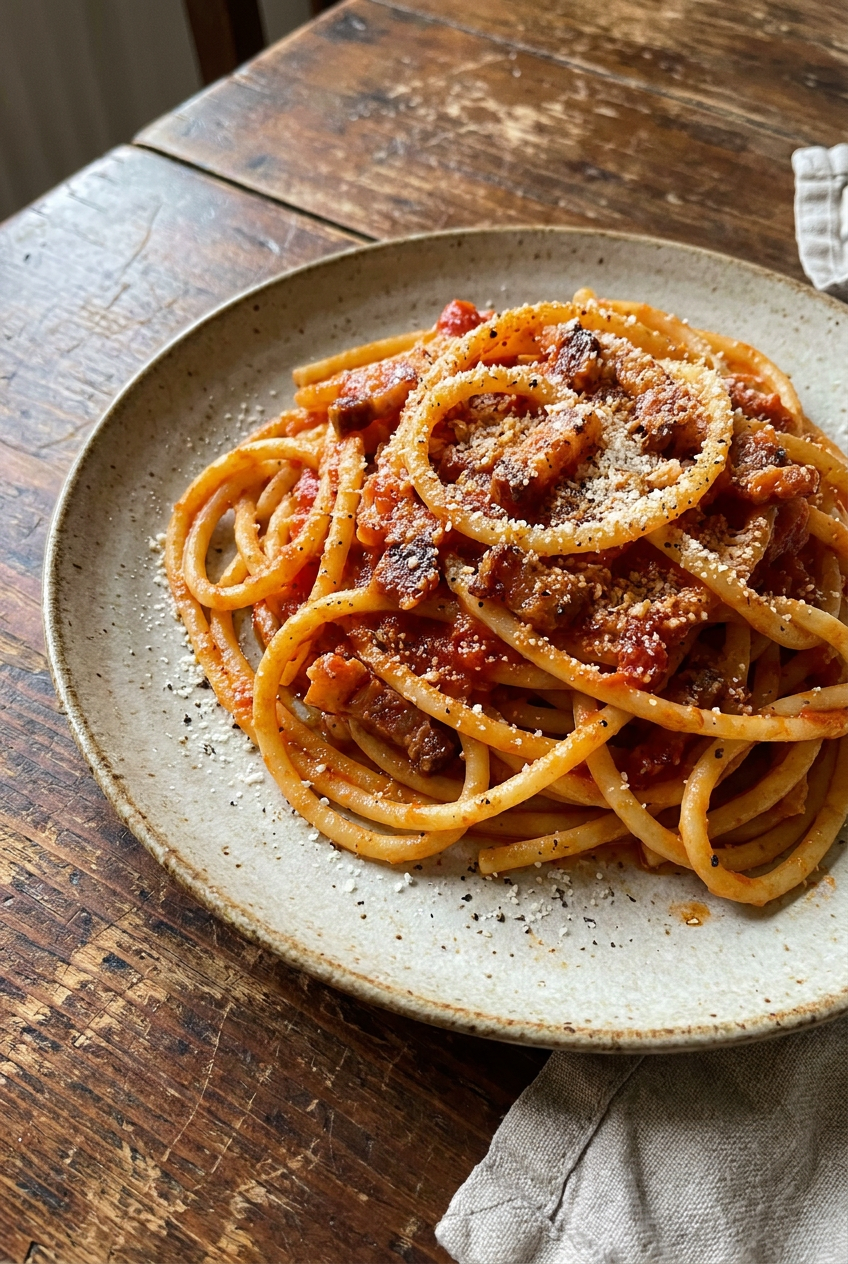
Table of Contents
- Bucatini all’Amatriciana Recipe: A bold, soulful Roman classic where cured pork cheek, tomatoes, and pecorino romano cling to hollow strands of bucatini, delivering pure comfort in every bite
- Why You Will Love This Bucatini all’Amatriciana Recipe
- Your Simple Ingredients for the Perfect Bucatini all’Amatriciana
- How to Make Perfect Bucatini all’Amatriciana
- Pro Tips and Easy Variations for Your Bucatini all’Amatriciana
- Serving Suggestions for a Perfect Dinner
- Nutrition Information
- Storage and Make-Ahead Instructions
- Your Bucatini all’Amatriciana Questions Answered
- More Incredible Italian Recipes to Try
- The Story Behind This Recipe
- Pin This Recipe for Later
Bucatini all’Amatriciana Recipe: A bold, soulful Roman classic where cured pork cheek, tomatoes, and pecorino romano cling to hollow strands of bucatini, delivering pure comfort in every bite
This bucatini all’amatriciana recipe is the dish I crave when I need something that feels both deeply nourishing and completely effortless at the same time. I first ate it in a tiny trattoria near the Pantheon, where the owner brought the pan to the table still hissing and the smell of rendered guanciale filled the entire room. He twisted a forkful of bucatini, speckled with flecks of chili and sharp pecorino, and handed it to me with a grin that said “you’re welcome.” From that first bite, I understood why Romans are so fiercely protective of this recipe. There is a raw honesty in a plate of Amatriciana that no amount of fussy technique can improve, and every time I make it at home, I am right back at that little marble table with a napkin tucked into my collar.
What sets this version apart from others you may have tried is a relentless attention to the small details that transform four humble ingredients into something magical. You start by rendering the guanciale in a completely cold skillet so the fat melts out gradually, leaving behind nubbins of meat that are crisp on the outside and tender within. The tomatoes are crushed by hand, never blended, which keeps the sauce nubby and textured rather than slick and uniform. And the final step, pulling the pan off the heat and tossing in a blizzard of freshly grated pecorino while you add splashes of starchy pasta water, creates a sauce so glossy and cohesive it clings to each hollow strand like it was meant to be there all along. If you have ever made a Moroccan chicken tagine, you already know the rewarding feeling of coaxing deep flavor from a few simple ingredients with patience and care, and this recipe follows that same philosophy.
This is the perfect dinner for a Tuesday evening when you want something that tastes like a restaurant dish but comes together in about 45 minutes from start to finish. It also holds its own when you invite friends over, because few things feel more celebratory than a big platter of pasta covered in a crimson sauce and a snowfall of cheese. I love making it after a long day when I need a quiet moment at the stove, listening to the wine sizzle as it hits the hot pan and watching the tomatoes bubble down into something deep and concentrated. It is a recipe that rewards your presence and gives you back every ounce of effort in the form of pure, unpretentious comfort.
Why You Will Love This Bucatini all’Amatriciana Recipe
- Authentic Roman flavor without a plane ticket. From the first forkful, you will taste the true character of Amatrice, the hill town that gave this dish its name. The combination of funky cured pork, tangy pecorino, and sweet San Marzano tomatoes transports you straight to a trattoria in the Eternal City, and the hollow bucatini strands trap sauce in the most satisfying way.
- Minimal ingredients, maximum impact. You need only a handful of pantry staples—guanciale, tomatoes, pecorino, wine, chili, and pasta—to build a sauce that tastes like it simmered all day. The recipe proves that Italian cooking is all about respecting each ingredient, not hiding them under layers of complexity.
- A one-skillet sauce that feels like a cooking lesson. Every step teaches you a new kitchen technique, from rendering fat in a cold pan to emulsifying cheese off the heat. By the time you finish, you will have the confidence to tackle any pasta you come across, and you will understand exactly why each move matters.
- Completely customizable to what you have on hand. While guanciale and bucatini are the traditional choices, the recipe offers real workable swaps for nights when your pantry is lean. You can use pancetta or even rigatoni and still end up with a deeply satisfying bowl of pasta.
- Weeknight friendly but weekend worthy. The sauce comes together in the time it takes to boil water, so it fits into a busy schedule beautifully. But when you want to linger with a glass of Verdicchio and take your time, the same recipe feels like a leisurely project with an outrageously good payoff.
- The most incredible leftover transformation. If you are lucky enough to have some left, the pasta absorbs the sauce overnight and becomes a magnificent cold pasta for lunch the next day. Reheated gently with a splash of water, it returns to its glossy glory, making you feel like you have cheated time.
Your Simple Ingredients for the Perfect Bucatini all’Amatriciana
For the sauce
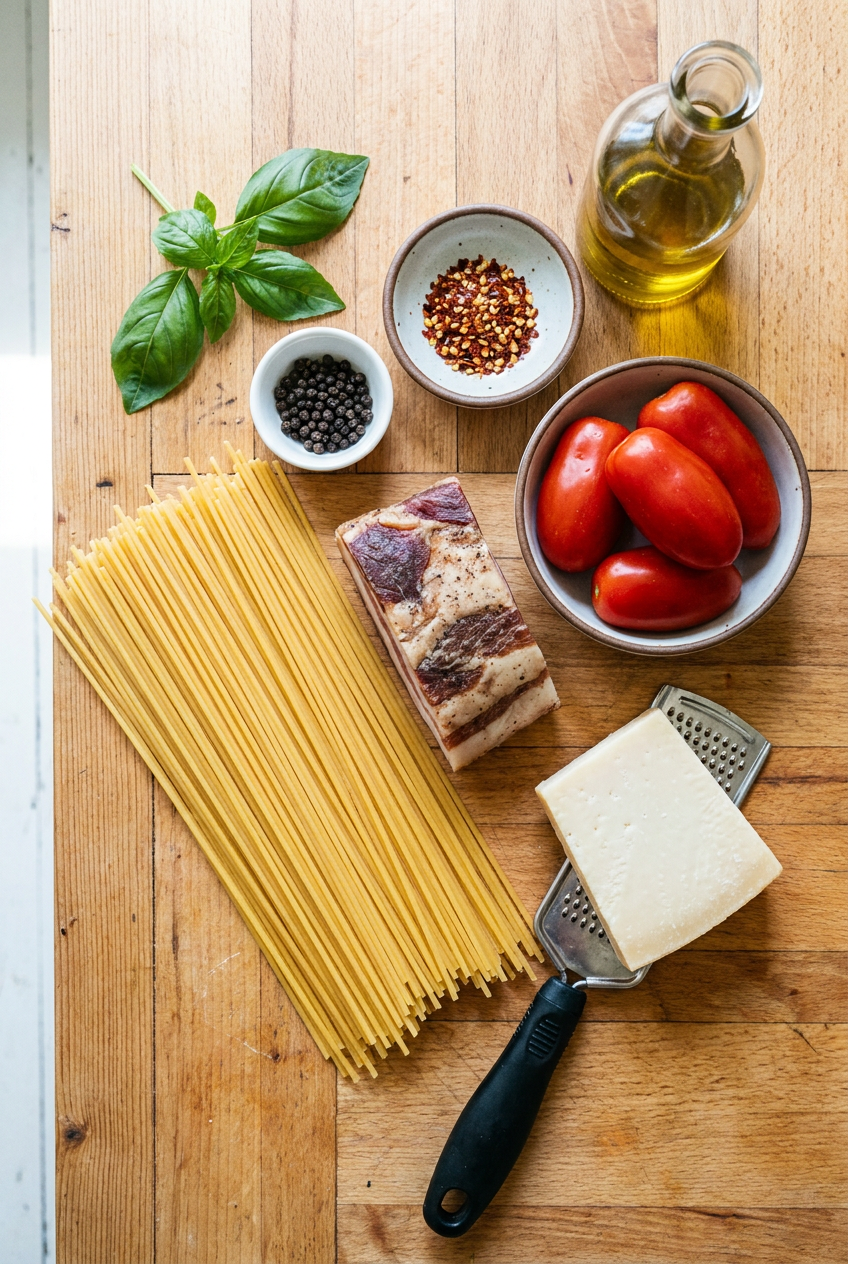
- 6 oz guanciale, rind removed, cut into 1/4-inch thick batons
- 2 tablespoons extra-virgin olive oil (use only if guanciale is lean)
- 1/2 cup dry white wine, such as Frascati or Pinot Grigio
- 1 can (14 oz) whole peeled San Marzano tomatoes, hand-crushed
- 1/2 teaspoon red pepper flakes, adjust to taste
- to taste kosher salt, go easy, pecorino is salty
For the pasta and finishing
- 1 lb bucatini, or rigatoni if unavailable
- 1 1/2 cups finely grated Pecorino Romano, plus more for serving
- as needed freshly ground black pepper, to finish
Ingredient Notes
Guanciale is the heart and soul of this dish. It is cured pork cheek, deeply marbled with fat and seasoned with black pepper, sometimes bay and thyme. That fat melts into a liquid gold that carries the sauce, leaving behind crispy morsels of intensely savory meat. Look for guanciale at an Italian specialty market or a well-stocked deli counter—it should be firm and rosy, with streaks of white fat. If you absolutely cannot find it, flat pancetta cut into batons is the most common substitute, though you will miss the unctuous, velvety mouthfeel guanciale provides.
San Marzano tomatoes are worth seeking out because their naturally sweet, low-acid flesh makes a sauce that tastes like you simmered it for hours. You will crush them by hand, leaving some texture behind rather than turning them into a smooth puree, which gives the final dish a rustic, chunky quality. If San Marzanos are unavailable, use any good-quality whole peeled plum tomatoes from Italy; avoid crushed or diced versions that often contain calcium chloride and can turn the sauce tinny.
Pecorino Romano is the sharp, salty sheep’s milk cheese that defines Amatriciana. It melts differently from Parmesan, lending a tangy, almost grassy punch that balances the rich pork fat. Buy a wedge and grate it yourself just before using; pre-shredded cheeses are coated with starches that interfere with smooth melting and can turn your glossy sauce into a stringy mess. Taste the cheese before you salt anything else, because its saltiness varies widely from producer to producer.
Bucatini is like spaghetti with a hole running through the center, which makes it notoriously fun to eat and spectacular at trapping thin sauces inside the pasta. The long, pliable strands wrap around the chunky tomato sauce and deliver little surprises of crispy guanciale. If bucatini proves elusive, rigatoni is a sturdy substitute whose ridges catch the sauce beautifully. Avoid thin angel hair or capellini, which cannot stand up to the weight of this sauce.
How to Make Perfect Bucatini all’Amatriciana
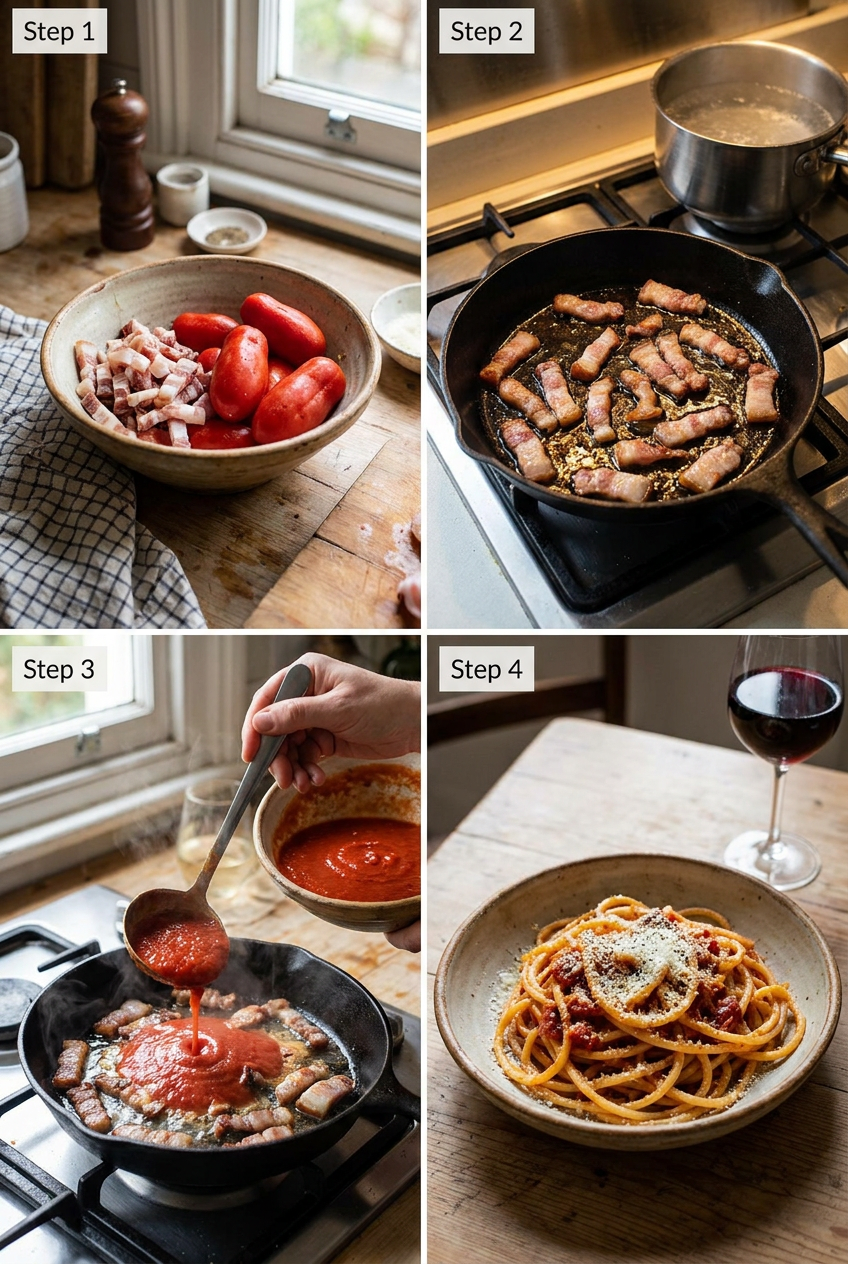
Phase 1: Build the Flavor Base
Render the guanciale
Place the guanciale batons in a cold large skillet, spreading them out so they have room to release their fat without steaming. Set the pan over medium heat and let the temperature rise gradually. You will hear a gentle sizzle after a minute or two, and then the kitchen will start to smell impossibly good. Stir occasionally with a wooden spoon, scraping any bits that stick to the bottom. Cook until the fat is completely translucent, the meat has turned a deep golden brown with crisp edges, and the internal temperature of the guanciale reaches 145°F (63°C). This takes about 8–10 minutes. If your guanciale is particularly lean and the pan looks dry, add a drizzle of olive oil now to help the process along. The goal is to have a shimmering pool of rendered fat studded with crunchy little nuggets of pork.
Pro tip: Starting with a cold pan is not a shortcut—it is the single most important step for perfect guanciale. The gentle heat coaxes out the fat slowly, leaving the meat tender on the inside and crackling on the outside. A hot pan would seize the meat and burn the exterior before the fat had time to melt.
Deglaze and build the base
With the guanciale still in the pan, carefully pour in the white wine. It will bubble up furiously, so stand back for a second. Grab your wooden spoon and scrape up every single browned bit stuck to the skillet’s surface—these are concentrated flavor bombs called fond. Let the wine bubble and reduce until it has almost completely evaporated and the mixture smells sweet and slightly fruity, about 2 minutes. The pan will look glistening and rich, with no watery liquid left behind.
Pro tip: Use a wine you would actually drink. A crisp, dry Italian white like Frascati or an unoaked Pinot Grigio works best because it brightens the sauce without adding sweetness. If you prefer not to use alcohol, you can substitute with an equal amount of chicken or vegetable broth, but you will lose the subtle acidic lift wine provides.
Phase 2: Simmer the Sauce
Add tomatoes and simmer
Open the can of San Marzano tomatoes and pour them into a bowl. Using your clean hands, crush each tomato into irregular chunks, letting the juices spill everywhere. This is a hands-on moment that connects you to the dish. Add the crushed tomatoes and their juices directly into the skillet, along with the red pepper flakes. Stir everything together and bring the sauce to a gentle simmer, then lower the heat so it just barely bubbles. Cook uncovered, stirring every few minutes to prevent sticking, for 15–18 minutes. The sauce will darken slightly, tighten up, and take on a concentrated, almost meaty flavor. Taste it now and add a tiny pinch of salt if needed, but remember the pecorino at the end will bring its own saltiness, so a light hand is crucial. You will know it is ready when a spoon dragged through the sauce leaves a clear path that slowly fills in.
Pro tip: Do not break the tomatoes down too finely. Leaving the pieces chunky gives the finished pasta a wonderful rustic texture and ensures every bite of bucatini has little pockets of tomato to snag onto. If the sauce looks too thick toward the end, loosen it with a splash of pasta water.
Phase 3: Cook the Pasta and Marry Everything
Cook the bucatini
While the sauce simmers, bring a large pot of water to a rolling boil. Salt it generously—this is your only chance to season the pasta from within, so the water should taste like the sea. Drop in the bucatini and cook until it is just shy of al dente, about one minute less than the package instructions indicate. The pasta will finish cooking in the sauce, absorbing flavor and releasing starch. Before you drain anything, scoop out at least 1 1/2 cups of the starchy pasta water with a heatproof measuring cup or ladle. Drain the pasta but do not rinse it; you want all that surface starch to help the sauce cling.
Pro tip: Bucatini has a stubborn habit of splattering sauce when you twirl it, and there’s no graceful way around that. Embrace the mess. A fork in one hand and a spoon in the other is the classic method, but I often just use tongs and lean forward slightly. A napkin across your shirt is a small price to pay for this much flavor.
Combine pasta and sauce
Transfer the drained bucatini directly into the skillet with the simmering tomato sauce. Set the skillet over medium heat and start tossing vigorously with tongs. The sauce may look a bit sparse at first, but that’s where the pasta water comes in. Add a splash or two of reserved water and keep moving the pasta. As you toss, the starch in the water will bind with the fat and tomato juices, creating a glossy, creamy emulsion that coats every strand like a silk robe. Cook for 1–2 minutes, until the pasta reaches perfect al dente and the sauce has tightened up just enough to cling without pooling on the plate.
Pro tip: This technique is the same gentle finishing touch you would use when making blueberry lemon ricotta pancakes, where you fold the batter just until combined and let the residual heat do the final cooking. Here, the pan’s warmth and the pasta water’s starch work together to create the creamiest texture imaginable, so keep the pasta moving and do not be afraid to add more liquid if it looks dry.
Phase 4: The Grand Finale
Finish with pecorino and serve
Remove the skillet from the heat. This is non-negotiable—direct heat will cause the cheese to seize into dreadful little clumps. Immediately sprinkle the finely grated Pecorino Romano over the pasta in several additions, tossing all the while. The residual heat will melt the cheese into a creamy sauce that blankets the bucatini without any stringy or grainy bits. If the mixture still seems thick, add a final splash of pasta water and toss again. Divide the pasta among warm bowls, crack a generous amount of black pepper over each serving, and shower on more pecorino. Hand them to your people right away, while the sauce is still glossy and the guanciale bits are at their crunchiest.
Pro tip: Grate your pecorino on the finest side of a box grater or with a microplane. This ensures it melts almost instantly. If you see any tiny unmelted flecks, keep tossing off the heat; it will smooth out.
Pro Tips and Easy Variations for Your Bucatini all’Amatriciana
Pro Tips
- Always use a cold pan for guanciale. This is the hill I will die on. Dumping the batons into a screaming hot skillet will burn the exterior before the fat renders, leaving you with tough, chewy bits and scorched fond that tastes bitter. Patience here rewards you with meltingly tender meat and a clean-flavored fat base.
- Grate your own pecorino moments before using. Pre-shredded cheese includes anti-caking agents that prevent it from melting smoothly. Grating from a wedge right before you toss the pasta ensures the cheese dissolves into a velvety sauce rather than turning into stubborn little lumps.
- Reserve more pasta water than you think you need. The starch in that cloudy liquid is the secret to a restaurant-quality emulsion. I always scoop out at least a cup and a half, and I often use nearly all of it. Better to have extra than to run out mid-toss and watch your sauce turn thick and gluey.
- Taste before you salt the sauce. Guanciale and pecorino are both heavily seasoned products. Add salt to the tomato sauce only after you have tasted the combined sauce and cheese. Many times I find I need none at all, or just a whisper to brighten the tomatoes.
- Off heat means off heat. Even the lowest flame will scramble the cheese proteins. Pull the skillet completely away from the stove, count to five, and then add the pecorino. This tiny bit of cooling prevents clumping and gives you a perfectly creamy finish.
Delicious Variations
- Pancetta swap. If guanciale is nowhere to be found, use flat pieces of pancetta cut into small strips. You will lose some of the unctuous richness, but the dish will still taste wonderfully savory. Avoid rolled pancetta, which often contains excess water and can steam rather than crisp.
- Roman onion addition. Some Roman households include a small, finely minced onion sautéed in the guanciale fat before adding the wine. This softens the sauce’s personality slightly and adds a gentle sweetness. It is not Amatriciana in the strictest sense, but it is undeniably delicious and a common adaptation in the capital.
- Rigatoni route. When bucatini is sold out or you simply prefer a shorter pasta, rigatoni is the ideal stand-in. Its ridges and tubes capture the sauce just as effectively. You can also use mezze maniche or paccheri for a dramatic presentation.
- Extra heat boost. If you love a tingly kick, double the red pepper flakes or add a fresh red chili pepper sliced thin along with the tomatoes. The heat builds gradually and plays beautifully against the salty cheese.
- Vegan approximation. A plant-based version is a departure from tradition, but you can capture the spirit by using smoked tempeh batons crisp-fried in olive oil, a splash of liquid smoke, and a good vegan hard cheese alternative that melts smoothly. It will not be the same, but it can be a compelling tribute in its own right.
If you are drawn to recipes that feel both special and achievable, you might also enjoy the delicate technique required for fluffy Japanese souffle pancakes, where temperature control makes all the difference between a cloud-like stack and a dense disappointment.
Serving Suggestions for a Perfect Dinner
This pasta is a meal in itself, but a few well-chosen sides can turn it into a complete Italian dinner that feels both generous and balanced. I love serving it with a simple arugula salad dressed in nothing more than lemon juice, extra-virgin olive oil, and flaky sea salt. The peppery greens and bright acidity cut through the richness of the guanciale and cheese, cleansing your palate between bites. A bottle of chilled Verdicchio or a crisp Orvieto is my go-to wine pairing; the dry, slightly almondy notes complement the pecorino beautifully without overpowering the tomatoes. For presentation, warm your serving bowls with a quick rinse of hot water so the pasta stays glossy longer, and do not skimp on that final flurry of black pepper and pecorino right at the table.
This dish shines at casual dinner parties where you want to impress without pretense. Multiply the sauce ingredients easily for a crowd—just use a wider skillet to avoid overcrowding—and let guests serve themselves from a large platter while the arugula salad sits alongside. It is equally perfect for a quiet date night at home, when a simple, soulful plate of pasta and a shared bottle of wine are all you really need. On weeknights, the whole thing comes together so quickly that you can enlist a family member to grate the cheese while you manage the skillet and still sit down together before the evening gets away from you.
Nutrition Information
(Approximate per serving, 4 servings total) Calories: 480, Fat: 18g, Carbohydrates: 58g, Protein: 22g, Fiber: 3g, Sodium: 620mg. Nutritional values are estimates only and will vary depending on the specific brands and quantities used, particularly the saltiness of your guanciale and pecorino.
Storage and Make-Ahead Instructions
- Refrigerator: Store any leftovers in an airtight container for up to 3 days. The pasta will absorb some of the sauce overnight and firm up, so expect a slightly tighter texture. The flavor actually deepens as it rests, making cold leftovers a secret pleasure if you can resist reheating them.
- Freezer: Freeze the sauce only, without the pasta, for the best results. Transfer cooled sauce to a freezer-safe container and freeze for up to 3 months. Thaw overnight in the refrigerator before gently reheating with a splash of water. Cooked pasta tends to turn mushy upon thawing, so I always keep the components separate for freezing.
- Reheating: Reheat leftovers gently in a skillet over medium-low heat with a few tablespoons of water. Toss continuously for about 4 minutes until the pasta is hot and the sauce regains its glossy emulsion. Adding a tiny knob of butter or a drizzle of olive oil can revive the richness. Avoid the microwave if possible, as it can make the cheese break and turn the sauce oily.
- Make-Ahead: You can prepare the tomato sauce up to two days in advance and keep it refrigerated. Warm it slowly in a skillet while the pasta cooks, and proceed with the final tossing steps. Do not add the pecorino ahead of time—it must be folded in off the heat just before serving. The guanciale can be cut into batons and stored covered in the fridge for a day, but rendering it fresh on the day you cook gives the best texture.
Your Bucatini all’Amatriciana Questions Answered
Can I use onion or garlic in Amatriciana?
Authentic Amatriciana from the town of Amatrice forbids both onion and garlic entirely. The sauce gets all of its deep, savory flavor from guanciale, pecorino, tomatoes, and chili. Some Roman interpretations include a little onion for sweetness, but purists insist on the simple original formula, and I agree that the pure flavors shine brightest without them.
Why does my cheese clump when I add it?
Clumping almost always happens for two reasons: the pan is too hot, or the cheese is pre-grated and coated with anti-caking starches. Always remove the skillet from the heat completely and let it rest for a few seconds before adding the pecorino. Grate your cheese from a block right before using, and toss vigorously so the residual heat melts it into a smooth, creamy sauce.
Can I make this bucatini all’amatriciana recipe vegetarian?
Traditional Amatriciana relies deeply on pork for its soul, but you can create a plant-based homage by replacing the guanciale with smoked tempeh batons or thick slices of roasted mushroom, plus a tiny dash of liquid smoke to mimic the cured meaty depth. Use a vegetarian hard cheese that melts well in place of Pecorino Romano, though be aware Pecorino is made with animal rennet unless specified otherwise.
What if I cannot find bucatini?
Rigatoni is your best friend in this situation. Its wide tubes and ridges catch the chunky tomato sauce beautifully, and it holds up well to tossing. Thick spaghetti or pici also work, though you lose some of the hollow core magic. The dish will still taste incredible with any sturdy, ridged pasta shape.
Is there a way to make this dish less spicy?
The red pepper flakes provide a gentle warmth rather than aggressive heat, but you can reduce the amount to a scant pinch or omit them completely. The sauce will still taste robust from the guanciale and pecorino. If you are cooking for someone very sensitive to spice, simply pass extra chili on the side so everyone can adjust their own bowl.
Can I use Parmesan instead of Pecorino Romano?
You can, but the result will taste noticeably different. Pecorino Romano is sharper and saltier than Parmesan, giving the sauce its characteristic punch. Parmesan is milder and nuttier, so the dish will lose some of its Roman edge. If you must swap, use a high-quality Parmigiano-Reggiano and be prepared for a softer, less tangy finish.
How do I know when the sauce has reduced enough?
The sauce is ready when it has visibly darkened and tightened, and a spoon drawn through it leaves a trail that slowly fills in. It should not be watery or soupy. Tasting is your best tool; the tomato flavor should be concentrated and sweet, with no raw acidity. If it still tastes sharp, let it bubble a few more minutes.
What is the best wine to cook with for this recipe?
A dry Italian white wine like Frascati, Orvieto, or an unoaked Pinot Grigio works beautifully. These wines add acidity and brightness without overwhelming the sauce with fruity or oaky notes. Avoid sweet wines, which will throw the flavor off balance, and always use a wine you enjoy drinking on its own.
More Incredible Italian Recipes to Try
If this bucatini all’amatriciana recipe made your evening feel a little more Roman, you should absolutely explore the world of comforting Italian pasta dishes that rely on the same honest, ingredient-first approach. A classic cacio e pepe uses only pecorino, pepper, and pasta water to create a creamy tangle that feels like pure alchemy. Gricia is Amatriciana’s close cousin, skipping the tomatoes entirely and focusing on the intense duo of guanciale and pecorino for an even more concentrated punch of porky, salty goodness. And if you enjoy the saucy, unctuous quality of the rendered fat, pasta alla carbonara will feel like a natural next step, where eggs and cheese come together to form a silky coating that rivals any cream sauce you have ever tasted.
For those times when you want to
Bucatini all'Amatriciana
Ingredients
Method
- Place guanciale batons in a cold large skillet. Set over medium heat and cook, stirring occasionally, until the fat renders, the meat turns golden and crisp, and the internal temperature reaches 145°F (63°C), about 8–10 minutes. If the guanciale is very lean, add a drizzle of olive oil.
- Carefully pour in the white wine, scraping up any browned bits from the bottom of the skillet. Let it bubble and reduce by half, about 2 minutes.
- Stir in the hand-crushed tomatoes and red pepper flakes. Bring to a gentle simmer, then reduce heat to low. Cook uncovered, stirring occasionally, for 15–18 minutes until the sauce thickens slightly and the flavors meld. Taste and add a tiny pinch of salt if needed (pecorino will add saltiness later).
- Meanwhile, bring a large pot of well-salted water to a rolling boil. Cook the bucatini until just shy of al dente (about 1 minute less than package instructions). Reserve 1 1/2 cups of starchy pasta water before draining.
- Add the drained bucatini directly to the skillet with the sauce. Toss vigorously with tongs over medium heat, gradually adding splashes of reserved pasta water to create a glossy, emulsified coating. Cook for 1–2 minutes until the pasta finishes cooking and the sauce clings to every strand.
- Remove the skillet from heat. Immediately sprinkle the finely grated Pecorino Romano over the pasta in several additions, tossing continuously until the cheese melts into a creamy, non-clumpy sauce. Divide among warm bowls, finish with a generous grinding of black pepper and extra pecorino on top. Serve instantly.
Disclosure: This post may contain affiliate links. If you purchase through our links we may earn a small commission at no extra cost to you.
If you made this Bucatini all’Amatriciana, please leave a comment below and let me know how it turned out.