Lemon Garlic Shrimp Linguine Recipe, Easy Italian Dinner in 35 Minutes
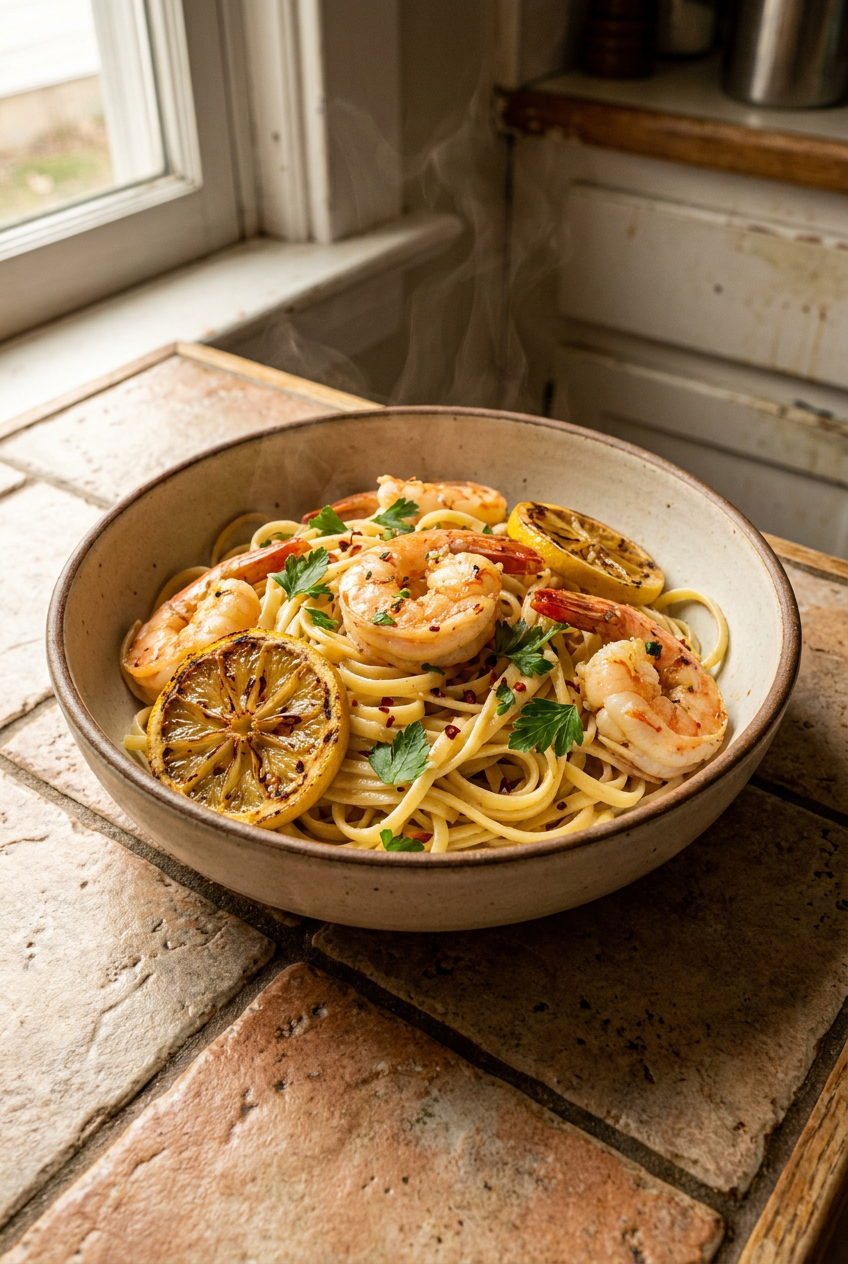
Table of Contents
- Lemon Garlic Shrimp Linguine: Bright Lemon, Garlicky Shrimp, and Al Dente Linguine Come Together in This Quick and Elegant Dinner
- Why You Will Love This Lemon Garlic Shrimp Linguine Recipe
- Your Simple Ingredients for the Perfect Lemon Garlic Shrimp Linguine
- How to Make Perfect Lemon Garlic Shrimp Linguine
- Pro Tips and Easy Variations for Your Lemon Garlic Shrimp Linguine
- Serving Suggestions
- Nutrition Information
- Storage and Make-Ahead Instructions
- Your Lemon Garlic Shrimp Linguine Questions Answered
- More Incredible Italian Recipes to Try
- The Story Behind This Recipe
- Pin This Recipe for Later
Lemon Garlic Shrimp Linguine: Bright Lemon, Garlicky Shrimp, and Al Dente Linguine Come Together in This Quick and Elegant Dinner
This lemon garlic shrimp linguine recipe has been my weeknight hero for as long as I can remember. I still recall the first time I made it, a frantic Tuesday when the fridge looked bare except for a bag of frozen shrimp and a lone lemon. I wanted something that felt special, not just another throw together meal. The moment I tossed the glossy linguine with that buttery, garlicky sauce and the perfectly pink shrimp, I knew I had stumbled onto something magical. The whole kitchen smelled like a seaside trattoria, and that first twirl of pasta, slick with bright lemon and punctuated by bites of succulent shrimp, made me close my eyes and smile. It was restaurant quality food on a random weeknight, and I felt like a kitchen hero. That memory is exactly why this dish has become a staple, it proves that a handful of honest ingredients can create something truly memorable with very little effort.
What sets this particular lemon garlic shrimp linguine apart is all in the technique and the uncompromised freshness of a few key elements. We sear the shrimp in a hot pan until just pink and tender, building a layer of savory fond that becomes the foundation of the sauce. Then we harness the alchemy of starchy pasta water, fresh lemon juice, and cold butter to create an emulsion that coats every strand of linguine in a silky, luminous glaze. There is no heavy cream, no complicated roux, just a clarity of flavor that lets each ingredient shine. The brightness of real lemon zest, the gentle heat of red pepper flakes, and the salty depth of good Parmesan all pull their weight without any one element steamrolling the others. It is a masterclass in simple, confident cooking, and once you make it this way, you will never look at a shrimp pasta dish the same way again.
This recipe is tailor made for anyone who craves a dinner that feels fancy but is secretly straightforward. Are you hosting a last minute date night? This is your dish. Impromptu dinner guests ringing the doorbell? This is your dish. Exhausted after a long workday and in need of something genuinely delicious in under 35 minutes? This is your dish. It is endlessly adaptable, whether you need to swap in a different pasta shape or add a handful of fresh greens, and the bright, clean flavors please just about every palate. If you enjoy the way citrus can lift a dish into something special, you might also love my blueberry lemon ricotta pancakes for a weekend brunch that shares the same cheerful, sunny spirit.
Why You Will Love This Lemon Garlic Shrimp Linguine Recipe
- Incredibly fast and efficient. From start to finish you are looking at about 35 minutes for a complete, company worthy dinner. The pasta water goes on to boil while you prep the shrimp and mince the garlic, so every minute is used wisely.
- Bright, fresh flavor that wakes up your taste buds. Real lemon juice and zest provide a vibrant pop that cuts through the richness of butter and Parmesan. It is a dish that tastes like sunshine, even on a dreary winter evening.
- A foolproof lesson in sauce building. You will learn the magic of using reserved pasta water to create a silky, clingy sauce without a drop of cream. It is a technique that will elevate every pasta dish you cook from now on.
- Perfectly cooked shrimp every single time. By patting them dry and searing them quickly in a single layer, you lock in their natural sweetness and achieve that irresistible gently curled, pink and white appearance. There are no rubbery, overcooked shrimp to worry about here.
- Made with simple, pantry friendly ingredients. Chances are you already have garlic, butter, Parmesan, and red pepper flakes on hand. A quick stop for fresh shrimp, a lemon, and a bunch of parsley, and you are in business.
- Easily customizable for different occasions. Add a handful of baby spinach for a green note, swap in scallops for an extra luxurious twist, or double the recipe to feed a hungry crowd. The foundation is so solid that it welcomes creative tweaks.
Your Simple Ingredients for the Perfect Lemon Garlic Shrimp Linguine
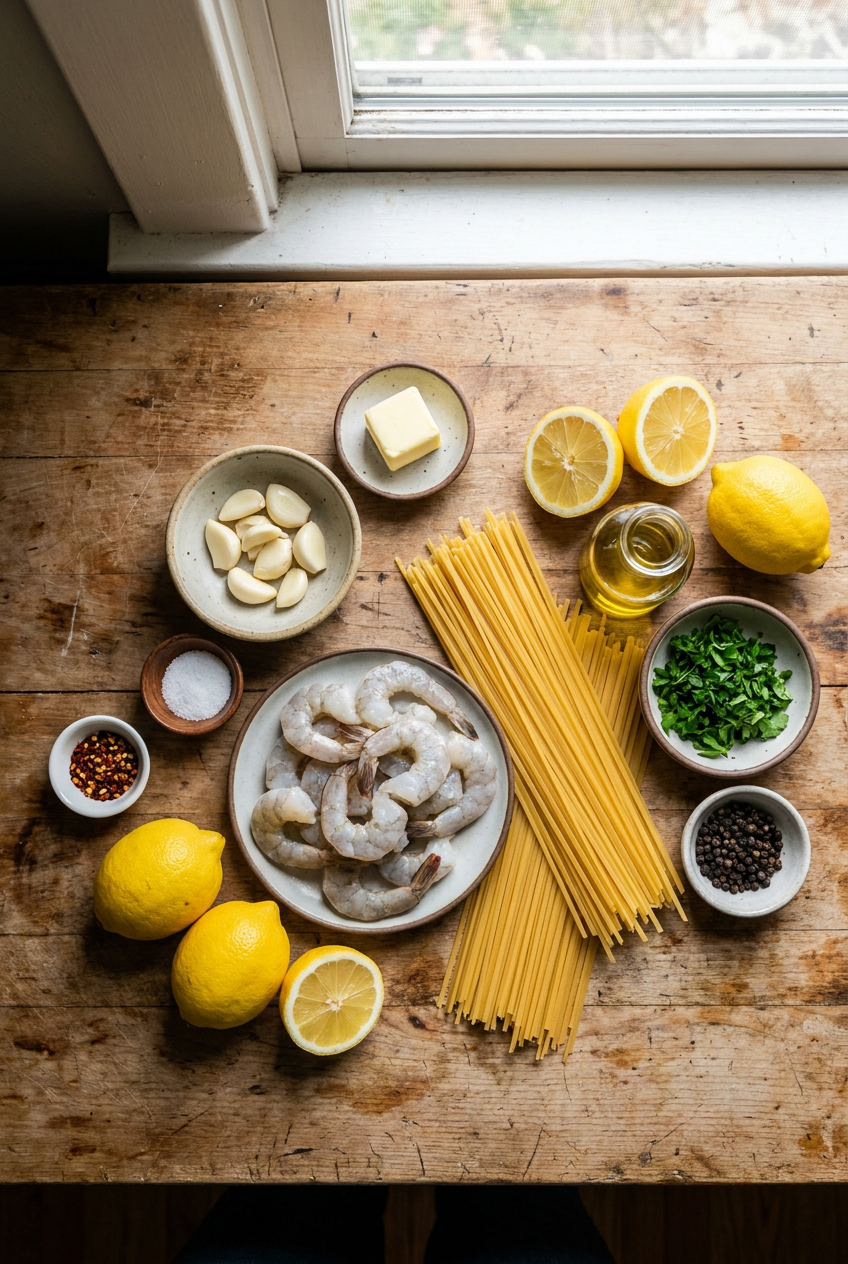
Pasta
- 1 lb dry linguine
- 1 tbsp salt (for pasta water)
Shrimp
- 1 lb large shrimp, peeled and deveined
- 1/2 tsp salt
- 1/4 tsp black pepper
- 1 tbsp olive oil (for cooking shrimp)
Sauce
- 3 tbsp unsalted butter, divided
- 4 cloves garlic, minced
- 1/2 tsp red pepper flakes, adjust to taste
- 1/4 cup fresh lemon juice (about 2 lemons)
- 1 tbsp lemon zest (from 1 lemon)
- 1/2 cup reserved starchy pasta water
- 1/3 cup grated Parmesan cheese, plus more for serving
Garnish
- 1/4 cup fresh parsley, chopped
- 1 lemon, cut into wedges
Ingredient Notes
Linguine. The long, flat shape of linguine is superb at catching the light lemon butter sauce in every crevice. When shopping, look for a high quality durum wheat semolina brand that will cook up pleasantly al dente. If you cannot find linguine, fettuccine or spaghetti are excellent substitutes, though keep in mind that spaghetti will yield a slightly more delicate mouthfeel.
Shrimp. Large shrimp, often labeled 21/25 count per pound, provide the best meaty bite and don’t get lost among the pasta strands. Always buy shrimp that are peeled and deveined for convenience, or do it yourself if you prefer. If using frozen shrimp, thaw them completely in the refrigerator overnight, then pat them exceptionally dry with paper towels. Any lingering moisture will steam the shrimp instead of searing them, and you will miss out on that lovely golden crust.
Fresh garlic. Mincing garlic just before it hits the pan ensures the most potent and aromatic flavor. Pre-minced jarred garlic can taste harsh and tinny, so a fresh bulb is well worth the extra minute. The key is to cook it just until it becomes fragrant, roughly 30 seconds, because burned garlic turns bitter and will overshadow the entire dish.
Lemon juice and zest. Freshly squeezed lemon juice is non negotiable here. The bottled stuff carries a flat, slightly metallic note that cannot replicate the bright, sunny character of the real fruit. Zest the lemon before you juice it, and be sure to only grate the yellow part, the white pith underneath is unpleasantly bitter. For an even more intense lemon presence, you can gently rub the zest into the butter before melting it.
Parmesan cheese. This ingredient adds a savory depth and helps thicken the sauce. Always grate your own from a block rather than using pre-shredded cheese, as the pre-packaged kind contains anti-caking agents that prevent it from melting smoothly. A microplane zester is my favorite tool for achieving fluffy, easily meltable shreds that disappear into the sauce.
Reserved pasta water. This is the secret weapon of any great pasta dish. As the linguine cooks, the water becomes cloudy with starch, and when added to the skillet, it acts as an emulsifier that binds the fat from the butter and the lemon juice into a cohesive, creamy coating. Always scoop out a cup just before draining, and use it warm so it blends effortlessly.
How to Make Perfect Lemon Garlic Shrimp Linguine
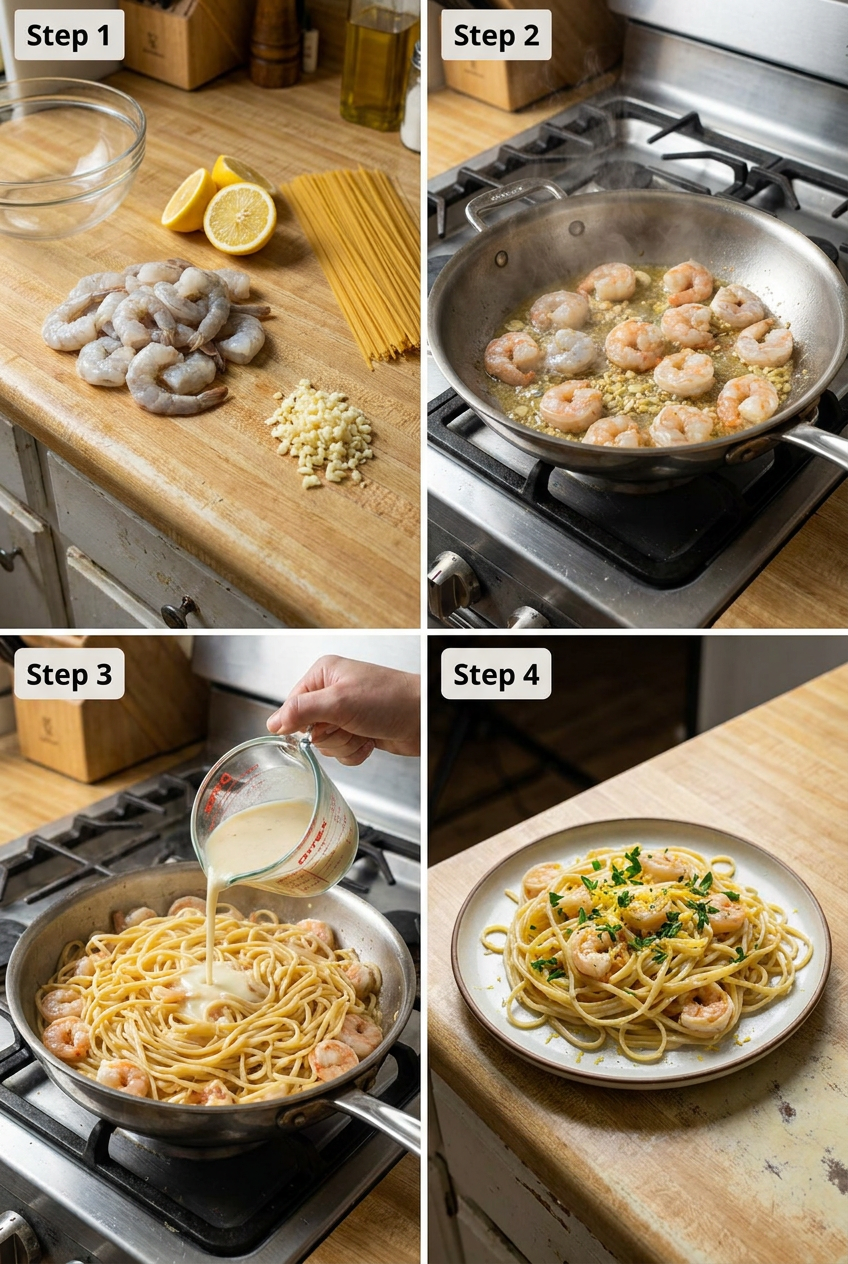
Phase 1: Cook the Pasta
Fill a large pot with water, at least 5 quarts, and bring it to a rolling boil over high heat. When the water is dancing vigorously, add 1 tablespoon of salt. This is your only chance to season the actual pasta, so the water should taste pleasantly like the sea. Slide in the dry linguine and give it a stir to prevent sticking. Cook according to the package directions, tasting the pasta a minute before the suggested time. You want it to be al dente, meaning tender with a slight firmness at the center. Al dente is crucial because the pasta will continue to cook when tossed in the hot sauce later. Just before draining, carefully dip a heatproof measuring cup into the pot and scoop out about 1 cup of that cloudy, starchy pasta water. Set it aside. Drain the linguine in a colander but do not rinse it, you want to keep the surface starch intact so the sauce can cling.
Phase 2: Sauté the Shrimp
While the pasta is cooking, pat the shrimp completely dry with paper towels. This step is non negotiable if you want a beautiful sear. Season the shrimp on both sides with the salt and black pepper. Place a large skillet over medium-high heat and add the olive oil. Once the oil shimmers and you can see wisps of smoke, carefully arrange the shrimp in a single layer with some space between each one. Overcrowding the pan will drop the temperature quickly and cause the shrimp to steam rather than brown, so work in batches if needed. Cook the shrimp undisturbed for 1 to 2 minutes on the first side until the edges turn pink and a golden crust starts to form. Then flip them with tongs and cook for another 1 to 2 minutes on the second side. The shrimp are done when they curl into a gentle C shape, are fully opaque, and register 145 degrees Fahrenheit on an instant read thermometer. Transfer them to a plate and tent loosely with foil to keep warm.
Phase 3: Build the Sauce
Turn the heat under the skillet down to medium. Add 2 tablespoons of the unsalted butter and let it melt, swirling the pan. As it foams, toss in the minced garlic and red pepper flakes. Stir constantly with a wooden spoon and watch closely. After about 30 seconds, the kitchen will fill with a heady garlic aroma. That is your cue, any longer and the garlic risks turning acrid. Immediately pour in the fresh lemon juice, the lemon zest, and the half cup of reserved pasta water. Scrape up any browned bits from the bottom of the pan with your spoon, those little flecks are packed with flavor. Let the mixture come to a gentle simmer and bubble away for about 2 minutes. You will notice the liquid begin to look slightly thicker and more glossy. This is the emulsion forming, the starch from the pasta water is marrying with the butter to create a silky sauce base. Much like the slow buildup of flavors in my Moroccan chicken tagine, this technique relies on patience and the right liquid to transform simple ingredients into something deeply satisfying.
Phase 4: Combine and Finish
Add the drained linguine directly into the skillet. It will seem like a lot, but trust the process. Drop in the remaining 1 tablespoon of butter and sprinkle the grated Parmesan over the top. Using tongs, start tossing the pasta vigorously, lifting and turning it so that every strand gets slicked with the sauce. The butter and cheese will melt into a creamy veil, and the sauce will cling to the pasta rather than pooling at the bottom. Fold in the cooked shrimp and most of the chopped parsley, reserving a small handful for garnish. Give the mixture one final toss. If at any point the pasta looks too tight or dry, splash in another tablespoon or two of the reserved pasta water to loosen it up. The sauce should be glossy, light, and coat the linguine evenly. Taste and adjust with an extra pinch of salt or a few more red pepper flakes if you like a spicier kick. Plate immediately while it is at its silkiest.
Pro Tips and Easy Variations for Your Lemon Garlic Shrimp Linguine
Pro Tips
- Pat the shrimp bone dry. Any surface moisture will instantly turn to steam in the hot pan, preventing that golden brown sear. Lay the shrimp out on a paper towel lined plate and press gently before seasoning. It makes a world of difference.
- Warm your plates before serving. This sounds fussy but it is a tiny step that keeps the pasta from cooling down too fast. Run the plates under hot water for a minute, dry them off, and the dish stays luxuriously warm from first bite to last.
- Time the pasta to finish right as the sauce comes together. Aim to drain the linguine just a minute before you need to toss it in the skillet. Pasta that sits in a colander for several minutes can congeal and become stodgy; hot and freshly drained is the way to go.
- Grate cheese with a microplane. A microplane produces fine, fluffy shreds that melt almost instantly when they hit the hot pasta, disappearing into the sauce instead of clumping. It also gives you a light, airy texture that feels more luxurious.
- Do not skip the lemon zest. The zest contains aromatic oils that provide a deeper, more perfumed lemon flavor than juice alone. Zesting directly over the skillet captures those tiny volatile droplets of oil that would otherwise be lost on a cutting board.
If you enjoy the attention to detail that makes this dish sing, you might find the same rewarding precision in my fluffy Japanese souffle pancakes, another recipe where technique transforms humble ingredients into something dreamy.
Delicious Variations
- Greens and vegetables. Stir a generous handful of fresh baby spinach into the hot pasta just before serving and let it wilt gently in the residual heat. Blanched asparagus tips or sweet peas also bring a beautiful pop of color and a tender crunch.
- Scallop and shrimp duo. Replace half of the shrimp with sea scallops for an extra decadent version. Sear the scallops just like the shrimp, making sure they have a deep golden crust on each side, then slice them in half before folding into the pasta.
- Spicy arrabbiata twist. Increase the red pepper flakes to a full teaspoon and add a spoonful of tomato paste to the garlic mix before deglazing with lemon juice. The result is a punchier, slightly rosy sauce that still keeps its bright lemon core.
- Herb garden finish. In addition to parsley, toss in a shower of fresh basil ribbons and a few snipped chives right at the end. The aromatic herbs lift the entire dish and give it an almost pesto like freshness.
- Creamy version. For special occasions, stir in two tablespoons of heavy cream along with the pasta water. It makes the sauce extra velvety while still allowing the lemon and garlic to be the stars.
Serving Suggestions for a Perfect Dinner
The beauty of this lemon garlic shrimp linguine is that it stands proudly on its own, but a few well chosen sides can turn it into a memorable feast. A basket of warm, crusty garlic bread is practically mandatory for sopping up every last drop of the glossy lemon butter sauce. On the side, a simple arugula salad dressed with a squeeze of lemon, a drizzle of olive oil, and thin shavings of Parmesan mirrors the flavors in the pasta and adds a crisp, peppery contrast. For drinks, a chilled glass of Pinot Grigio or a lightly oaked Chardonnay matches the shrimp’s sweetness and the citrusy sauce without overwhelming it. If you prefer something non alcoholic, sparkling water with a splash of lemon and a sprig of rosemary feels festive and keeps the palate clean.
This recipe is a natural fit for a relaxed date night, a small dinner party with close friends, or even a quick solo meal that feels like a treat. To serve a crowd, simply double the ingredients and cook the shrimp in batches so you still achieve a proper sear. You can hold the cooked shrimp and pasta in a warm oven for a few minutes while you finish the sauce, then toss everything together in a large serving bowl. Because it comes together so swiftly, it is also a wonderful option for a weeknight when you need something special to celebrate a small win or just to remind yourself that dinner can be both easy and extraordinary.
Nutrition Information
(Approximate per serving, 4 servings total) Calories: 540, Fat: 16g, Carbohydrates: 65g, Protein: 32g, Fiber: 3g, Sodium: 720mg. Nutritional values are estimates only.
Storage and Make-Ahead Instructions
- Refrigerator: Store leftovers in an airtight container in the refrigerator for up to 3 days. The pasta will absorb some of the sauce, but it will still taste lovely. Keep in mind the shrimp are best enjoyed when fresh, and their texture may soften slightly over time.
- Freezer: Freezing is not recommended for this dish. The pasta tends to become mushy upon thawing, and the shrimp can turn rubbery. If you must freeze, do so only with the sauce base without the pasta and shrimp, then cook fresh pasta and shrimp when ready to serve.
- Reheating: Gently reheat the pasta in a skillet over medium heat with a splash of water or chicken broth. Toss frequently until warmed through. The microwave is also an option, but use half power and stop to stir every 30 seconds to prevent uneven heating and tough shrimp.
- Make-Ahead: You can prep the shrimp by peeling, deveining, and patting them dry a day in advance, then store them in the refrigerator on a paper towel lined plate covered with plastic wrap. Mince the garlic, zest and juice the lemon, and grate the Parmesan, keeping everything in separate sealed containers. When it is time to cook, the assembly moves at lightning speed.
Your Lemon Garlic Shrimp Linguine Questions Answered
Can I use frozen shrimp for this recipe?
Absolutely. Thaw the shrimp completely in the refrigerator overnight, then drain any accumulated liquid and pat them very dry with paper towels. Any excess moisture will prevent a proper sear, so take your time with this step. The results will be just as good as fresh shrimp.
What pasta can I substitute if I don’t have linguine?
Fettuccine, spaghetti, or even angel hair are all excellent substitutes. Fettuccine offers a similar broad surface for the sauce to cling to, while spaghetti and angel hair will make the dish feel lighter. Adjust the cooking time based on the package directions and always aim for al dente.
How do I make this dairy free?
Replace the butter with an equal amount of high quality extra virgin olive oil or a plant-based butter alternative. Omit the Parmesan or use a good vegan Parmesan or nutritional yeast to add a cheesy savory note. The sauce will still emulsify beautifully thanks to the pasta water.
How do I know when the shrimp are perfectly cooked?
Shrimp cook very quickly. Look for a gentle C shaped curl, an opaque pink and white color throughout, and an internal temperature of 145 degrees Fahrenheit. If they form a tight O shape, they are overcooked and may be tough. Remove them from the pan the moment they lose their translucency.
My sauce seems thin. What can I do?
Let the sauce simmer a minute longer to reduce and thicken, and be sure you are using the starchy pasta water, which is key to the emulsion. Adding the cold butter and Parmesan off the heat and tossing vigorously also helps. If it still feels thin, a touch more freshly grated Parmesan can bring it together.
Can I add vegetables to this dish?
Yes, and they would be a welcome addition. Toss in a few handfuls of baby spinach at the end and let it wilt from the residual heat. Steamed broccoli florets, sautéed zucchini ribbons, or roasted cherry tomatoes also work beautifully and turn this into a more rounded one dish meal.
Is it okay to use bottled lemon juice?
I strongly advise against it. Bottled lemon juice has a flat, slightly metallic taste that cannot compare to the bright, aromatic quality of fresh lemons. Fresh juice also contains natural oils that boost the sauce’s complexity. One squeeze of the real thing makes a noticeable difference.
How can I reduce the sodium in this dish?
Use unsalted butter and low sodium or no salt added Parmesan, and adjust the amount of salt in the pasta water slightly. Taste as you go, especially with the shrimp seasoning. The dish will still be flavorful from the garlic, lemon, and herbs, even with less salt.
Can I prepare this dish ahead of time for a party?
It is best served immediately for optimal texture. However, you can cook the shrimp ahead and hold them at room temperature, cook the pasta and toss with a little olive oil to prevent sticking, then quickly reheat everything in the sauce just before serving. This keeps the assembly fast while preserving quality.
What is the best wine to serve with lemon garlic shrimp linguine?
A crisp, dry white wine like Pinot Grigio, Sauvignon Blanc, or an unoaked Chardonnay pairs wonderfully. The citrus and acidity in the dish echo the wine’s bright notes, and the wine’s freshness cuts through the richness of the butter and Parmesan. For a celebratory touch, Prosecco also works beautifully.
More Incredible Italian Recipes to Try
If the combination of succulent seafood and al dente pasta makes your heart sing, there is a whole world of Italian dinners waiting for you. A classic spaghetti alle vongole, with its briny clams and white wine garlic sauce, delivers a similar quick elegance and leans heavily on the same starchy water technique. For a cozy night in, nothing beats a plate of creamy mushroom risotto, where the gradual addition of stock yields an impossibly creamy texture without a drop of cream, much like our emulsified sauce here. And if you are in the mood for a baked comfort dish, a bubbling tray of classic eggplant Parmesan offers rich, hearty satisfaction that still celebrates bright tomato and herb flavors.
You might also love dishes that lean into that beloved lemon and butter pairing. Chicken piccata, with its tangy caper studded sauce, shares the same sunny personality and comes together just as quickly on a busy evening. For something entirely different but equally joyful, a simple lemon olive oil cake for dessert carries the citrus theme through to the end of the meal and is a delicate, fragrant way to finish. The world of Italian cooking is generous and welcoming, and each recipe teaches a new little kitchen lesson that you will carry with you for years.
The Story Behind This Lemon Garlic Shrimp Linguine
This dish traces its roots back to Italian-American shrimp scampi, which originally referred to langoustines cooked in oil and garlic and served simply. As Italian immigrants adapted their traditions to the ingredients they found in America, shrimp became more readily available and linguine entered the picture, creating a beloved staple that felt both rustic and celebratory. The addition of lemon and butter was a natural evolution, brightening the richness and giving the dish the kind of vibrancy that makes it timeless.
In my own kitchen, this recipe became a symbol of resourcefulness and joy. It represents the idea that you do not need a cart full of expensive groceries or hours of prep to serve something that tastes like a special occasion. Every time I smell garlic hitting the warm butter and see that lemon zest scatter like confetti, I am reminded of that chaotic Tuesday when I pulled together dinner from almost nothing and sat down feeling like I had given myself a gift. That is the real magic of this lemon garlic shrimp linguine. It is more
Lemon Garlic Shrimp Linguine
Ingredients
Method
- Bring a large pot of water to a boil. Add 1 tablespoon salt and the linguine. Cook according to package directions until al dente. Reserve 1 cup pasta water, then drain and set aside.
- While the pasta cooks, pat the shrimp dry and season with salt and pepper. In a large skillet over medium-high heat, heat 1 tablespoon olive oil. Add the shrimp in a single layer and cook for 1-2 minutes per side until pink, opaque, and reach an internal temperature of 145°F (63°C). Transfer to a plate.
- Reduce heat to medium. In the same skillet, melt 2 tablespoons butter. Add garlic and red pepper flakes; cook until fragrant, about 30 seconds. Stir in lemon juice, lemon zest, and 1/2 cup reserved pasta water. Simmer for 2 minutes to blend flavors.
- Return the cooked linguine to the skillet. Add the remaining 1 tablespoon butter and the Parmesan. Toss with tongs until the pasta is well coated and the sauce has thickened slightly. Fold in the cooked shrimp and most of the parsley, reserving some for garnish.
- Divide among warm plates, twirling portions into neat nests. Sprinkle with remaining parsley, extra Parmesan, and serve with lemon wedges.
Disclosure: This post may contain affiliate links. If you purchase through our links we may earn a small commission at no extra cost to you.
If you made this Lemon Garlic Shrimp Linguine, please leave a comment below and let me know how it turned out.