Classic Homemade Egg Pasta Dough Recipe, Easy Italian Dinner in 1 Hour
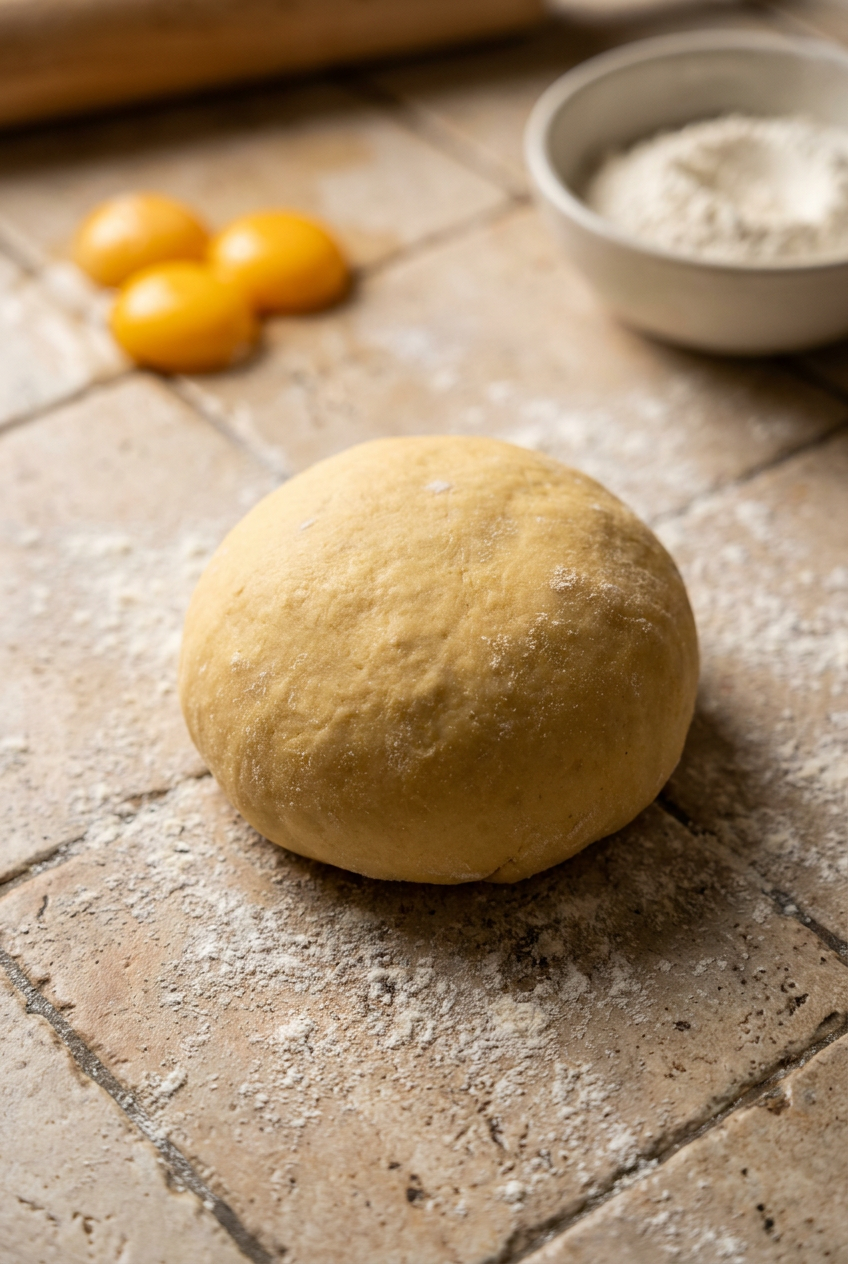
Table of Contents
- Classic Homemade Egg Pasta Dough: Silky, Tender Fresh Pasta Made From Just Three Simple Ingredients
- Why You Will Love This Classic Homemade Egg Pasta Dough Recipe
- Your Simple Ingredients for the Perfect Classic Homemade Egg Pasta Dough Recipe
- How to Make Perfect Classic Homemade Egg Pasta Dough
- Pro Tips and Easy Variations for Your Classic Homemade Egg Pasta Dough
- Serving Suggestions for a Perfect Italian Dinner
- Nutrition Information
- Storage and Make-Ahead Instructions
- Your Classic Homemade Egg Pasta Dough Questions Answered
- More Incredible Italian Recipes to Try
- The Story Behind This Classic Homemade Egg Pasta Dough
- Pin This Classic Homemade Egg Pasta Dough Recipe for Later
Classic Homemade Egg Pasta Dough: Silky, Tender Fresh Pasta Made From Just Three Simple Ingredients
This classic homemade egg pasta dough recipe is the kind of kitchen project that transforms an ordinary evening into something magical. I still remember the first time I upended a bag of flour onto my countertop, carved out a little volcano, and cracked three perfect eggs into the center. There was a quiet thrill in watching that golden puddle settle, the gentle scent of fresh flour and the quiet promise that in under an hour I would be eating pasta so silky and tender it would ruin me for the boxed stuff forever. That first bite, dressed in nothing but melted butter and a snowfall of Parmesan, tasted like achievement. Since then, this dough has become my Sunday afternoon ritual, a meditative act that connects me to generations of home cooks who understood that the simplest ingredients, handled with care, create the most profound comfort. Making fresh pasta is never just about the food; it is about slowing down, getting your hands dusty, and feeding the people you love something you crafted from scratch.
What sets this particular classic homemade egg pasta dough recipe apart is its utter simplicity and reliability. There are no obscure flours to hunt down, no specialty equipment required beyond a rolling pin and a bit of determination. The dough relies on the humble alchemy of all-purpose flour, room-temperature eggs, a glug of olive oil, and a pinch of salt. Yet within that short ingredient list lives an entire world of texture and flavor. The technique is gentle: you build a flour well, slowly incorporate the eggs, and then knead until the dough transforms under your palms into a smooth, elastic ball that feels like a living thing. The resting period, something so many rushed recipes skip, is the quiet secret that allows the gluten to relax and ensures your pasta sheets roll out paper-thin without ever snapping back. When you taste the result, you get that elusive al-dente bite that is firm yet giving, a noodle that clings to sauce like it was made for it, because it was.
This recipe is for anyone who has ever wanted to feel like a true Italian nonna in their own kitchen. It is perfect for a date night where you want to impress without stress, for a lazy weekend when the whole family can take turns cranking the pasta machine, or for those moments when you need a dinner that says “I care” loud and clear. If you have ever found peace in the rhythmic process of making something from nothing, you will understand the quiet joy of this dough. I often think about another simple, soulful project that delivers the same sense of wonder: fluffy Japanese souffle pancakes, which also turn pantry staples into something that feels like a celebration. Here, the result is not only a meal but a centerpiece, a pasta that tastes like it came from a trattoria on a cobblestone street, made by your own two hands.
Why You Will Love This Classic Homemade Egg Pasta Dough Recipe
- Impossibly silky texture. This dough yields pasta so tender and smooth it practically glides across the plate. The eggs and olive oil enrich the flour in a way that dried pasta simply cannot replicate, giving each strand a delicate chew that feels luxurious.
- Only three main ingredients. Flour, eggs, and olive oil are all you need to create a restaurant-worthy dinner. You likely already have everything in your pantry, which means a spontaneous pasta night is always within reach.
- Deeply satisfying to make by hand. Kneading the dough connects you to the food in a tactile, almost therapeutic way. Watching a shaggy mass turn satiny under your fingers is one of the most rewarding moments in home cooking.
- Endlessly versatile. Once you have the dough, you can cut it into fettuccine, tagliatelle, pappardelle, or leave it in sheets for lasagna. The same recipe adapts to any sauce you crave, from a rich ragu to a simple garlic and oil.
- Faster than you think. The hands-on time is minimal, and the cooking takes only 2-3 minutes. While the dough rests, you can prep your sauce pick some basil, and set the table for a complete Italian dinner.
- Pure, clean flavor. There are no preservatives or additives, just the honest taste of wheat and egg. That uncomplicated base lets whatever sauce you choose shine, and it tastes like home.
Your Simple Ingredients for the Perfect Classic Homemade Egg Pasta Dough Recipe
Pasta Dough
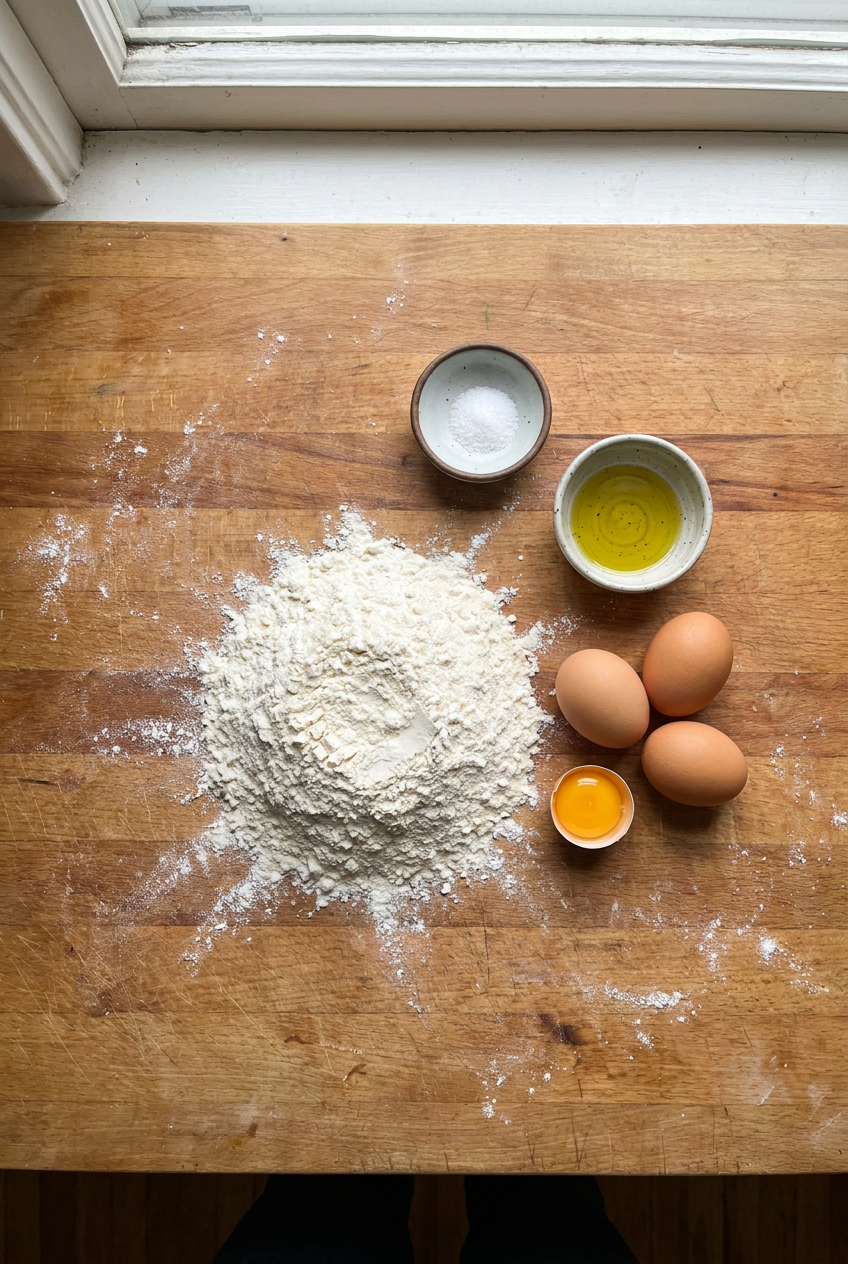
- 2 cups all-purpose flour, plus extra for dusting
- 3 large eggs, at room temperature
- 1 tablespoon extra-virgin olive oil
- 1/2 teaspoon salt
For Shaping and Cooking
- As needed semolina or all-purpose flour, for dusting
- 4 quarts water, for boiling
- 1 tablespoon salt, for pasta water
Ingredient Notes
All-purpose flour. I reach for standard unbleached all-purpose flour because it contains a moderate amount of protein that creates just the right amount of gluten for a tender yet sturdy pasta. Using 00 flour gives a more delicate result, but all-purpose is more widely available and yields a slightly chewier, utterly satisfying bite. If you prefer to weigh your ingredients, 2 cups are approximately 240 grams. For the most accurate results, spoon the flour into your measuring cup and level it off rather than scooping directly from the bag.
Eggs. The eggs are the liquid and the richness in this dough. I use large eggs at room temperature; cold eggs can cause the dough to stay too firm and require more kneading to come together. Fresh, high-quality eggs make a noticeable difference both in color and in the suppleness of the final pasta. If you have a local source for farm-fresh eggs, this is the time to use them.
Extra-virgin olive oil. A single tablespoon of good olive oil adds pliability to the dough and a subtle fruitiness that enhances the overall flavor. Do not skip it, even though some traditional recipes omit it. The oil also helps the dough sheets stay soft and less prone to tearing during rolling. Any decent extra-virgin olive oil you enjoy for dressing salads will work beautifully here.
Salt. A small amount of salt integrated directly into the dough seasons the pasta from within. Pasta water later will also be salted, but this early addition ensures that every strand carries flavor, not just a salty surface.
Semolina or all-purpose flour for dusting. Semolina adds a subtle grittiness that helps prevent sticking and gives the pasta a bit more grip for sauce to cling to. I love its golden color and delicate crunch, but if you do not have it on hand, all-purpose flour works perfectly fine for dusting your rolled sheets and cut strands.
How to Make Perfect Classic Homemade Egg Pasta Dough
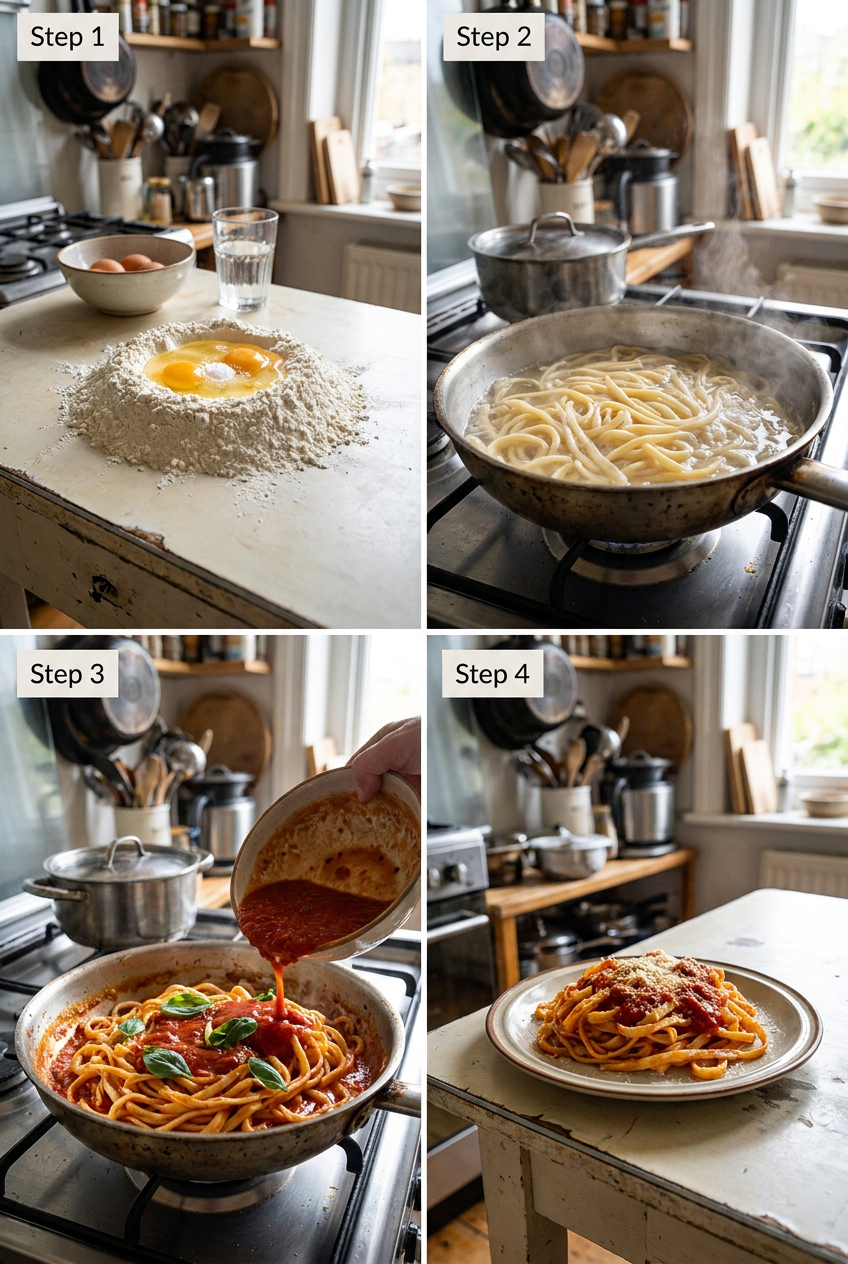
Step 1: Make the Flour Well
Find a large clean work surface or a wide mixing bowl. Pour the flour into a mound and use your fingers to scoop out a wide well in the center, leaving a ring of flour at the base so the eggs will not spill out. Crack the three eggs into the well, then add the olive oil and salt. The visual of that sunny egg pool surrounded by a snowy flour wall always reminds me that something beautiful is about to happen. Take a moment to breathe it in.
Pro tip: Use room-temperature eggs for the smoothest dough; cold eggs will stiffen it and make the initial mixing tougher.
Step 2: Combine and Knead
With a fork, begin gently beating the eggs, slowly pulling flour from the inner walls of the well into the liquid. Keep the motion calm and steady so the well walls do not collapse all at once. After a minute, the mixture will turn into a shaggy, messy clump. At that point, abandon the fork and use your hands to bring everything together into a rough ball. Now comes the kneading. Press the dough away from you with the heel of your hand, fold it back, give it a quarter turn, and repeat. Knead for 8 to 10 minutes. At first it will feel dry and lumpy, but keep going. Eventually you will feel it transform: it will become smooth and elastic, with a surface as tight as polished stone. When you poke it with your finger and it springs back, you know the gluten has developed enough for that perfect al-dente chew. If the dough seems too dry and refuses to come together, wet your hands slightly and continue kneading; if it is sticky, dust lightly with flour.
Pro tip: Listen for a soft squeak under your palms as the dough becomes silken. That sound means you have done your job well.
Step 3: Rest the Dough
Shape the dough into a neat ball, wrap it tightly in plastic wrap so no air touches it, and set it on the counter. Let it rest for at least 30 minutes, though a full hour is even better. This quiet period allows the gluten strands you have just worked so hard to develop to relax completely. If you try to roll the dough right away, it will fight you, snapping back stubbornly. After a proper rest, it will roll out obediently into thin, even sheets. I like to use this time to tidy up, pour a glass of wine, and turn on some music.
Pro tip: Do not skip the rest. The difference in texture and ease of rolling is night and day.
Step 4: Roll Out the Pasta
Unwrap the rested dough and cut it into four equal pieces. Keep the pieces you are not working with covered under a clean kitchen towel or plastic wrap to prevent drying. Take one piece and flatten it with your palm into a small disk. If using a rolling pin, begin rolling from the center outward, turning the dough frequently and dusting lightly with semolina or flour to prevent sticking. If using a pasta machine, set it to the widest setting and feed the dough through. Fold the sheet into thirds like a letter after the first pass, rotate it, and send it through the same wide setting a few more times. This extra folding helps align the gluten for an exceptionally smooth sheet. Gradually step the machine down to narrower settings until you reach your desired thickness, usually setting 6 on a standard kitchen machine, which yields a beautifully translucent sheet that still has enough body to hold a sauce.
Pro tip: Roll until you can see the shadow of your hand through the dough. That thinness will expand slightly when boiled, giving you the most delicate texture.
Step 5: Cut the Pasta
Dust the rolled sheet generously with semolina or flour on both sides. Decide on your shape: fettuccine (about 1/4-inch wide), tagliatelle (3/8-inch), or pappardelle (3/4-inch). You can use a sharp knife, a pastry wheel, or the cutting attachment of your pasta machine. Gently fluff the cut strands and toss them with a bit more semolina to keep them from sticking. Shape them into loose nests that will cook evenly and look beautiful on a tray. If you plan to cook the pasta immediately, leave the nests on a flour-dusted baking sheet while you bring the water to a boil.
Pro tip: A bench scraper or pizza cutter works perfectly if you do not have a pasta cutter, and it makes quick, clean cuts.
Step 6: Cook the Pasta
Fill a large pot with 4 quarts of water and add 1 tablespoon of salt. Bring it to a rolling, vigorous boil; the water should taste like the sea. Drop in the fresh pasta nests carefully. The pasta will sink for a moment, then quickly rise and float. Cook for 2 to 3 minutes, tasting a strand at the 2-minute mark. It should be tender but with a pleasant firmness at the center, that perfect al-dente bite. Drain the pasta, reserving at least a cup of the starchy pasta water, and toss it immediately with your chosen sauce so every strand gets coated while still hot and receptive.
Pro tip: Fresh pasta cooks alarmingly fast, so have your sauce ready and your serving bowls warm before the pasta hits the water. A plate of hot pasta can come together in less than five minutes.
Pro Tips and Easy Variations for Your Classic Homemade Egg Pasta Dough
Pro Tips
- Weigh your flour for best accuracy. Scooping directly from the bag can compact the flour and throw off the ratio, leading to a dough that is too dry or too stiff. Two cups of all-purpose flour is approximately 240 grams, and a kitchen scale guarantees repeatable results every single time.
- Knead until the dough feels like a baby’s cheek. An under-kneaded dough will always be tough and reluctant to roll thin. Aim for a surface that is so smooth and supple it invites you to keep touching it. The transformation usually happens right around 9 minutes of vigorous kneading.
- Roll the sheets as thinly as you dare. Fresh pasta expands when it hits the boiling water, gaining a bit of thickness. If your sheets start thin, the final pasta will be ethereally light. You are aiming for a sheet you can almost read a newspaper through.
- Rest your scraps before re-rolling. Gather any offcuts or imperfect pieces into a ball, wrap them, and let them rest for 20 minutes. This relaxes the gluten again so the dough does not become tough and grainy on the second pass.
- Salt your pasta water generously. It is the main chance to season the pasta itself. If the water is only mildly salted, the whole dish will taste flat no matter how good your sauce is.
- Cook eggs safely. Always cook fresh pasta until the egg proteins are fully set, meaning the white and yolk are firm. This recipe achieves that within the 2-3 minute boil, so you can enjoy tender pasta with complete peace of mind.
Delicious Variations
- Spinach Pasta. Add 1/4 cup of cooked, very well-squeezed and finely chopped spinach to the eggs before you begin. You may need to reduce the flour slightly if the mixture feels wet. The result is a vibrant green pasta with a mild earthy flavor that pairs beautifully with creamy sauces.
- Whole Wheat Pasta. Replace 1 cup of all-purpose flour with whole wheat flour and add an extra egg yolk to maintain tenderness. The nuttier, more robust pasta is wonderful with heartier toppings like mushroom ragu or braised meats.
- Saffron Pasta. Steep a pinch of saffron threads in 1 tablespoon of hot water until the liquid turns a deep golden orange, then cool and mix into the eggs. The pasta takes on a stunning yellow hue and a delicate floral aroma that makes any dish feel festive.
- Herb-flecked Pasta. Mix finely chopped fresh herbs such as parsley, chives, or thyme directly into the flour before making the well. The speckled sheets look gorgeous and bring a whisper of garden freshness to every bite.
While these variations are all savory, the hands-on joy of making dough reminds me of other simple from-scratch projects that bring just as much delight, like a stack of blueberry lemon ricotta pancakes on a sleepy Sunday morning. Both demand a little patience and reward you with something that tastes far greater than the sum of its parts.
Serving Suggestions for a Perfect Italian Dinner
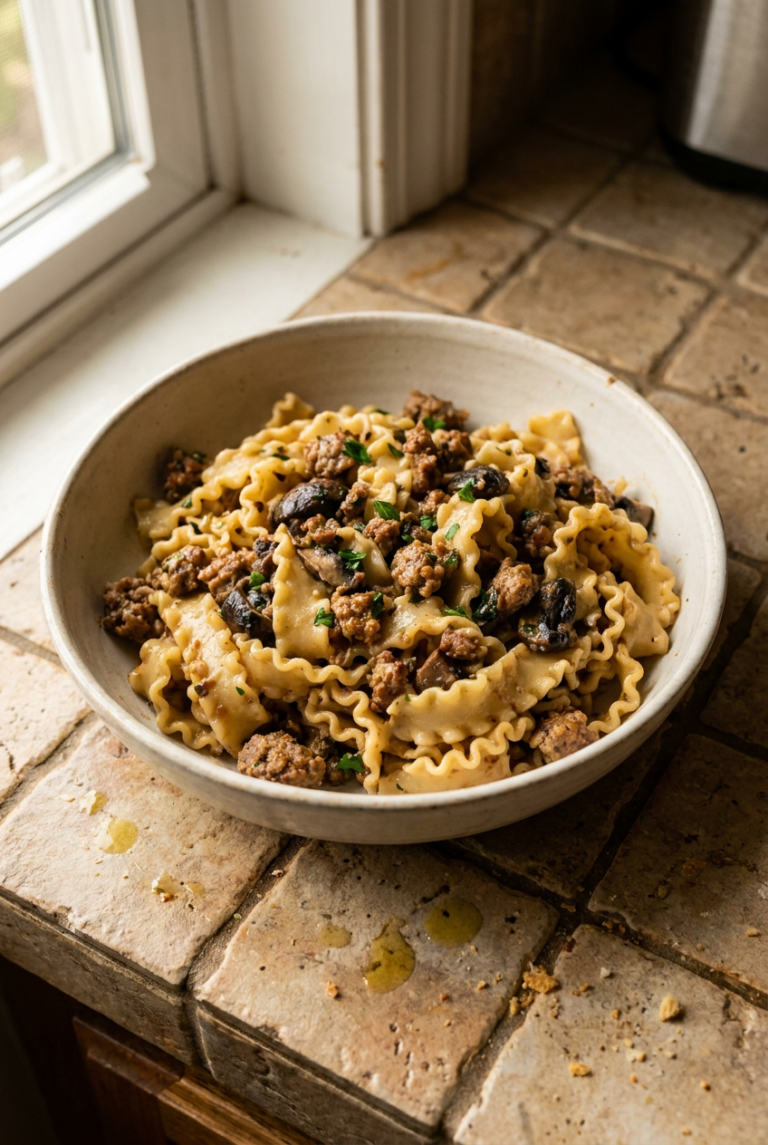
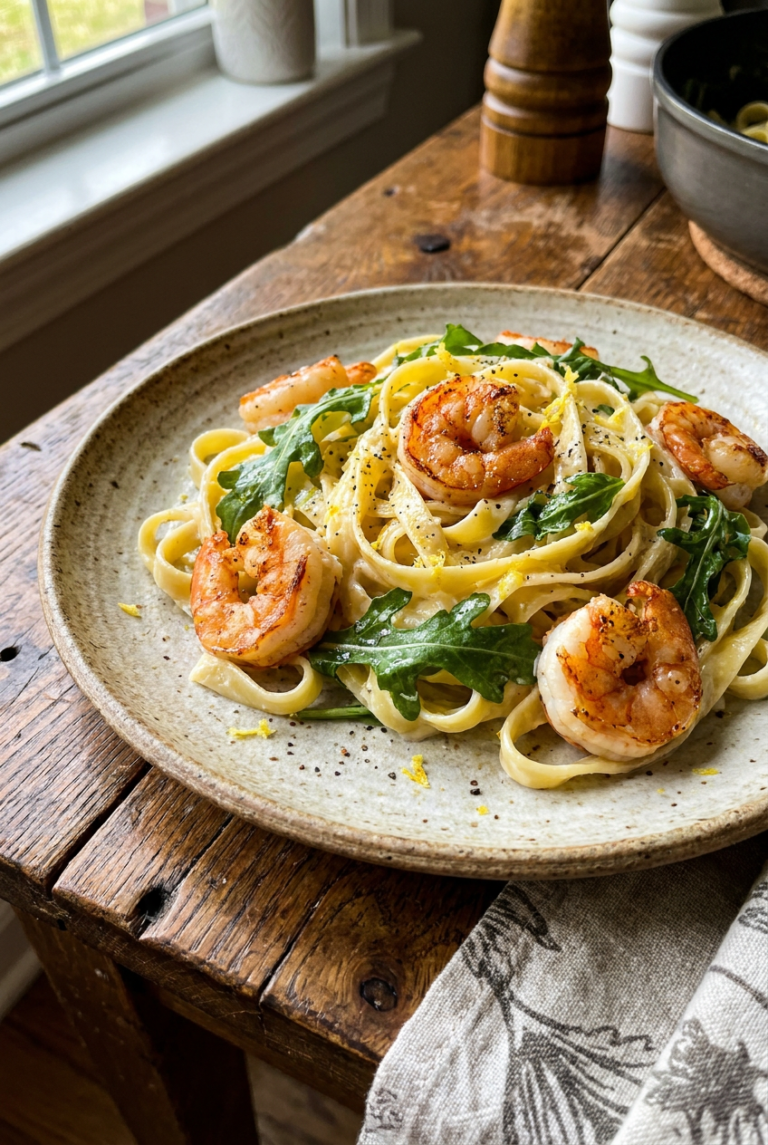
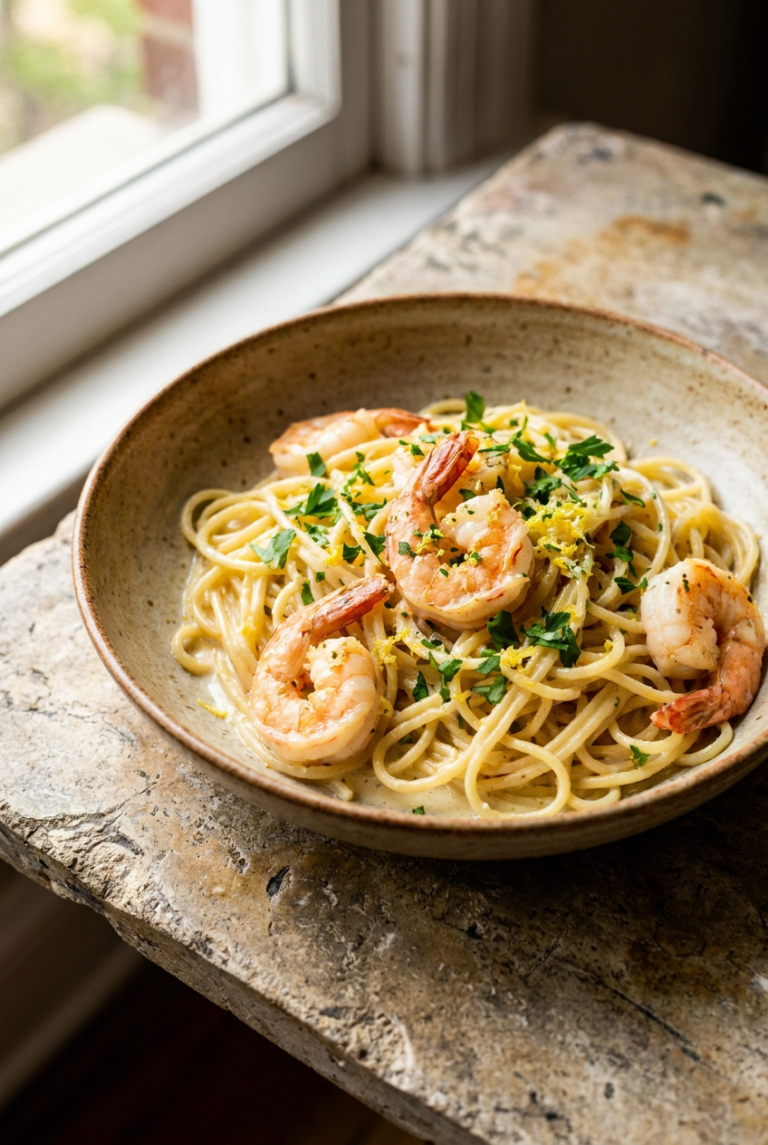
Once you have drained your fresh pasta, the possibilities open up like a sunny Italian piazza. For a quick weeknight meal, toss the hot noodles with a classic pesto alla Genovese and a generous shower of freshly grated Parmesan. The silky pasta catches every fleck of basil and pine nut, creating a dish that tastes like summer. On a cooler evening, I love it twirled into a rich carbonara, the creamy egg and Pecorino Romano clinging to each strand of fettuccine, partnered with crispy guanciale.
Classic Homemade Egg Pasta Dough
Ingredients
Method
- Mound the flour on a clean work surface or in a large bowl. Create a wide well in the center. Crack the eggs into the well, add olive oil and salt.
- Using a fork, slowly incorporate flour from the inner walls of the well into the eggs. Once a shaggy dough forms, knead by hand for 8-10 minutes until smooth and elastic. If too dry, add a teaspoon of water; if too sticky, dust with a little flour.
- Shape the dough into a ball, wrap tightly in plastic wrap, and let it rest at room temperature for at least 30 minutes (up to 1 hour). This relaxes the gluten and makes rolling easier.
- Cut the dough into 4 pieces; keep the rest covered. Flatten one piece with your palm, then roll with a rolling pin or pasta machine from the thickest setting down to your desired thickness (typically setting 6 on a kitchen machine). Dust lightly with semolina or flour to prevent sticking.
- Dust the rolled sheet with flour, then cut into your desired shape — fettuccine (1/4-inch wide), tagliatelle (3/8-inch), pappardelle (3/4-inch), or leave in sheets for lasagna. Gently toss the strands with semolina to prevent sticking and form loose nests.
- Bring a large pot of salted water (4 quarts water + 1 tablespoon salt) to a rapid boil. Drop in the fresh pasta and cook for 2-3 minutes, until it floats and is tender but still firm to the bite. Drain, reserving a cup of pasta water, and toss immediately with sauce.
Disclosure: This post may contain affiliate links. If you purchase through our links we may earn a small commission at no extra cost to you.
If you made this Classic Homemade Egg Pasta Dough, please leave a comment below and let me know how it turned out.