Bucatini all’Amatriciana Recipe, Easy Italian Dinner in 30 Minutes
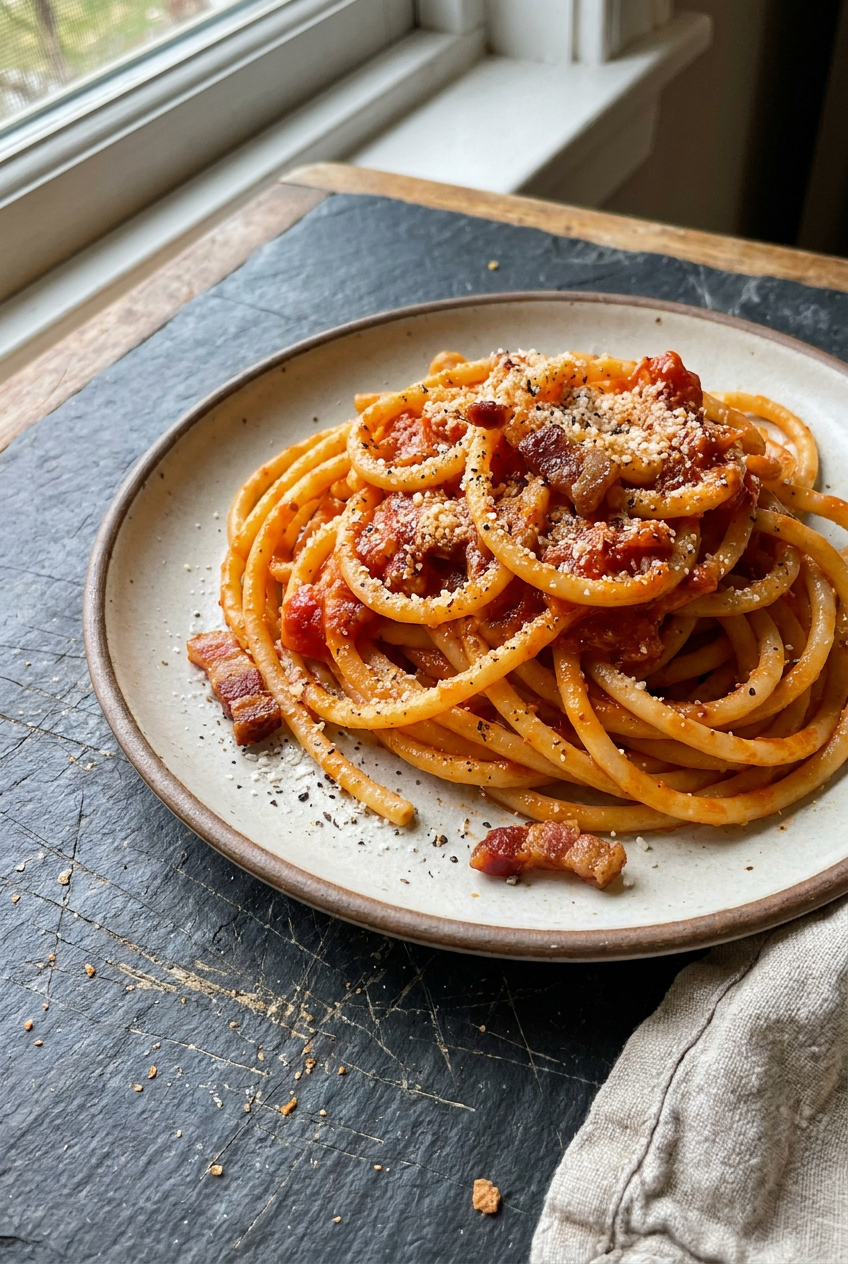
Table of Contents
- Bucatini all’Amatriciana: A Classic Roman Pasta with a Rich, Spicy Tomato and Guanciale Sauce
- Why You Will Love This Bucatini all’Amatriciana Recipe
- Your Simple Ingredients for the Perfect Bucatini all’Amatriciana Recipe
- How to Make Perfect Bucatini all’Amatriciana
- Pro Tips and Easy Variations for Your Bucatini all’Amatriciana
- Serving Suggestions for a Perfect Dinner
- Nutrition Information
- Storage and Make-Ahead Instructions
- Your Bucatini all’Amatriciana Questions Answered
- More Incredible Italian Recipes to Try
- The Story Behind This Recipe
- Pin This Recipe for Later
Bucatini all’Amatriciana: A Classic Roman Pasta with a Rich, Spicy Tomato and Guanciale Sauce
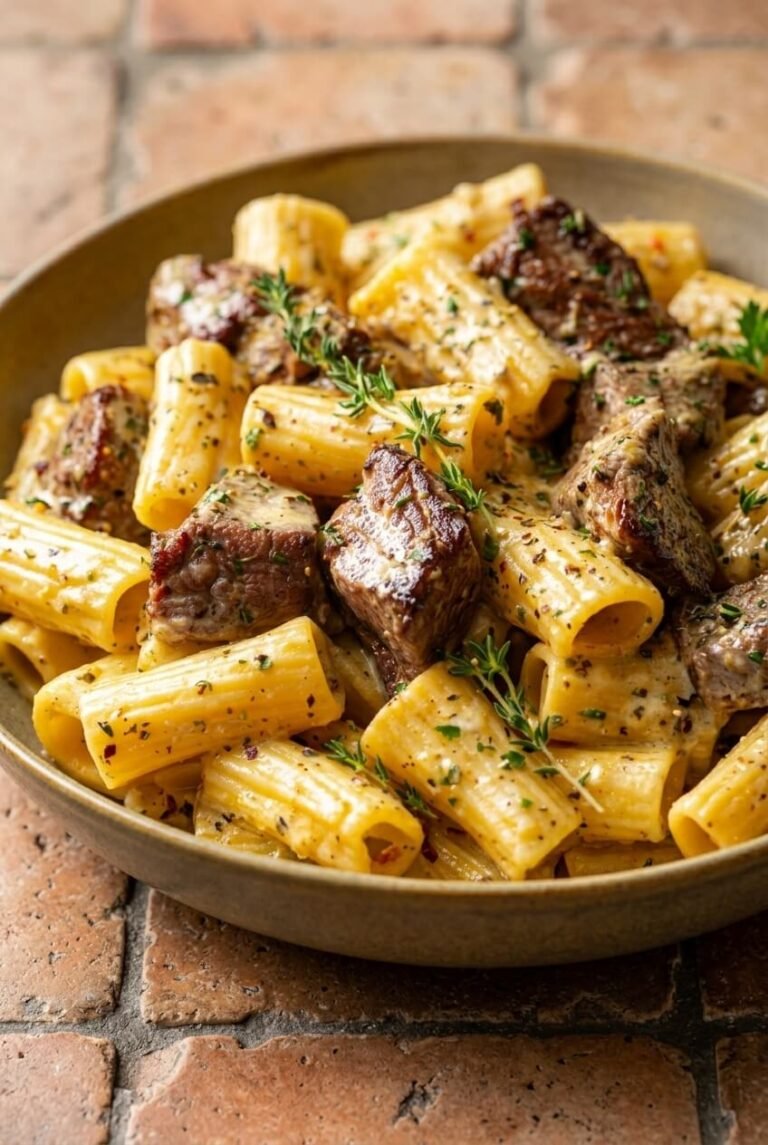
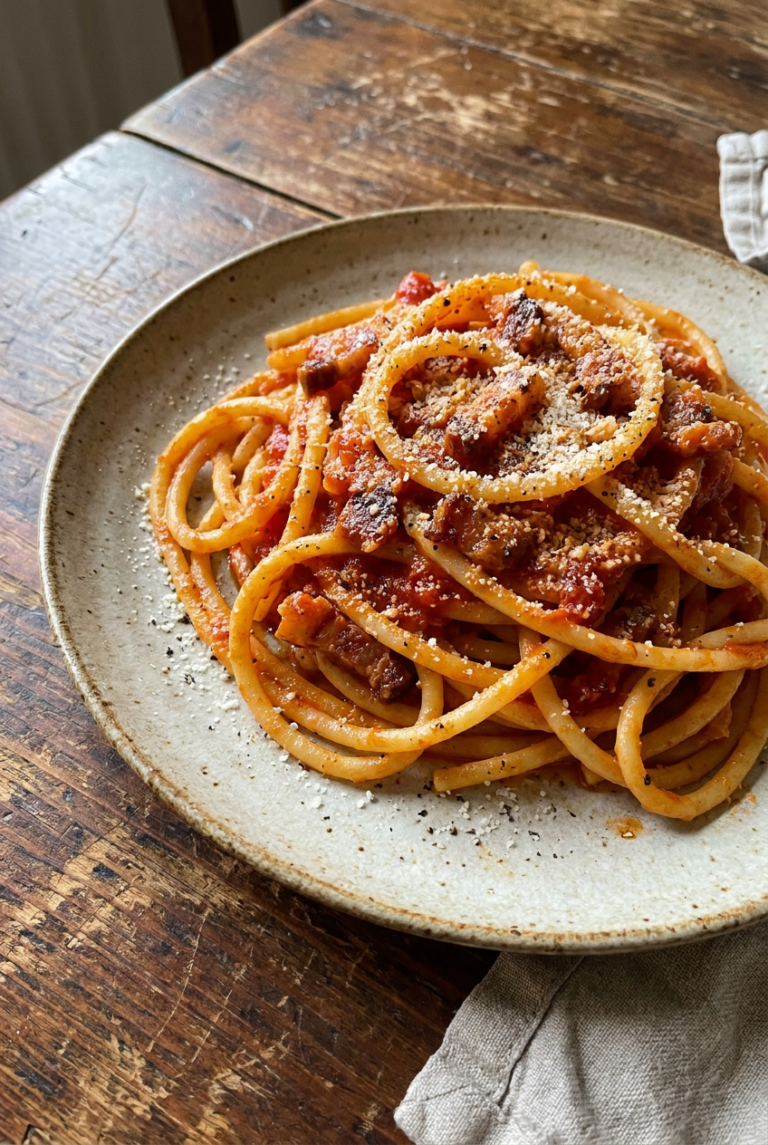
If you are searching for the ultimate bucatini all’amatriciana recipe, you have come to the right place. I still remember the first time I truly understood this dish. It was a tiny trattoria in Rome, tucked away from the crowds, with checked tablecloths and a cook who moved with the calm of someone who had made this sauce thousands of times. The bowl arrived steaming, the sauce a burnished orange-red, clinging to every hollow bucatini strand. The first forkful brought salty, porky depth, a gentle heat from chili, and the sharp bite of pecorino. It was simple, but so much more than the sum of its parts. That moment defined for me what a home-cooked Italian dinner could feel like: deeply satisfying, unpretentious, and made with just a handful of ingredients treated with care.
This bucatini all’amatriciana recipe stands out because it respects tradition without overcomplicating things. Unlike many modern versions that drown the pasta in too much tomato or lean on bacon, here we let guanciale, the cured pork cheek, be the star. Slowly rendering it until crispy creates the foundation of the sauce, releasing its fat to carry the heat of chili flakes. Deglazing with white wine lifts all those caramelized bits from the pan, and hand-crushed San Marzano tomatoes simmer just long enough to meld with the porky richness. Tossing the pasta directly in the skillet with splashes of starchy cooking water creates a glossy, emulsified sauce that coats every single strand. The finishing handful of pecorino Romano, always off heat, melts into a creamy, salty cloak that ties everything together.
This is the kind of meal I turn to when I want to gather people around the table without spending hours in the kitchen. The recipe works beautifully for a cozy weeknight dinner when you need something comforting in under thirty minutes, yet it is elegant enough for a Saturday evening with friends and a bottle of Chianti. If you love bold, rustic flavors and the satisfaction of making something truly authentic from scratch, you will find yourself returning to this homemade Bucatini all’Amatriciana again and again. It has the same soulful depth I crave in a long-simmered Moroccan chicken tagine, but delivered with the swift energy of a classic Italian dinner recipe.
Why You Will Love This Bucatini all’Amatriciana Recipe
- Utterly authentic flavor. This is not a watered-down version. Using guanciale, pecorino Romano, and a simple hand-crushed tomato base gives you the exact same deep, savory, slightly spicy taste you would find in a Roman kitchen. Every bite transports you to the cobbled streets of the Eternal City.
- Incredibly fast from start to finish. You can have a restaurant-quality dinner on the table in just about 30 minutes. While the pasta water boils, you render the guanciale, build the sauce, and by the time the bucatini is al dente, everything is ready to toss together.
- Only a handful of simple ingredients. The real beauty of this dish is its restraint. You need bucatini, guanciale, a can of good tomatoes, some chili, white wine, and pecorino. No garlic, no onion, no herbs. Each element shines because nothing is masked.
- Techniques that build confidence. Through this recipe you will learn to render cured pork perfectly, deglaze with wine for depth, emulsify a sauce with pasta water, and finish with cheese off heat. These are skills that will make you a better cook in every Italian dish you try.
- Versatile and forgiving. While the recipe is best with guanciale and bucatini, you can easily substitute pancetta and spaghetti or rigatoni and still end up with a stunning bowl of pasta. The core method remains rock solid no matter what you have on hand.
- A crowd pleaser every time. The combination of rich pork, bright tomato, and salty cheese is universally loved. Whether you are feeding picky eaters or seasoned food lovers, this dish rarely sees leftovers.
Your Simple Ingredients for the Perfect Bucatini all’Amatriciana Recipe
Pasta
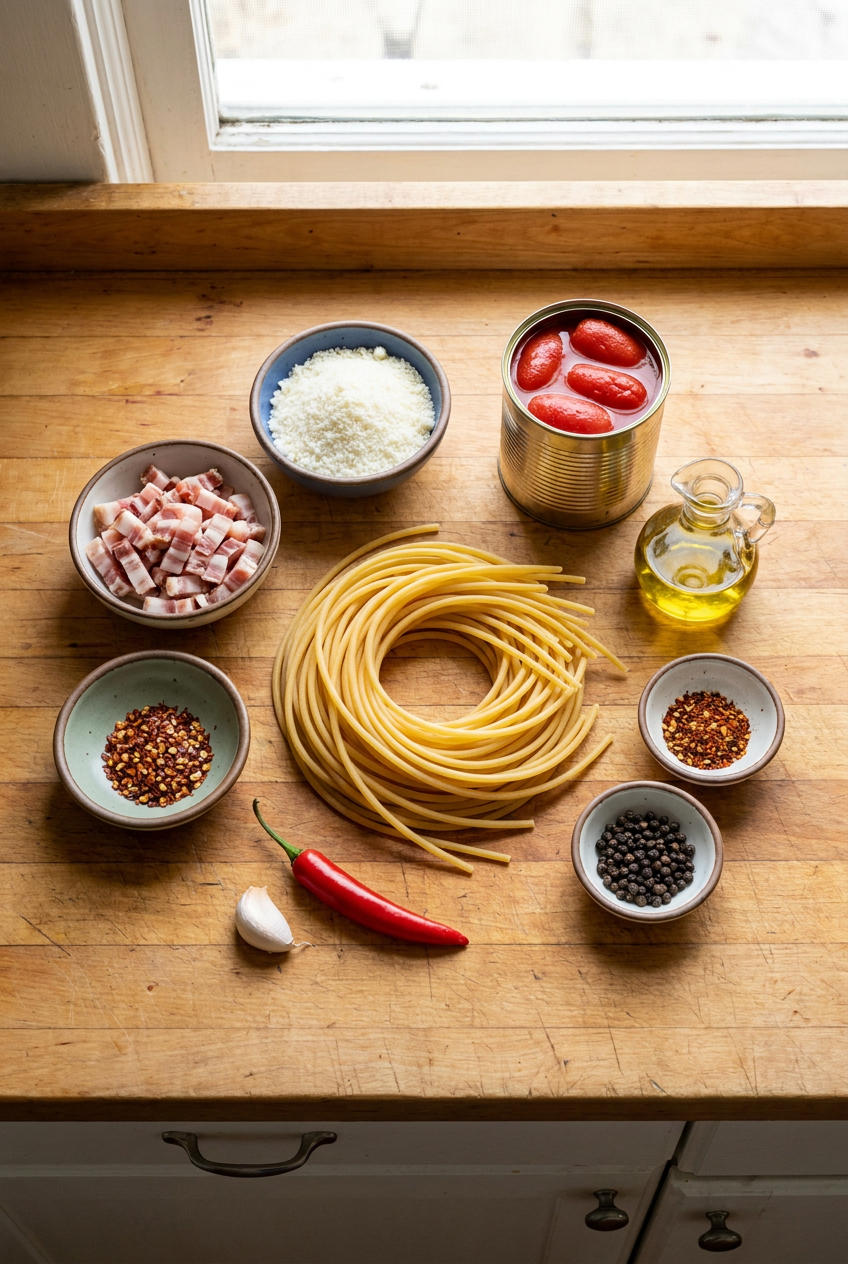
- 400g (14 oz) bucatini pasta, or thick spaghetti
Sauce
- 150g (5 oz) guanciale, diced into small cubes, or pancetta
- 1/2 teaspoon red chili flakes, adjust to taste
- 1/2 cup dry white wine, such as Frascati
- 1 can (400g/14 oz) San Marzano whole peeled tomatoes, crushed by hand
- Salt, to taste
Garnish
- 1 cup Pecorino Romano cheese, finely grated, plus more for serving
- Freshly ground black pepper, to taste
Ingredient Notes
Bucatini: This long, hollow pasta is ideal because the sauce flows into the center tube, delivering flavor inside and out. Its thicker body also stands up to a hearty sauce without becoming limp. Look for bronze-die extruded bucatini which has a rough surface that grips sauce beautifully. If you cannot find it, a thick spaghetti or rigatoni works wonderfully, though you will lose some of that delightful slurp factor.
Guanciale: This cured pork cheek is the soul of Amatriciana. It has a higher fat content than pancetta or bacon and a delicate, sweet savoriness that melts into the sauce. When buying, seek out pieces with a balanced ratio of pink meat to creamy white fat. If guanciale is unavailable, pancetta is the closest substitute, though it is leaner and slightly less rich. In a pinch, you can use bacon, but blanch it first for a minute in boiling water to remove some of the smoky flavor which would overpower the sauce.
San Marzano tomatoes: These Italian plum tomatoes are sweeter, less acidic, and have a dense flesh that breaks down into a velvety sauce. Always buy whole peeled ones and crush them by hand to preserve their natural texture. Avoid pre-crushed or diced tomatoes which often contain calcium chloride and never achieve the same consistency. If San Marzanos are not on hand, any good quality whole peeled plum tomato will work.
Pecorino Romano: This sheep’s milk cheese is saltier and sharper than Parmesan, providing the distinctively bold finish the dish requires. Buy a wedge and grate it freshly; pre-grated cheese won’t melt as smoothly. Under no circumstances substitute Parmesan here, as the entire flavor balance will shift in a way that is not authentic to the recipe.
White wine: A dry Italian white like Frascati or even a Pinot Grigio adds brightness and an acidic lift that cuts through the richness of the guanciale. The alcohol burns off during deglazing, leaving behind a subtle fruitiness and the aromatic depth from the fond. If you prefer not to use wine, you can deglaze with a splash of chicken broth or even pasta water, though the flavor will be less complex.
How to Make Perfect Bucatini all’Amatriciana
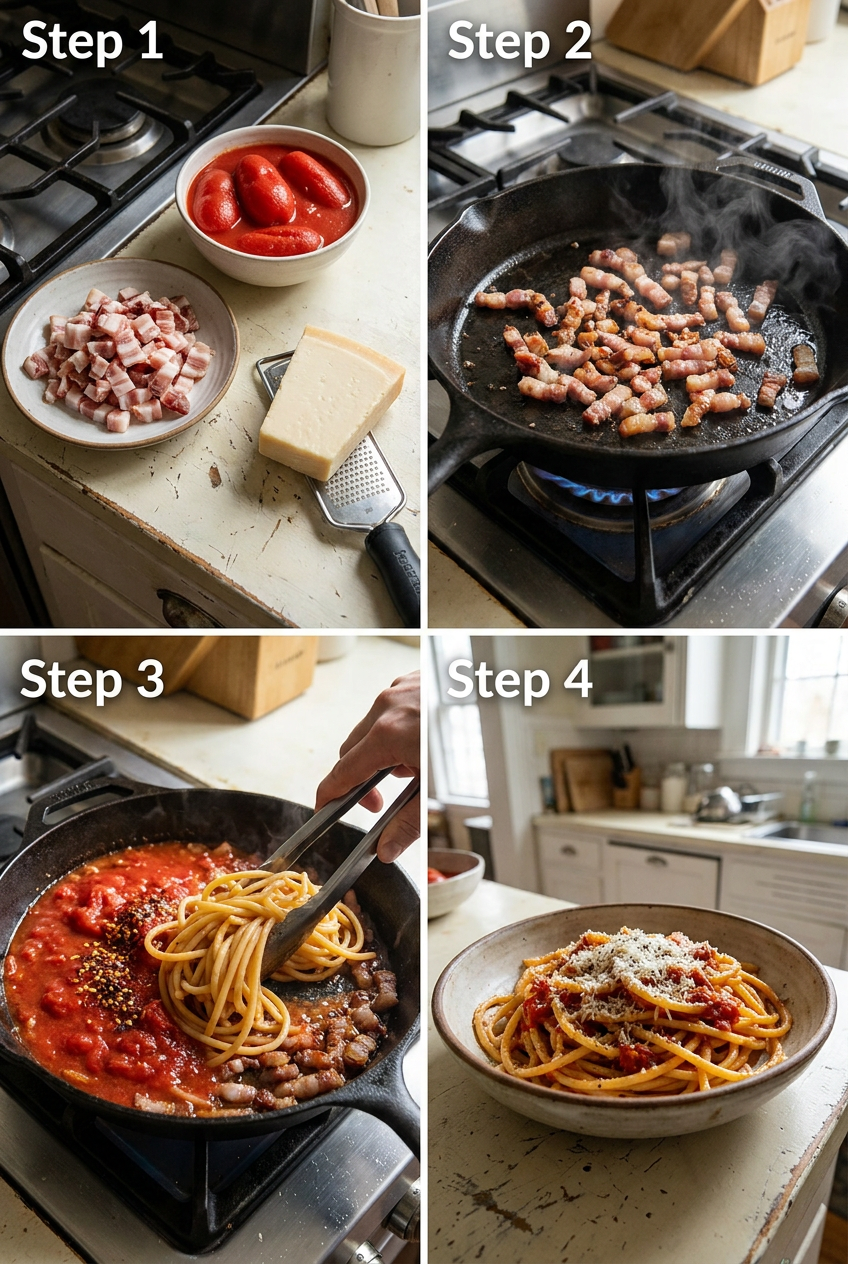
Phase 1: Prepare the Base
1. Boil water
Bring a large pot of generously salted water to a rolling boil for the bucatini. The water should taste like the sea; this is your only chance to season the pasta itself. While the water heats, move on to the sauce. By the time the water is boiling, your sauce will be close to done, making this how to make Bucatini all’Amatriciana efficiently. Do not skimp on the salt, or the final dish will taste flat no matter how good your sauce is.
2. Render the guanciale
In a large skillet, add the diced guanciale and chili flakes. Place over medium heat and cook, stirring occasionally. You will hear a gentle sizzle at first, then as the fat begins to melt, the sound deepens. Stir often so the pieces crisp evenly without burning. After about 5 to 7 minutes, the guanciale should be deeply golden and crispy, with most of the fat rendered into the pan. If you see a lot of white steam, your pan is too cool and the guanciale is steaming; raise the heat slightly. The key is to fry, not steam. Transfer the guanciale to a plate using a slotted spoon, leaving all that beautiful fat behind.
3. Deglaze with wine
Pour the white wine into the hot skillet, scraping the bottom with a wooden spoon to lift every bit of browned fond. The kitchen will fill with a sharp, fruity scent that quickly softens. Let the wine bubble vigorously until the alcohol smell fades and the liquid reduces to almost nothing, about 2 minutes. You will know it is ready when the mixture looks slightly syrupy and you cannot smell raw alcohol anymore. This step builds a layer of savory complexity that makes the final sauce so much more than just tomato and pork.
Phase 2: Build the Sauce
4. Simmer the tomato sauce
Add the hand-crushed San Marzano tomatoes along with their juices to the skillet. Season with a pinch of salt, but go lightly because the guanciale and later the pecorino will add saltiness. Stir everything together. The sauce should look a bit chunky at first. Lower the heat and let it simmer gently, stirring occasionally and breaking up any large tomato pieces with the back of your spoon. After about 10 to 12 minutes, the sauce will thicken slightly and the color will deepen from bright red to a richer, brick-orange hue. The aroma becomes sweeter and more concentrated. At this point, return the crispy guanciale to the sauce and give it a good stir. The sauce should now coat the back of a spoon and taste perfectly balanced with a gentle heat from the chili.
5. Cook the pasta
While the sauce simmers, drop the bucatini into the boiling water. Cook it for exactly 1 minute less than the package directions for al dente. Because bucatini is hollow and thicker than spaghetti, it often needs that extra minute to avoid being too toothy. Set a timer and taste a strand early. You want it to still have a firm bite at the center. Just before draining, scoop out about a cup of the starchy pasta water. This liquid gold will help bind the sauce to the pasta in the most magical way, similar to how a careful emulsion brings together a delicate batter like the one I use for my fluffy Japanese souffle pancakes.
Phase 3: Bring It All Together
6. Toss pasta and sauce
Drain the pasta and transfer it straight into the skillet with the sauce. Turn the heat to medium and toss vigorously with tongs. At first the sauce may seem a bit dry, but that is where the reserved pasta water comes in. Add a small splash and keep tossing. You will watch as the starchy water helps the fat and tomato bind into a velvety, glossy coating. Add more splashes as needed until every strand of bucatini is slick with sauce and nothing pools at the bottom of the pan. This step usually takes about 2 minutes. Work quickly and trust your instincts; the pasta will keep cooking in the pan.
7. Finish with cheese
Pull the skillet off the heat completely. This is non-negotiable. Sprinkle the finely grated Pecorino Romano and a generous grind of black pepper over the pasta. Toss again until the cheese melts into the sauce, creating a creamy, slightly thick cloak. If you add cheese over direct heat, it will seize and turn into stringy clumps instead of integrating smoothly. You will see the sauce turn pale and almost luscious. Taste and adjust with more pepper or just a tiny bit more cheese if needed, but be careful not to overpower the guanciale.
8. Serve immediately
Divide the pasta among warm bowls. Warm bowls make a real difference here, holding onto the heat so the pasta stays luxurious until the last bite. Top each portion with an extra flurry of pecorino and another crack of black pepper. Serve at once, because this dish waits for no one. The hollow strands release little steamy puffs of sauce as people twirl them onto forks, and the first mouthful will deliver that perfect balance of salty, spicy, and tangy.
Pro Tips and Easy Variations for Your Bucatini all’Amatriciana
Pro Tips
- Choose guanciale carefully. Look for pieces that are more pink than white, with a thin peppery crust on the outside. Avoid overly thick fat caps. The quality of the guanciale directly determines the depth of your sauce, so do not settle for the first package you see.
- Crush tomatoes by hand. Pour the whole peeled tomatoes into a bowl and squeeze them between your fingers. This gives you a rustic, varied texture that canned crushed tomatoes cannot replicate. It also lets you control how chunky or smooth the sauce becomes.
- Reserve pasta water like a pro. Scoop out the water just before draining, using a heatproof measuring cup. The starch that settles on the bottom is the most potent, so give it a little swirl before adding it to the pan. Start with a quarter cup and increase only as needed to avoid a watery sauce.
- Always finish cheese off heat. This is the single biggest game-changing detail. Heat plus pecorino equals a stringy mess. Removing the skillet from the burner lets the cheese melt gently into the emulsion, thickening the sauce with a creamy, silky consistency.
- Toast the chili flakes briefly. Adding the chili flakes to the guanciale as it renders, rather than later, blooms their fiery flavor in the fat. This releases fat-soluble heat compounds and spreads an even warmth through the dish without any raw spicy bite.
- Serve as soon as it is ready. Amatriciana is not a dish that benefits from resting. The pasta continues to absorb liquid, so a wait of even five minutes can turn it from glossy to dry. Have your bowls and cheese ready before you drain the pasta.
Delicious Variations
- Pancetta or bacon swap. If guanciale is not available, pancetta is the closest cousin. Use flat pancetta rather than rolled and dice it yourself. If using bacon, blanch the strips in boiling water first for 1 minute to remove the smoky edge, then pat dry and dice. The result will be slightly different but still deeply satisfying.
- Spaghetti alla Amatriciana. When bucatini is nowhere to be found, a thick spaghetti or spaghettoni works beautifully. The sauce clings to the long strands and the eating experience is only a little less whimsical without the hollow center.
- Fresh tomato version. In late summer, use about 6 ripe plum tomatoes, peeled and crushed by hand. Cook them a bit longer to evaporate excess water. The flavor will be brighter and fruitier, almost jammy, which pairs wonderfully with the richness of the guanciale.
- Garlic and onion twist. While not traditional in Amatriciana, a single clove of garlic lightly crushed and cooked in the guanciale fat before adding tomatoes can add a gentle aromatic note. Some home cooks also sauté a small finely chopped onion after removing the guanciale for extra sweetness. I prefer the purist version, but this is your kitchen.
If you love discovering the authentic feel of a dish, you will enjoy reading about the careful batter folding in my blueberry lemon ricotta pancakes. Both recipes require just the right touch to achieve that perfect, melt-in-your-mouth texture.
Serving Suggestions for a Perfect Dinner
This robust pasta calls for sides that are refreshing and simple. A crisp arugula salad dressed with nothing more than lemon juice, good olive oil, and a sprinkle of salt cuts straight through the richness of the sauce. The peppery greens mirror the heat in the pasta while the lemon brightens everything up. For a bigger dinner, add a board of aged cheeses, some marinated olives, and crusty bread to mop up any remaining sauce. Drinks matter here too. A dry, medium-bodied red wine like Chianti Classico or a Montepulciano d’Abruzzo stands up to the bold flavors without overwhelming them. If you prefer white, that same Frascati you used for deglazing makes a lovely pairing.
This dish is made for gatherings. I love setting out a big platter of it family-style when friends come over, letting everyone serve themselves while the pasta is still piping hot. To scale it for a crowd, simply double the ingredients and use a very large skillet or work in batches. For a complete meal that feels effortless, start with a light antipasto of prosciutto and melon, then follow the pasta with a simple green salad. It is the kind of dinner that makes people linger at the table, reaching for one more bite and pouring another glass of wine.
Nutrition Information
(Approximate per serving, 4 servings total) Calories: 570, Fat: 15g, Carbohydrates: 75g, Protein: 17g, Fiber: 3g, Sugar: 5g, Sodium: 650mg. Nutritional values are estimates only.
Storage and Make-Ahead Instructions
- Refrigerator: Store any leftovers in an airtight container for up to 3 days. The pasta will absorb more sauce as it sits, so it may seem a little dry when cold. That is perfectly normal.
- Freezer: Freezing is not recommended. The bucatini texture turns mushy upon thawing, and the sauce can separate when reheated. It is best enjoyed fresh.
- Reheating: Gently reheat in a skillet over low heat with a splash of water or extra tomato passata. Toss frequently until warmed through. Avoid the microwave, which can make the pasta gummy and the sauce oily.
- Make-Ahead: You can dice the guanciale and grate the cheese the day before and keep them in separate containers in the fridge. The sauce itself can be made up to two days in advance and stored in a jar; simply reheat it gently while the pasta cooks, then toss with fresh pasta and cheese as directed.
Your Bucatini all’Amatriciana Questions Answered
Can I use Parmesan instead of Pecorino?
No, that would drastically change the flavor. Pecorino Romano provides a sharp, salty tang that defines the dish. Parmesan is milder and nuttier and will not give you the same authentic taste. If you must, use a combination of mostly pecorino with a little Parmesan, but never all Parmesan.
What exactly is guanciale and where can I find it?
Guanciale is cured pork cheek, seasoned with salt, pepper, and sometimes other spices. It has a high fat content and a delicate, sweet flavor. You can find it at Italian specialty markets, well-stocked deli counters, or online retailers. If you cannot source it, pancetta is the next best option.
Can this be made vegetarian?
Yes, though it will no longer be traditional. Omit the guanciale and sauté two cloves of sliced garlic in a generous glug of olive oil. Add a pinch of smoked paprika to recall the smoky depth. Proceed with the wine and tomatoes as written. It will be a different but still tasty pasta.
How do I know when the guanciale is perfectly crispy?
Look for a deep golden-brown color and listen for a gentle, continuous sizzle, not popping. The pieces should feel firm when pressed with a spoon, with most of the white fat rendered into liquid in the pan. They will not be as crunchy as bacon but should hold their shape.
Why does my sauce taste bitter?
Bitterness usually comes from scorched chili flakes or burned fond during the guanciale rendering. Keep the heat at medium and stir often. If you do burn the bits on the bottom, wipe the pan clean before deglazing to avoid carrying that acrid taste forward.
Can I use another pasta shape?
Absolutely. Mezze maniche, rigatoni, or thick paccheri all work beautifully because their ridges and hollows trap the sauce. Spaghetti is the classic alternative. Avoid very thin shapes like angel hair which can become overwhelmed.
Is it necessary to use wine?
It adds nuance and brightens the sauce, but you can leave it out. Substitute an equal amount of low-sodium chicken broth or simply skip it and proceed with the tomatoes. The result will be a bit flatter but still delicious.
How can I make this less spicy?
Simply reduce the red chili flakes to a small pinch or omit them entirely. The dish will still have great depth from the guanciale and pecorino. You can always add a little freshly ground black pepper for a milder warmth.
Why did my cheese clump when I added it?
You likely added it over direct heat. The proteins in pecorino tighten and become stringy in high heat. Always remove the pan from the burner, wait about 15 seconds, then toss in the cheese. The residual warmth is enough to melt it smoothly.
Can I double this recipe?
Yes, but use a very large skillet so the guanciale has room to crisp and the pasta can be tossed evenly. You may need to work in two batches for the pasta tossing. Keep the ratio of ingredients the same and taste for seasoning as you go.
More Incredible Italian Recipes to Try
Once you have mastered this best Bucatini all’Amatriciana recipe, you will find yourself craving other classics from the Italian kitchen. A cacio e pepe is an obvious next step, with its minimalist combination of pecorino, black pepper, and pasta that teaches you the art of a perfect cheese emulsion. Carbonara, the silky egg and guanciale sauce without a drop of cream, is another Roman treasure that shares ingredients with this dish but delivers a completely different experience. For a lighter yet equally satisfying option, puttanesca’s punchy olives, capers, and anchovies create a sauce that transforms a pantry into a feast.
If you want to explore beyond pasta, a simple saltimbocca or a slow-braised osso buco brings that same rustic warmth to the table. Each of these dishes, like this Amatriciana, relies on a few high-quality ingredients and careful technique rather than complicated steps. The moment you taste that perfect balance of salty, rich, and bright, you will understand why Italian home cooking has captured hearts everywhere.
The Story Behind This Bucatini all’Amatriciana
Amatriciana traces its roots not to Rome but to the small town of Amatrice in the region of Lazio. Originally the dish was a simple shepherd’s meal called gricia, made with guanciale, pecorino, and dried pasta, with no tomato at all. When tomatoes arrived from the New World and became widely accepted in Italian cooking, the sauce evolved into what we now know as Amatriciana. The town of Amatrice is so proud of this creation that it holds an annual festival celebrating the dish, and the local recipe is fiercely protected.
When the dish migrated to Rome, it found a permanent home in the city’s trattorias, where cooks began adding a touch of white wine and sometimes onion or garlic, though purists argue loudly against any additions. My own version stays close to the original Amatrice style, using only the essential five ingredients, but I include the wine for the depth it adds. Learning this recipe from a Roman friend’s grandmother taught me that the magic is not in secret ingredients but in patience and respect for the products. Every time I make it, I think of her small kitchen filled with the
Bucatini all'Amatriciana
Ingredients
Method
- Bring a large pot of generously salted water to a rolling boil for the bucatini.
- In a large skillet over medium heat, add the diced guanciale and chili flakes. Cook, stirring occasionally, until the guanciale is crispy and its fat has rendered, about 5-7 minutes.
- Pour in the white wine, scraping up any browned bits from the bottom. Let it bubble until the alcohol smell dissipates and the wine has almost completely evaporated, about 2 minutes.
- Add the hand-crushed tomatoes along with their juices. Season with a pinch of salt. Lower the heat and simmer gently, stirring occasionally, until the sauce thickens slightly, 10-12 minutes.
- Meanwhile, cook the bucatini in the boiling water for 1 minute less than the package directions for al dente.
- Drain the pasta, reserving about 1 cup of the starchy pasta water. Transfer the bucatini directly to the skillet with the sauce. Toss vigorously over medium heat, adding splashes of reserved pasta water as needed, until the sauce clings to every strand and looks glossy.
- Remove the skillet from the heat. Sprinkle the grated Pecorino Romano and a generous amount of black pepper over the pasta. Toss again until the cheese melts and coats the pasta.
- Divide among warm bowls, top with extra pecorino and black pepper, and serve at once.
Disclosure: This post may contain affiliate links. If you purchase through our links we may earn a small commission at no extra cost to you.
If you made this Bucatini all’Amatriciana, please leave a comment below and let me know how it turned out.