Beef Stir Fry with Vegetables Recipe, Easy Asian Dinner in 30 Minutes
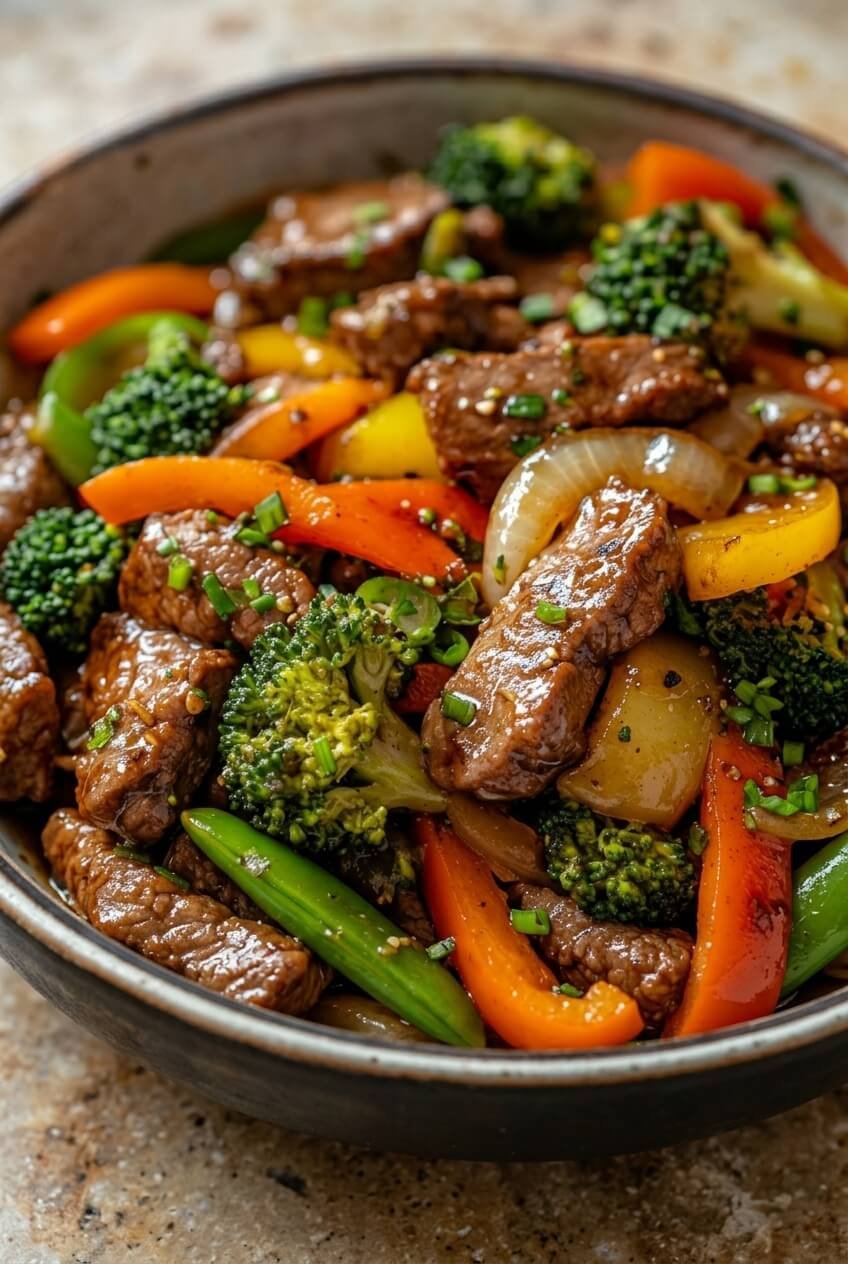
Beef Stir Fry with Vegetables: A Vibrant, 30-Minute Weeknight Wonder
Table of Contents
- Beef Stir Fry with Vegetables: A Vibrant, 30-Minute Weeknight Wonder
- Why You Will Love This Beef Stir Fry with Vegetables Recipe
- Your Simple Ingredients for the Perfect Beef Stir Fry with Vegetables
- How to Make Perfect Beef Stir Fry with Vegetables
- Pro Tips and Easy Variations for Your Beef Stir Fry with Vegetables
- Serving Suggestions for a Perfect Dinner
- Nutrition Information
- Storage and Make-Ahead Instructions
- Your Beef Stir Fry with Vegetables Questions Answered
- More Incredible Asian Recipes to Try
- The Story Behind This Beef Stir Fry with Vegetables
- Pin This Recipe for Later
Beef Stir Fry with Vegetables: A Vibrant, 30-Minute Weeknight Wonder
There is a certain kind of magic that happens when a hot wok meets thinly sliced beef and a rainbow of crisp vegetables. That sizzle, that incredible aroma of garlic and ginger filling the kitchen, the promise of a complete, satisfying meal in minutes. This beef stir fry with vegetables recipe is my absolute go-to when the day has been long, the energy is low, but the craving for something wholesome and delicious is high. It reminds me of those bustling food court stalls, where the chef’s movements are a blur and the food arrives steaming and perfect, but with the comforting knowledge that I made it myself, exactly to my taste, right in my own kitchen.
What makes this particular beef stir fry with vegetables recipe stand out is its focus on technique over complexity. The secret isn’t in a long list of obscure ingredients, but in a few key steps: slicing the beef correctly against the grain, creating a simple but deeply flavorful sauce that clings to every bite, and mastering the high-heat dance of stir-frying. The cornstarch in the marinade is a game-changer for tenderness, and the quick-cook method keeps every vegetable at its peak crisp-tender brightness. It’s a method that builds confidence, because once you learn it, you can adapt it endlessly with whatever protein and veggies you have on hand.
This recipe is perfect for anyone seeking a reliable, quick dinner solution that doesn’t sacrifice flavor or nutrition. It’s ideal for busy weeknights, effortless enough for beginner cooks, and impressive enough for casual weekend dinners with friends. Whether you’re cooking for one and planning leftovers or feeding a hungry family, this beef stir fry with vegetables recipe scales beautifully and delivers every single time. It’s the kind of foundational dish that becomes a trusted part of your regular rotation, much like a comforting Moroccan chicken tagine is for a slower Sunday.
Why You Will Love This Beef Stir Fry with Vegetables Recipe
- Unbeatable speed and efficiency. From the moment you take out your cutting board to sitting down to eat, you are looking at about 30 minutes for a complete, homemade dinner. The active cooking time is under 15 minutes, making it faster than most takeout delivery.
- Master a foundational cooking technique. Learning to stir-fry properly opens up a world of culinary possibilities. This recipe teaches you the essential skills of high-heat cooking, batch searing, and building a glossy, restaurant-quality sauce at home.
- Endlessly adaptable to your preferences. The formula is simple: protein + vegetables + sauce. Don’t have snow peas? Use green beans. Prefer chicken? Swap it in. This recipe provides a perfect blueprint you can customize based on what’s in your fridge or what’s on sale.
- A fantastic way to eat more vegetables. You can pack a stunning variety of colorful, nutrient-dense veggies into one delicious pan. The quick cooking preserves their texture, color, and vitamins far better than boiling or slow-cooking.
- Minimal cleanup required. Everything comes together in one wok or large skillet. With a little organization, you can have a spectacular meal without a sink full of pots and pans to wash afterward.
- Consistently delicious results. Follow the simple steps for marinating the beef and building the sauce, and you are guaranteed a flavorful, satisfying dish every single time. It’s a recipe that builds kitchen confidence.
Your Simple Ingredients for the Perfect Beef Stir Fry with Vegetables
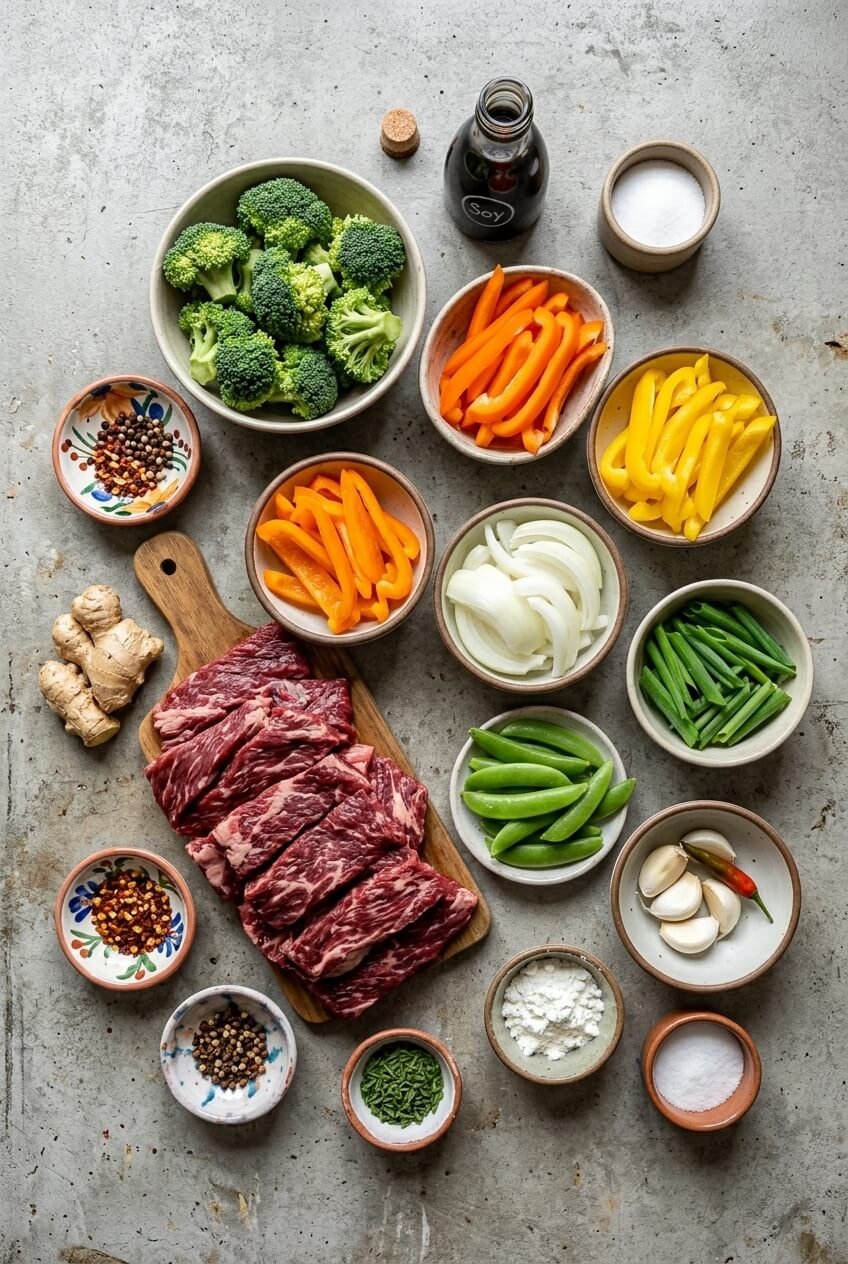
For the Beef & Marinade
- 1 lb flank steak or sirloin, thinly sliced against the grain
- 2 tbsp low-sodium soy sauce
- 1 tbsp rice vinegar
- 1 tbsp cornstarch
- 1 tsp sesame oil
- 1/2 tsp freshly ground black pepper
For the Stir-Fry Sauce
- 1/3 cup low-sodium soy sauce
- 3 tbsp oyster sauce (or hoisin sauce for a vegetarian alternative)
- 2 tbsp rice vinegar
- 1 tbsp brown sugar
- 2 cloves garlic, minced
- 1 tbsp fresh ginger, grated
- 1 tsp cornstarch
- 1/4 cup water or beef broth
For the Vegetables
- 2 cups broccoli florets, cut into bite-sized pieces
- 1 red bell pepper, thinly sliced
- 1 yellow or orange bell pepper, thinly sliced
- 1 medium yellow onion, thinly sliced
- 1 cup snow peas, trimmed
- 2 green onions, sliced, for garnish
For Cooking
- 3 tbsp vegetable oil, divided
- 1 tsp toasted sesame seeds, for garnish (optional)
Ingredient Notes
Flank Steak or Sirloin: This is the star of your beef stir fry with vegetables. Flank steak is lean and flavorful, while sirloin is a bit more tender. The absolute most important step is to slice it thinly against the grain. Look for the long muscle fibers on the surface of the meat and cut perpendicular to them. This shortens the fibers, making each bite incredibly tender instead of chewy. If you can’t find these cuts, skirt steak or even a well-trimmed chuck roast sliced very thinly will work.
Cornstarch: This humble ingredient plays two critical roles. In the beef marinade, it creates a light coating that seals in the meat’s juices during the high-heat sear, preventing it from becoming tough. In the sauce, it acts as a thickener, helping transform the liquid ingredients into a glossy, clingy sauce that coats every piece of beef and vegetable beautifully. Do not substitute with flour, as it can make the sauce cloudy and pasty.
Oyster Sauce: This is the ingredient that adds a deep, savory, umami-rich backbone to your stir-fry sauce. It’s not overly fishy, but rather provides a complex saltiness that soy sauce alone cannot. For a vegetarian version, hoisin sauce is a great alternative, though it will make the sauce slightly sweeter. A good quality oyster sauce, like this Lee Kum Kee Panda Brand Oyster Sauce, is a pantry staple worth having.
Fresh Ginger and Garlic: Please, use fresh. The bright, sharp punch of freshly grated ginger and minced garlic is irreplaceable in a stir-fry. They infuse the oil and, consequently, the entire dish with an aromatic foundation that jarred or powdered versions simply cannot match. Look for ginger with smooth, taut skin and garlic heads that feel firm and heavy for their size.
Vegetable Oil: We use a neutral, high-smoke-point oil like vegetable, canola, or peanut oil for stir-frying. The pan needs to be screaming hot to properly sear the meat and vegetables, and oils like olive oil will burn and smoke at those temperatures, imparting a bitter flavor. The sesame oil is reserved for the marinade and finishing touches, as its flavor is delicate and can be destroyed by high heat.
How to Make Perfect Beef Stir Fry with Vegetables
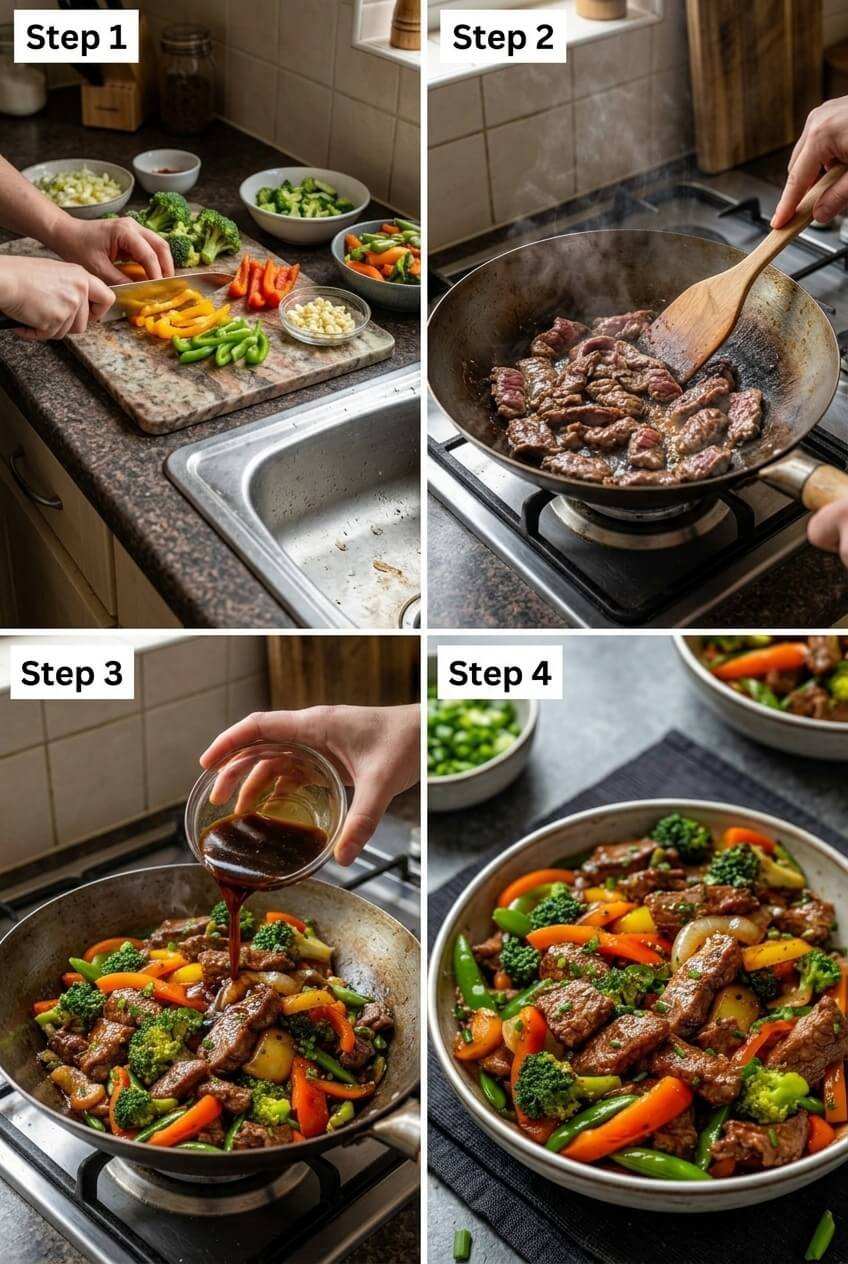
Step 1: Marinate the Beef
In a medium bowl, combine the thinly sliced beef with all the marinade ingredients: 2 tablespoons of soy sauce, 1 tablespoon of rice vinegar, 1 tablespoon of cornstarch, 1 teaspoon of sesame oil, and the black pepper. Use your hands or tongs to toss everything together until every slice of beef is evenly coated in the mixture. Let it sit for at least 10 to 15 minutes while you prepare the sauce and vegetables. This brief marinating time allows the cornstarch to form a protective layer on the beef and the flavors to begin penetrating. Pro Tip: Slicing the beef against the grain is the single most important step for ensuring tender meat. Look for the lines of muscle fiber and cut straight across them, not parallel.
Step 2: Prepare the Sauce and Vegetables
While the beef marinates, whisk together all the stir-fry sauce ingredients in a small bowl or measuring cup. Start by dissolving the 1 teaspoon of cornstarch in the cold water or broth to make a slurry, then whisk in the soy sauce, oyster sauce, rice vinegar, brown sugar, minced garlic, and grated ginger. Set this sauce aside. Next, prepare all your vegetables: cut the broccoli into florets, slice the bell peppers and onion, and trim the snow peas. Having everything measured, chopped, and within arm’s reach is called mise en place, and it’s non-negotiable for successful stir-frying. The cooking happens far too fast to stop and chop something.
Step 3: Stir-Fry the Beef
Place your largest wok or heavy-bottomed skillet over high heat. Let it get very hot for a full minute or two—you should see a slight wisp of smoke. Add 1 tablespoon of the vegetable oil and swirl to coat the pan. Add the marinated beef in a single layer. If your pan isn’t large enough to do this without crowding, cook the beef in two batches. Crowding will steam the meat. Let the beef sear undisturbed for about 1 minute to develop a beautiful brown crust. Then, stir-fry for just another 1 to 2 minutes, until the beef is just browned on the outside but not cooked all the way through. Transfer it to a clean plate immediately. The beef will finish cooking later. Pro Tip: A screaming hot pan is essential. You should hear a vigorous sizzle the moment the beef hits the oil.
Step 4: Cook the Vegetables
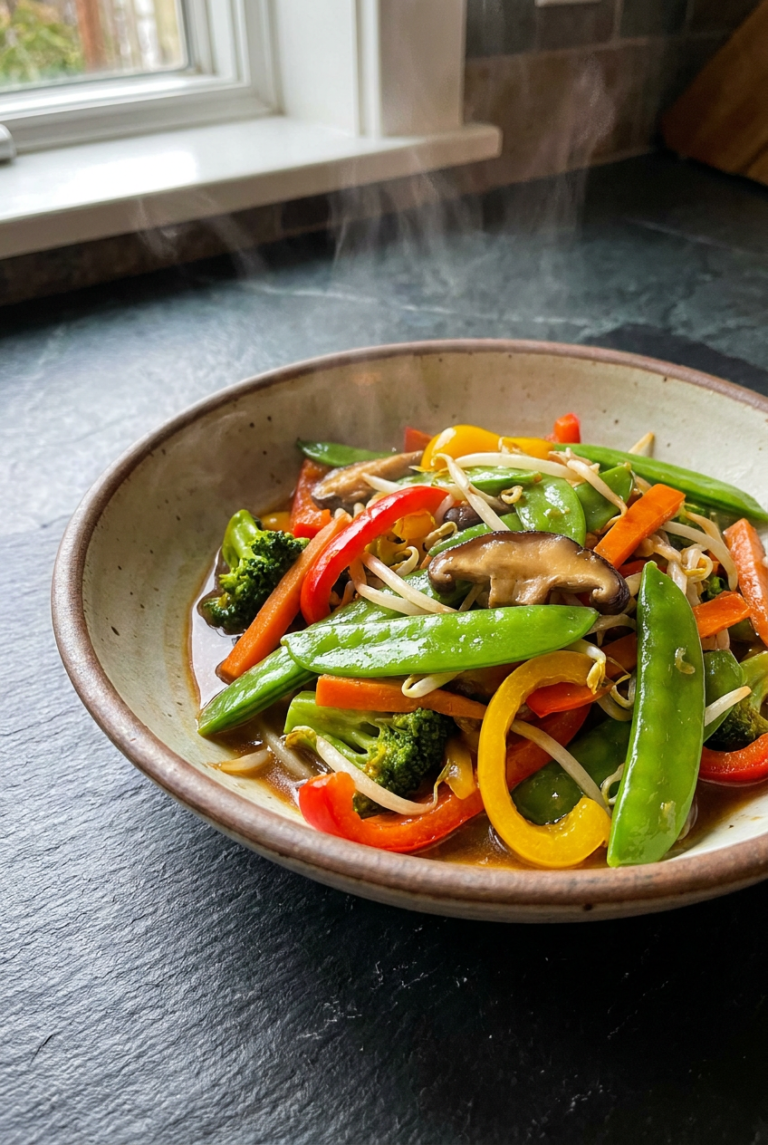
Add the remaining 2 tablespoons of oil to the now-empty hot wok. Add the broccoli florets first, as they take the longest to cook. Stir-fry them for about 2 minutes. Then, add the sliced onions and bell peppers. Continue to stir-fry for another 2 to 3 minutes, tossing frequently. You’ll see the onions become translucent and the peppers will start to soften and brighten. Finally, add the snow peas and stir-fry for just 1 more minute. The goal is crisp-tender vegetables with vibrant color. They should be cooked but still have a pleasant snap. This layered approach ensures nothing is over or undercooked.
Step 5: Combine and Simmer
Return the cooked beef and any juices that have collected on the plate back to the wok, mixing it with the vegetables. Give the prepared sauce a quick re-whisk (the cornstarch may have settled) and pour it evenly over everything. Immediately start tossing and stirring to coat every piece. The sauce will begin to bubble and thicken rapidly. Continue to cook, stirring constantly, for 1 to 2 minutes, until the sauce has thickened into a glossy glaze that clings to the beef and vegetables and everything is heated through. The sauce is done when it coats the back of a spoon. Pro Tip: Keep everything moving once you add the sauce. The cornstarch activates with heat and can cause the sauce to thicken in spots if left unstirred.
Step 6: Serve Immediately
Remove the wok from the heat. Garnish the finished beef stir fry with vegetables generously with the sliced green onions and a sprinkle of toasted sesame seeds if desired. Serve right away over a bed of steamed rice or noodles. For a complete meal, consider starting with something light and sweet like blueberry lemon ricotta pancakes for a special weekend brunch, and then enjoy this savory stir-fry for dinner. The contrast is wonderful.
Pro Tips and Easy Variations for Your Beef Stir Fry with Vegetables
Pro Tips
- Master the mise en place. Chop every vegetable, mix every sauce, and have your oil and tools ready before you turn on the heat. Stir-frying is a fast, high-heat process with no time for pauses.
- Use the right pan and get it hot enough. A wok is ideal because its shape distributes heat evenly, but a large, heavy-bottomed skillet works perfectly. Preheat it until it’s very hot—you’ll often see the metal start to shimmer or a tiny bit of smoke.
- Do not overcrowd the pan. Adding too much food at once drops the pan’s temperature dramatically, causing ingredients to steam and release water instead of searing. Cook in batches if necessary for the best texture.
- Slice your beef thinly and against the grain. This is the ultimate secret to tender stir-fry beef. Take a moment to identify the direction of the muscle fibers and cut perpendicular to them.
- Pat your beef dry before marinating. If your beef is wet from packaging, blot it gently with a paper towel. This helps the marinade adhere better and promotes a better sear.
- Have all your components ready to go. Keep your sauce, a spatula, a bowl for cooked meat, and a plate for serving all within reach. The final assembly happens in under three minutes.
Delicious Variations
- Chicken Stir Fry: Swap the beef for 1 lb of boneless, skinless chicken breast or thighs, sliced thinly. Marinate using the same method. Chicken may cook a minute or two faster than beef.
- Spicy Szechuan Style: Add 1-2 teaspoons of Szechuan peppercorns (lightly crushed) and 1-2 dried red chilies to the oil before adding the vegetables. Finish with a drizzle of chili oil or a spoonful of chili crisp.
- Teriyaki Twist: Replace the stir-fry sauce with a simple homemade teriyaki: 1/3 cup soy sauce, 3 tbsp honey or brown sugar, 2 tbsp mirin, 1 tbsp minced ginger, and 1 tsp cornstarch mixed with 2 tbsp water.
- Thai Basil Beef: Use a sauce of 3 tbsp fish sauce, 2 tbsp oyster sauce, 1 tbsp soy sauce, and 1 tbsp sugar. In the last 30 seconds of cooking, stir in a big handful of fresh Thai basil leaves.
- Complete Protein Swap: For a vegetarian version, use extra-firm tofu (pressed and cubed) or tempeh. For a seafood version, use large shrimp or scallops, reducing the cook time to just 1-2 minutes per side.
Serving Suggestions for a Perfect Dinner
The classic and most satisfying way to serve this beef stir fry with vegetables is over a bed of steamed white or brown jasmine rice. The fluffy rice soaks up the delicious sauce perfectly. For a heartier meal, serve it over lo mein noodles, rice noodles, or even cauliflower rice for a low-carb option. To round out the dinner, a simple side of steamed edamame sprinkled with sea salt or a light cucumber salad with rice vinegar dressing provides a refreshing contrast to the rich, savory stir-fry.
This dish is incredibly versatile for different occasions. It’s a flawless weeknight family dinner, easily doubled to feed a crowd at a casual gathering. For a fun interactive meal, set up a “stir-fry bar” with the cooked components and let everyone build their own bowls with extra toppings like chopped peanuts, cilantro, or extra chili flakes. It pairs wonderfully with a light, crisp lager or a glass of off-dry Riesling. If you’re in the mood for a different kind of comforting, hands-on meal another night, you might enjoy the slow-simmered flavors of a Moroccan chicken tagine.
Nutrition Information
(Approximate per serving, 4 servings total) Calories: 380, Fat: 19g, Carbohydrates: 22g, Protein: 32g, Fiber: 5g, Sodium: 1250mg. Nutritional values are estimates only.
Storage and Make-Ahead Instructions
- Refrigerator: Store leftovers in an airtight container in the refrigerator for up to 3 to 4 days. The vegetables will soften slightly upon reheating, but the flavor will still be excellent.
- Freezer: This stir fry freezes quite well. Cool completely, then transfer to a freezer-safe container or heavy-duty bag, removing as much air as possible. Freeze for up to 2 to 3 months.
- Reheating: For best results, reheat gently in a skillet or wok over medium heat with a small splash of water or broth to loosen the sauce. You can also microwave in a covered dish for 1 to 2 minutes, stirring halfway through.
- Make-Ahead: You can prep everything ahead of time! Slice the beef and marinate it in a sealed container in the fridge for up to 24 hours. Chop all vegetables and store them in separate bags or containers in the fridge. Make the sauce and keep it in a jar in the fridge. When ready to cook, you can start at the stir-frying step.
Your Beef Stir Fry with Vegetables Questions Answered
Can I make this beef stir fry with vegetables gluten-free?
Absolutely. Use certified gluten-free tamari or coconut aminos instead of soy sauce. Ensure your oyster sauce is labeled gluten-free (many brands contain wheat), or substitute it with additional gluten-free hoisin sauce or a dedicated gluten-free stir-fry sauce.
My vegetables turned out soggy. What went wrong?
The most common causes are a pan that wasn’t hot enough or overcrowding. If you add too many vegetables at once, they steam in their own released moisture instead of searing. Cook in batches if your pan is small, and always ensure the oil is shimmering hot before adding ingredients.
Can I use frozen vegetables instead of fresh?
You can, but for best results, thaw them completely and pat them very dry with paper towels before adding to the hot wok. Excess water from frozen veggies will dilute your sauce and create steam, leading to a less flavorful, soggier stir-fry.
What’s the best cut of beef for stir-fry besides flank or sirloin?
Skirt steak is an excellent choice with great flavor. You can also use a well-marbled ribeye for a more luxurious (though pricier) result. For budget-friendly options, look for “stir-fry beef” pre-cut packs or use a chuck roast, but be sure to slice it very thinly against the grain.
How can I reduce the sodium in this recipe?
Use low-sodium soy sauce as directed. You can also reduce the amount of oyster sauce slightly and add a teaspoon of rice vinegar or a squeeze of lime juice to brighten the flavor without extra salt. Using water instead of broth in the sauce also helps control sodium.
Do I need a wok to make a good stir-fry?
While a carbon steel wok is the traditional and ideal tool, it’s not strictly necessary. A large, heavy-bottomed skillet (like cast iron or stainless steel) that can hold high heat and has plenty of surface area will work perfectly for this beef stir fry with vegetables recipe.
Can I add pineapple or other fruit?
Yes, adding fruit like pineapple chunks, mango, or even apple can add a wonderful sweet and tangy element. Add them at the very end with the sauce, just to heat through, so they don’t break down and become mushy.
How do I know when the beef is cooked perfectly?
When you first sear the beef, you only want to cook it until it’s just browned on the outside but still pink in the middle, as it will finish cooking when added back to the sauce. The final result should be tender and slightly pink for flank or sirloin. Overcooking will make it tough.
More Incredible Asian Recipes to Try
If you loved the speed, flavor, and versatility of this beef stir fry with vegetables, you’ll find a whole world of Asian-inspired dishes to explore. For a project that’s equally rewarding but on the sweeter side, mastering fluffy Japanese souffle pancakes is a delightful weekend treat. They require a bit more patience and technique but result in the most ethereally light and cloud-like pancakes you’ve ever tasted.
On the savory side, if you enjoy the one-pan convenience and complex sauces, branching out into curries, noodle dishes, or clay pot recipes is a natural next step. Dishes like a rich red curry with eggplant and basil, or simple garlic noodles with shrimp, follow similar principles of building layers of flavor quickly. The key is finding recipes that balance authentic taste with approachable methods for the home cook, just like this stir-fry aims to do.
The Story Behind This Beef Stir Fry with Vegetables
Stir-frying is a cooking technique with ancient roots in China, developed as a fast, fuel-efficient way to cook small pieces of food over high heat. It was a practical solution that maximized flavor and nutrition while conserving precious resources. The dish we know today as beef stir fry with vegetables is a modern interpretation, popularized in the West but deeply connected to those traditional principles of quick cooking, fresh ingredients, and balanced flavors—salty, sweet, sour, and umami all in one bite.
For me, this recipe is less about strict authenticity and more about the spirit of adaptability and resourcefulness it represents. It’s a lesson my mother taught me: a great meal doesn’t require fancy ingredients, just good technique and a willingness to use what you have. This beef stir fry with vegetables recipe is my homage to that idea—a reliable, joyful formula that turns a simple collection of meat and veggies into something greater than the sum of its parts, a little sizzle of excitement at the end of an ordinary day.
Pin This Beef Stir Fry with Vegetables Recipe for Later
Love this recipe? Save it to your favorite Pinterest board so you can find it again easily. Share it with friends and family who would enjoy making it too.
I truly hope this beef stir fry with vegetables becomes a trusted favorite in your kitchen, just as it is in mine. It’s a recipe built for real life—fast, forgiving, and fantastically delicious. If you give it a try, I’d love to hear how it turned out for you. Did you stick with the classic combo or try a fun variation? Share your thoughts in the comments below.
Want More Recipes Like This?
I put together 400 of my favorite recipes in one download. Chicken dinners, creamy pastas, easy cakes, quick breakfasts, and simple everyday meals the whole family actually eats. If you cook at home regularly, you will use this all the time.

Beef Stir Fry with Vegetables
Ingredients
Method
- In a medium bowl, combine the thinly sliced beef with 2 tbsp soy sauce, 1 tbsp rice vinegar, 1 tbsp cornstarch, 1 tsp sesame oil, and black pepper. Toss until the beef is evenly coated. Let it marinate for at least 10-15 minutes while you prepare the other ingredients.
- In a small bowl or measuring cup, whisk together all the stir-fry sauce ingredients: 1/3 cup soy sauce, oyster sauce, rice vinegar, brown sugar, minced garlic, grated ginger, 1 tsp cornstarch, and water. Set aside.
- Heat a large wok or skillet over high heat until very hot. Add 1 tablespoon of vegetable oil. Add the marinated beef in a single layer, working in batches if necessary to avoid overcrowding. Sear without moving for 1 minute, then stir-fry for another 1-2 minutes until just browned but not fully cooked through. Transfer the beef to a clean plate.
- Add the remaining 2 tablespoons of oil to the hot wok. Add the broccoli florets and stir-fry for 2 minutes. Add the sliced onions and bell peppers and stir-fry for another 2-3 minutes until they begin to soften. Finally, add the snow peas and stir-fry for 1 more minute. The vegetables should be crisp-tender and brightly colored.
- Return the cooked beef and any accumulated juices to the wok with the vegetables. Give the prepared sauce a quick re-whisk and pour it over everything. Toss to combine. Bring the sauce to a simmer and cook, stirring constantly, for 1-2 minutes until the sauce has thickened and glossy and everything is heated through.
- Remove from heat. Garnish with sliced green onions and toasted sesame seeds. Serve immediately over steamed rice or noodles in bowls.
Disclosure: This post may contain affiliate links. If you purchase through our links we may earn a small commission at no extra cost to you.
If you made this Beef Stir Fry with Vegetables, please leave a comment below and let me know how it turned out.