Creamy Lemon Garlic Shrimp Gluten-Free Pasta Recipe, Easy Italian-American Dinner in 30 Minutes
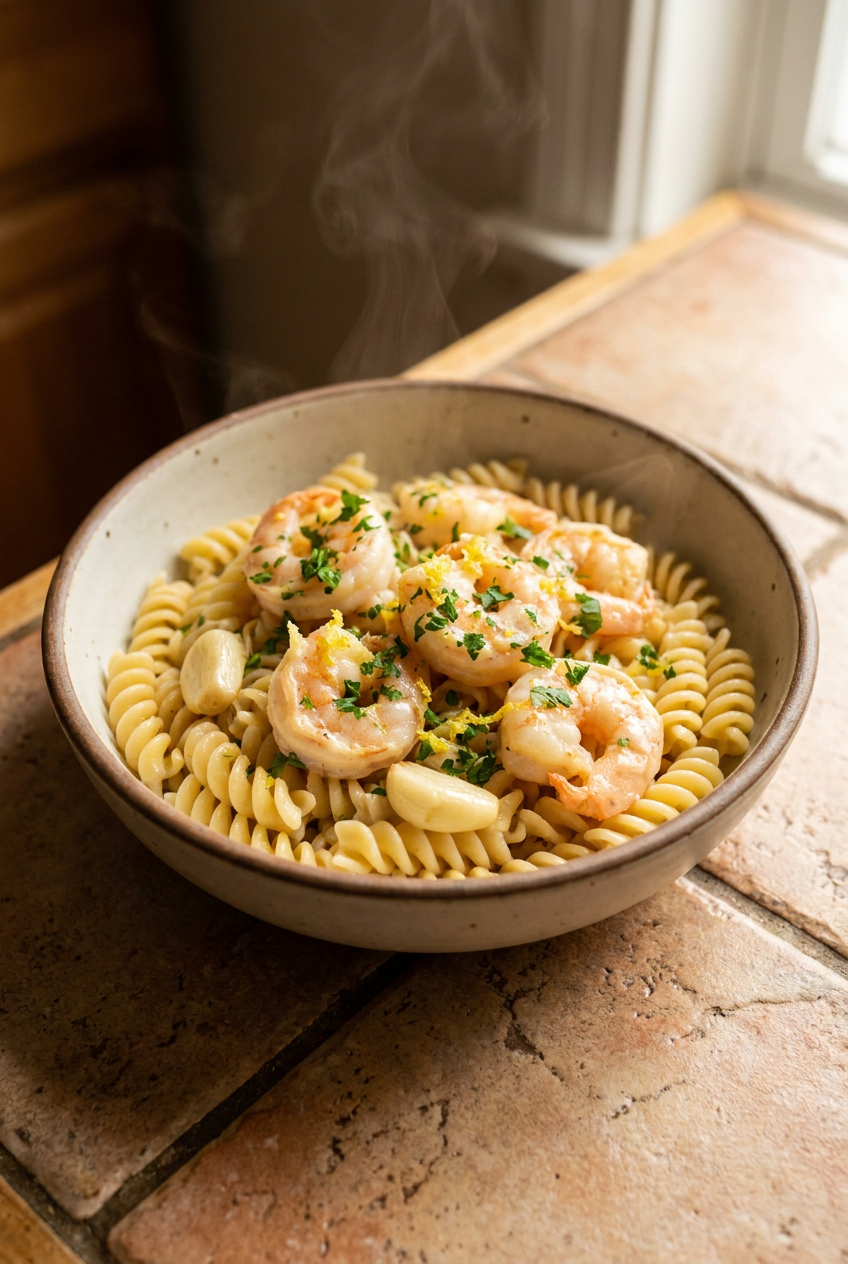
Table of Contents
- Creamy Lemon Garlic Shrimp Gluten-Free Pasta: A Vibrant, Zesty Dinner in 30 Minutes
- Why You Will Love This Creamy Lemon Garlic Shrimp Gluten-Free Pasta Recipe
- Your Simple Ingredients for This Creamy Lemon Garlic Pasta
- How to Make Perfect Creamy Lemon Garlic Shrimp Gluten-Free Pasta
- Pro Tips and Easy Variations for Your Creamy Lemon Garlic Pasta
- Serving Suggestions for a Perfect Dinner
- Nutrition Information
- Storage and Make-Ahead Instructions
- Your Creamy Lemon Garlic Shrimp Gluten-Free Pasta Questions Answered
- More Incredible Italian-American Recipes to Try
- The Story Behind This Recipe
- Pin This Recipe for Later
Creamy Lemon Garlic Shrimp Gluten-Free Pasta: A Vibrant, Zesty Dinner in 30 Minutes
This creamy lemon garlic shrimp gluten-free pasta recipe came to life on a hectic Tuesday evening when my pantry felt bare and my energy was low. I stood in front of the fridge, a lemon and a bag of shrimp staring back at me, and I remembered a dish I had years ago at a tiny seaside restaurant that smelled of salt air and sizzling garlic. I wanted that same bright, creamy comfort but without any gluten, and I wanted it fast enough to get dinner on the table before anyone started rummaging through the snack drawer. What I pulled together that night was nothing short of a revelation: tender, seared shrimp swimming in a velvety lemon garlic cream sauce, all tangled in satisfying gluten-free spaghetti. My family now requests this meal regularly, and it has become my go-to when I need something that tastes both indulgent and fresh.
What truly sets this recipe apart from other creamy shrimp pastas is the deliberate focus on texture and emulsion. Gluten-free pasta can be tricky, so I walk you through exactly how to cook it to the perfect al dente bite, plus you learn a simple trick of reserving starchy pasta water to create a remarkably silky sauce that clings to every strand. Unlike recipes that rely on butter alone, we use olive oil to sear the shrimp, which yields a delicate golden crust without burning, and we finish the sauce off the heat so the Parmesan melts into a glossy, dreamy blanket. The lemon is added in two forms: zest simmered into the cream for deep citrus perfume and fresh juice stirred in at the end for a bright pop that cuts through the richness.
This recipe is for anyone who has ever felt intimidated by cooking shrimp or who worries that gluten-free pasta will turn to mush. It is perfect for busy weeknights when you want a restaurant-quality dish in under thirty minutes, yet elegant enough to serve at a dinner party. The combination of garlic, lemon, and cream feels timeless, and because it is naturally free of gluten when you choose the right ingredients, it welcomes everyone to the table, including those with celiac disease. If you are looking for a sweet finish, you might find yourself drawn to my fluffy Japanese souffle pancakes for a weekend brunch. But tonight, let this zesty pasta become your new favorite comfort meal.
Why You Will Love This Creamy Lemon Garlic Shrimp Gluten-Free Pasta Recipe
- Remarkably fast from start to finish. You can have this complete dinner on the table in only 30 minutes, with just 10 minutes of easy prep. That means you can toss it together after a long workday and still sit down to a warm, satisfying meal before your favorite show starts.
- Luxuriously creamy without feeling heavy. The sauce combines heavy cream with bright lemon juice and zest, creating a balanced richness that coats the pasta beautifully. Parmesan adds depth while the lemon keeps everything tasting fresh and light.
- Perfectly seared shrimp every time. By patting the shrimp completely dry and cooking them quickly over medium-high heat, you achieve a caramelized golden exterior while the inside stays plump and juicy. The simple technique guarantees shrimp that are never rubbery.
- 100 percent gluten-free peace of mind. When you use certified gluten-free pasta, cheese, and cream, this dish is entirely safe for those with celiac disease. The recipe delivers all the satisfaction of a classic pasta dish without any gluten worry.
- Exceptionally versatile for everyday ingredients. You likely have a lemon, garlic, and olive oil on hand already, and frozen shrimp can work beautifully with one easy thawing step. It is an adaptable recipe that invites you to add spinach or switch up the cream for a dairy-free option.
- A true crowd pleaser for all ages. The mild garlic flavor and subtle lemon tang appeal to kids, while adults appreciate the sophisticated sauce. It is one of those rare dinners that makes everyone ask for seconds without any complaints.
Your Simple Ingredients for This Creamy Lemon Garlic Pasta
Pasta
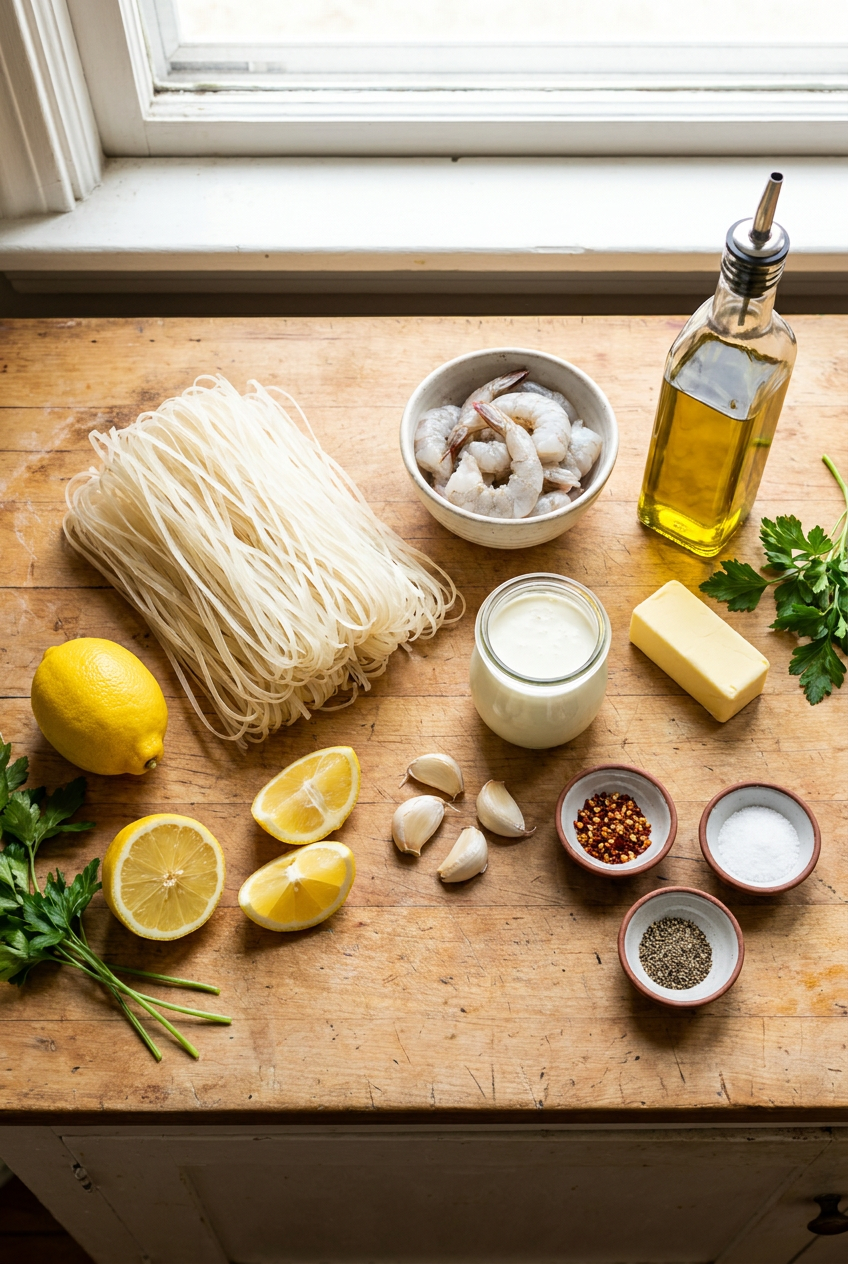
- 12 oz gluten-free spaghetti, preferably brown rice or corn-based
Shrimp and Sauce
- 1 lb large shrimp, peeled and deveined
- 2 tbsp olive oil
- 4 cloves garlic, minced
- 1 cup heavy cream, or dairy-free cream alternative
- 1/2 cup Parmesan cheese, grated
- 1 lemon, zested and juiced
- salt and pepper, to taste
- 1/4 tsp red pepper flakes, optional
Garnish
- 2 tbsp fresh parsley, chopped
Ingredient Notes
Gluten-free spaghetti. The backbone of this dish is a high-quality gluten-free spaghetti made from brown rice and corn. These blends tend to hold their shape best during boiling and provide a neutral flavor that soaks up the sauce without turning gummy. Look for brands that have a slightly rough surface, as this texture helps the cream sauce cling. If you prefer, you can use chickpea or lentil pasta, but the cooking time will vary and you may need to watch it even more closely to avoid mushiness.
Large shrimp. Opt for shrimp labeled 16/20 count per pound for the ideal size that cooks quickly and looks impressive on the plate. Buy them peeled and deveined to save time, or do it yourself by running a knife down the back and removing the dark vein. Fresh shrimp have a mild sea smell, not an ammonia odor. If using frozen shrimp, thaw them overnight in the refrigerator and then pat them very, very dry so they sear instead of steam.
Garlic. Four cloves of fresh garlic provide the aromatic base for the sauce. Mince them finely so they release their oils quickly without burning in the hot oil. Jarred minced garlic can work in a pinch, but the flavor will be less vibrant and slightly more acidic. Fresh garlic gives that sweet, pungent fragrance that fills your kitchen and builds the foundation of the entire dish.
Heavy cream. Heavy cream, with its high fat content, creates the luscious texture of the sauce and prevents curdling when you add the lemon juice. For a dairy-free version, full-fat coconut cream is an excellent substitute, though it will add a subtle coconut note that pairs surprisingly well with lemon. Avoid using low-fat milk alone, as the sauce will be too thin and may separate unless you add a cornstarch slurry to stabilize it.
Parmesan cheese. Grate your own Parmesan from a block for the smoothest melt and best flavor. Pre-shredded varieties often contain anti-caking agents that can make the sauce grainy. A high-quality Parmigiano Reggiano adds nutty, savory depth that balances the tangy lemon. For a dairy-free alternative, you can omit the cheese entirely and stir in 2 tablespoons of nutritional yeast to get a cheesy, umami note without any dairy.
Lemon. One large, bright yellow lemon with a firm, fragrant skin is ideal. You will use the zest to infuse the cream with citrus oils while the sauce simmers, then stir in the juice at the very end to preserve its fresh, sharp acidity. Always zest before you juice, and avoid the white pith which can taste bitter. If your lemon is small, grab two to ensure you have enough juice and zest for a properly vibrant sauce.
How to Make Perfect Creamy Lemon Garlic Shrimp Gluten-Free Pasta
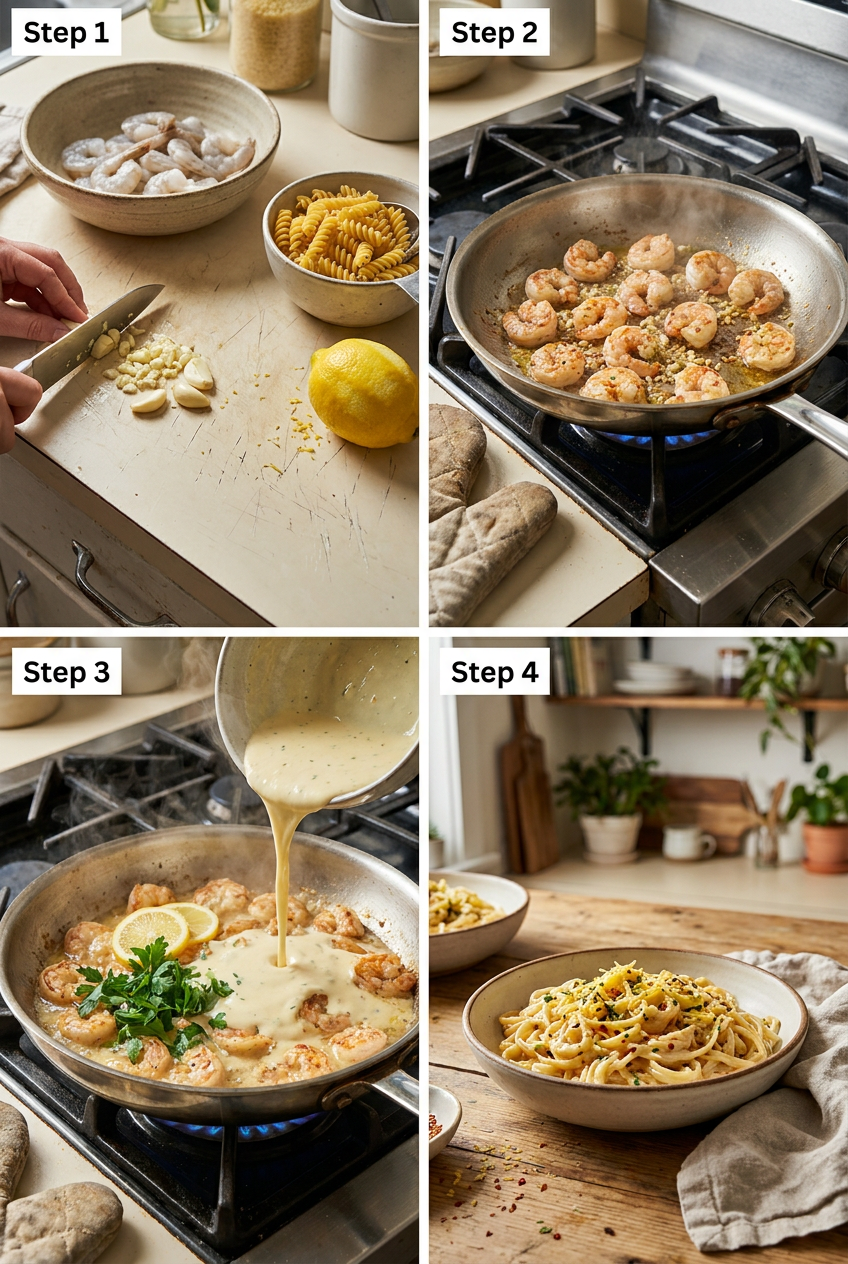
Phase 1: Pasta and Shrimp
Step 1: Cook the Gluten-Free Pasta
Fill a large pot with water, season it generously with salt until it tastes like the sea, and bring it to a rolling boil. Add the gluten-free spaghetti and set a timer for 1 to 2 minutes less than the package directs. Stir the pasta immediately to prevent sticking, then use a pair of tongs to lift a strand and taste it frequently during the final minute. You are looking for a tender but firm bite, a true al dente that still has a little resistance when you chew. Gluten-free pasta can go from perfectly cooked to mushy in seconds, so err on the side of undercooking. When you drain it, reserve at least 1 cup of the cloudy pasta water, which is full of starch and will later transform your sauce into a silky coating. Do not rinse the pasta; the light coating of starch on each strand will help the sauce stick.
Step 2: Sear the Shrimp to a Golden Crust
While the pasta cooks, place the peeled and deveined shrimp on a clean kitchen towel or paper towels and pat them completely dry. Any moisture left on the surface will create steam and prevent browning. Season them generously with salt and freshly cracked black pepper on both sides. Heat a large skillet over medium-high heat and add 1 tablespoon of olive oil. When the oil shimmers and slides easily across the pan, add the shrimp in a single layer. You should hear a satisfying sizzle; if the pan is not hot enough, the shrimp will turn pale instead of golden. Cook for exactly 2 minutes without moving them, then flip each one with tongs and cook for another 2 minutes. The shrimp are done when they are opaque throughout, curled into a loose C shape, and have reached an internal temperature of 145°F (63°C). Transfer them to a plate and tent loosely with foil to keep them warm.
Phase 2: The Cream Sauce and Final Assembly
Step 3: Bloom the Garlic
Reduce the heat under the same skillet to medium, letting it cool slightly so the garlic does not scorch. Add the remaining 1 tablespoon of olive oil, then scatter in the minced garlic. Stir it constantly with a wooden spoon for about 30 seconds. You will know the garlic is ready when you can smell its sweet, nutty aroma rising from the pan and it turns a pale golden color without any hint of brown. Overcooking garlic at this stage leads to bitterness that will carry through the entire sauce, so keep your attention fully on the pan.
Step 4: Simmer the Creamy Lemon Sauce
Pour the heavy cream into the skillet in a steady stream, stirring as you go. Add the lemon zest and the red pepper flakes if you are using them. Scrape up any browned bits left from the shrimp with your spoon; those delicious little bits add a depth of flavor. Bring the sauce to a gentle simmer, not a rapid boil, and let it bubble softly for 2 to 3 minutes. You will see it thicken slightly and coat the back of a spoon. If the sauce seems too thick, you can loosen it with a splash of the reserved pasta water. The fragrance at this point will be pure magic, a blend of sweet cream, bright lemon, and warm garlic.
Step 5: Toss Everything Together Off Heat
Remove the skillet from the burner entirely. This crucial step keeps the cheese from seizing into clumps. Sprinkle the grated Parmesan over the cream and add the fresh lemon juice, then stir briskly until the sauce is completely smooth and glossy. Add the drained gluten-free spaghetti directly to the skillet and use tongs to toss and lift the strands, incorporating the sauce evenly. Pour in splashes of the reserved pasta water, a couple of tablespoons at a time, tossing after each addition, until the sauce reaches a loose, silky consistency that lightly coats every noodle. Finally, fold in the seared shrimp and most of the chopped parsley, giving everything a gentle turn to combine. If you want to explore another gluten-free favorite for breakfast, my blueberry lemon ricotta pancakes are a delightful weekend treat. Now, divide the pasta among warm plates, scatter the remaining parsley on top, and serve right away.
Pro Tips and Easy Variations for Your Creamy Lemon Garlic Pasta
Pro Tips
- Choose blended gluten-free pasta. Pasta made from a combination of brown rice and corn typically offers the most authentic al dente texture and less risk of falling apart. These blends hold their shape during tossing and reheating better than single-grain varieties.
- Never skip the pasta water. That cloudy, starchy water acts as the perfect emulsifier, bringing the oil and cream together into a cohesive sauce that clings to the pasta. Without it, the sauce can break or pool at the bottom of the plate.
- Dry the shrimp meticulously. Even a little moisture on the shrimp will cause them to steam in the pan, leaving you with a pale, rubbery texture instead of a caramelized sear. Use paper towels and press firmly.
- Add lemon juice strictly off heat. High heat dulls the fresh acidity of lemon juice and can cause dairy to curdle. Stirring it in after you remove the pan from the burner preserves its bright flavor and keeps the sauce smooth.
- Undercook the pasta by a minute. Gluten-free pasta continues to soften when you toss it with the hot sauce. Finishing the cooking in the skillet ensures the perfect final texture rather than an overcooked, mushy outcome.
- Warm your plates before serving. A quick minute in a low oven or a rinse with hot water keeps the pasta hot and the sauce creamy from the first bite to the last. It is an effortless touch that makes dinner feel special.
Delicious Variations
- Spinach and sun-dried tomato boost. Add 2 cups of fresh baby spinach during the last minute of simmering the cream sauce, letting it wilt gently, then stir in 1/4 cup chopped oil-packed sun-dried tomatoes for a pop of color and tangy sweetness.
- Dairy-free lemon garlic shrimp pasta. Replace the heavy cream with full-fat coconut cream, omit the Parmesan, and whisk in 2 tablespoons of nutritional yeast along with the lemon juice. The result is still incredibly creamy with a subtle coconut undertone.
- Spicy arrabbiata style. Increase the red pepper flakes to 1 teaspoon and add 2 tablespoons of tomato paste to the garlic before pouring in the cream. This creates a creamy, blush-toned sauce with a lingering warmth that complements the shrimp beautifully.
- Herbed garlic butter version. Melt 2 tablespoons of butter along with the olive oil, and stir in a mix of finely chopped basil and chives at the very end. The herbs brighten the dish and give it a summery garden feel.
- Lemon garlic scallop linguine. Swap the shrimp for sea scallops, searing them the same way for about 2 minutes per side, and consider adding a splash of white wine to the pan after cooking the garlic for an extra layer of flavor.
If you find yourself in the mood for a completely different but equally warming dinner, my Moroccan chicken tagine offers tender spiced chicken and apricots that cook slowly into a fragrant stew. It is another wonderful way to bring bold, comforting flavors to your table.
Serving Suggestions for a Perfect Dinner
A bowl of this creamy lemon garlic shrimp pasta feels like a complete meal on its own, but a few simple sides elevate it into a memorable dinner. A crisp arugula salad with shaved Parmesan and a lemon vinaigrette mirrors the bright notes of the sauce without competing with it. For a drink pairing, a chilled Pinot Grigio with its citrus and apple notes cuts through the richness beautifully. If you prefer a non-alcoholic option, a tall glass of sparkling water with a slice of lemon or cucumber refreshes the palate between bites. For presentation, I like to twirl each portion of pasta into a neat nest using tongs, then arrange the shrimp on top and garnish with a generous flurry of parsley and extra lemon wedges alongside a small bowl of additional grated Parmesan so everyone can customize their plate.
This dish shines at casual weeknight dinners when you crave something that feels a little fancy but comes together without fuss. Because it scales easily, you can double the recipe for a small gathering, just be sure to sear the shrimp in two batches to avoid crowding the pan. It also makes a lovely lunch when you have leftovers and a few minutes to reheat them gently. No matter the occasion, the vibrant flavors and comforting creaminess make it a recipe you will return to again and again, especially during the spring and summer when lemons are at their best.
Nutrition Information
(Approximate per serving, 4 servings total) Calories: 450, Fat: 26g, Carbohydrates: 28g, Protein: 24g, Fiber: 3g, Sodium: 480mg. Nutritional values are estimates only.
Storage and Make-Ahead Instructions
- Refrigerator: Transfer any leftovers to an airtight container and store in the fridge for up to 3 days. The pasta will absorb some sauce over time, so it may become a bit softer, but the flavor remains wonderful.
- Freezer: Freezing is not recommended because the cream sauce can separate and develop a grainy texture once thawed. The shrimp can also become rubbery after freezing and reheating.
- Reheating: The best way to bring the dish back to life is in a skillet over low heat. Add a splash of water, milk, or additional cream and stir gently until the sauce loosens and the shrimp are warmed through. Avoid high heat which can break the sauce.
- Make-Ahead: You can peel and devein the shrimp a day in advance and store them in the fridge on a paper towel-lined plate. Grate the Parmesan and chop the parsley ahead of time as well. Cook the pasta and sauce right before serving for the best texture.
Your Creamy Lemon Garlic Shrimp Gluten-Free Pasta Questions Answered
Can I use frozen shrimp for this recipe?
Yes, you absolutely can. Thaw the shrimp completely in the refrigerator overnight, then drain any liquid and pat them as dry as possible with paper towels. Thorough drying is essential to achieve a golden sear instead of steaming them.
How do I keep gluten-free pasta from turning mushy?
Undercook the pasta by 1 to 2 minutes compared to the package directions, tasting frequently as you approach the end. If you are not adding it to the sauce right away, rinse it briefly with cold water to stop the cooking, then toss with a drizzle of olive oil to prevent sticking.
Is this dish truly safe for someone with celiac disease?
Yes, as long as all ingredients are certified gluten-free. Double-check the labels on your pasta, Parmesan cheese, and heavy cream, as some brands may have cross-contamination risks. When in doubt, choose products clearly marked gluten-free.
What can I substitute for heavy cream to make it lighter?
You can use half-and-half combined with 1 teaspoon of cornstarch mixed into 1 tablespoon of cold water. Whisk this slurry into the half-and-half before adding it to the pan, and simmer gently until thickened. The sauce will be a bit less rich but still creamy.
How do I know when the shrimp are perfectly cooked?
Perfectly cooked shrimp turn pink and opaque, curling into a loose C shape. If they curl into a tight O, they are likely overcooked and may be rubbery. Use an instant-read thermometer to check for an internal temperature of 145°F (63°C) for the most accurate doneness.
Can I add vegetables to this pasta?
Absolutely. Fresh spinach, asparagus tips, or halved cherry tomatoes all work wonderfully. Add delicate greens like spinach right at the end of the sauce simmer so they wilt gently, and sauté heartier vegetables before you cook the garlic to ensure they are tender.
Why did my sauce turn out grainy?
A grainy sauce often happens when the Parmesan is added to a pan that is too hot, causing the cheese to clump instead of melting smoothly. Always remove the skillet from the heat before stirring in the cheese, and use freshly grated Parmesan for the best results.
Can I make this recipe dairy-free?
Yes, for a dairy-free version use full-fat coconut cream in place of heavy cream, omit the Parmesan, and stir in 2 tablespoons of nutritional yeast for a cheesy flavor. The lemon and garlic still shine through, creating a creamy, vibrant sauce.
What type of gluten-free pasta shape works best?
While spaghetti or linguine is classic for this sauce, any long strand pasta works beautifully. Short shapes like penne or fusilli can also be used, but they may not hold the sauce in the same way. Choose a shape with ridges or a rough texture to help the cream sauce adhere.
Can I prepare the sauce in advance?
The sauce is best made fresh because cream sauces can thicken and separate when chilled and reheated. If you must prep ahead, cook only the garlic and cream base, then reheat gently and add the lemon juice, Parmesan, and pasta water just before serving to restore its creamy texture.
More Incredible Italian-American Recipes to Try
If the comforting combination of cream, garlic, and seafood captured your heart, you might also adore a classic shrimp scampi served over gluten-free linguine, where white wine and butter create a lighter yet equally aromatic sauce. Another Italian-American favorite that pairs beautifully with a gluten-free lifestyle is chicken piccata, where tender chicken cutlets swim in a lemon caper sauce that echoes the bright, citrusy notes of this pasta. And for a cozy, slow-simmered option, a hearty gluten-free meatball marinara over polenta satisfies that deep craving for red sauce and savory richness.
These recipes share the same soul-warming qualities that make this creamy lemon garlic pasta so beloved: they rely on simple, high-quality ingredients and techniques that anyone can master. Whether you are new to gluten-free cooking or a seasoned pro, having a collection of reliable Italian-American dinners means you can always whip up a meal that feels both celebratory and comforting. I hope this recipe becomes a staple in your kitchen and encourages you to explore even more ways to enjoy pasta night, completely free of gluten and full of flavor.
The Story Behind This Creamy Lemon Garlic Shrimp Gluten-Free Pasta
The idea of combining lemon, garlic, and seafood with pasta is deeply rooted in coastal Italian cooking, particularly from regions like Campania and
Creamy Lemon Garlic Shrimp Gluten-Free Pasta
Ingredients
Method
- Bring a large pot of salted water to a boil. Cook the gluten-free spaghetti according to package directions until al dente. Reserve 1 cup of pasta water, then drain and set aside.
- Pat shrimp dry and season with salt and pepper. In a large skillet over medium-high heat, warm 1 tablespoon olive oil. Add shrimp in a single layer and cook 2 minutes per side until pink and opaque, reaching an internal temperature of at least 145°F (63°C). Transfer to a plate.
- In the same skillet, reduce heat to medium and add the remaining 1 tablespoon olive oil. Sauté minced garlic for 30 seconds until fragrant. Pour in the heavy cream, lemon zest, and red pepper flakes (if using). Simmer for 2–3 minutes until slightly thickened.
- Remove skillet from heat. Stir in Parmesan cheese and lemon juice until smooth. Add the drained pasta and toss well, adding splashes of reserved pasta water to reach a silky, creamy consistency. Fold in the cooked shrimp and most of the parsley.
- Divide among warm plates, top with remaining parsley, and serve immediately with extra Parmesan and lemon wedges on the side.
Disclosure: This post may contain affiliate links. If you purchase through our links we may earn a small commission at no extra cost to you.
If you made this Creamy Lemon Garlic Shrimp Gluten-Free Pasta, please leave a comment below and let me know how it turned out.