Classic Pasta e Fagioli Soup Recipe, Easy Italian Dinner in 45 Minutes
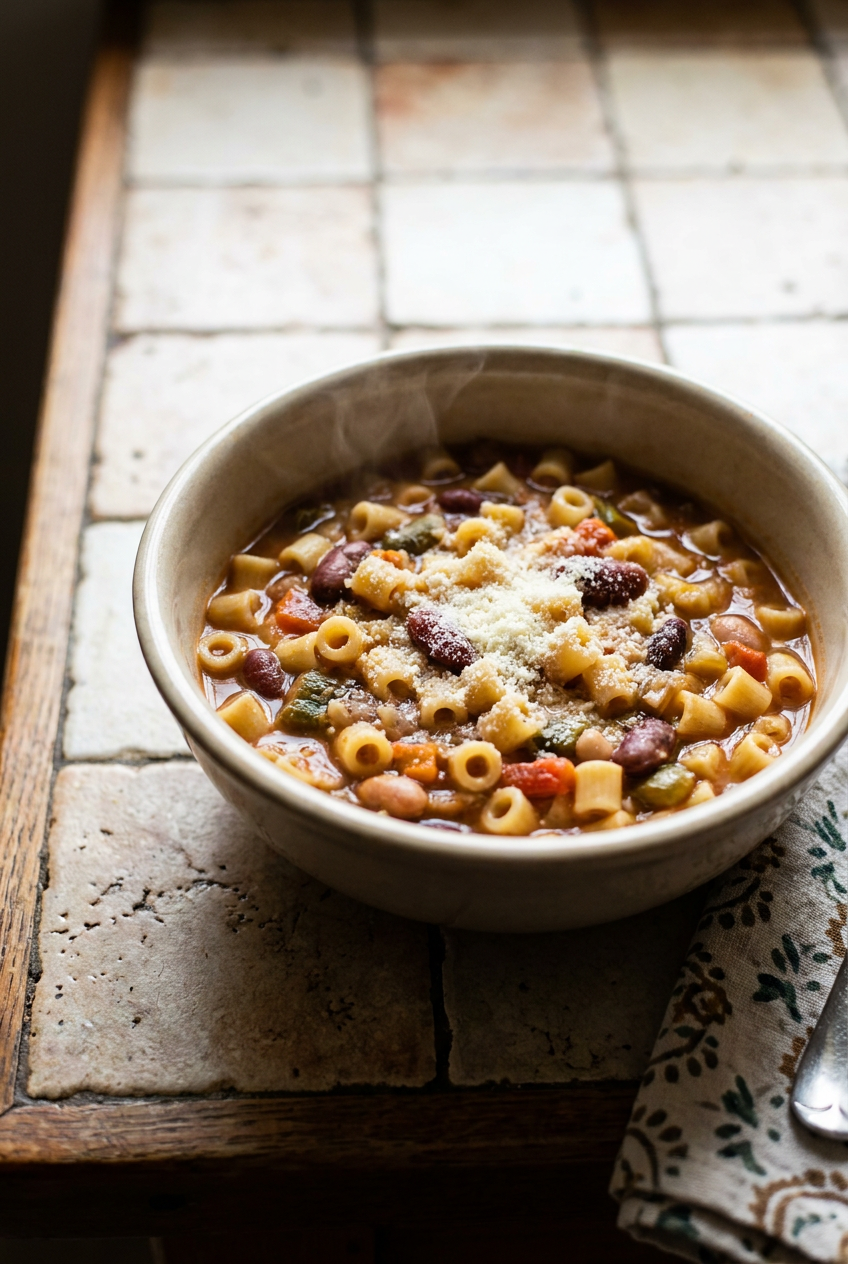
Table of Contents
- Classic Pasta e Fagioli Soup Recipe: A Hearty, Rustic Italian Soup That Marries Tender Pasta and Creamy Beans in a Rich Tomato Broth, Finished with a Swirl of Extra-Virgin Olive Oil
- Why You Will Love This Classic Pasta e Fagioli Soup Recipe
- Your Simple Ingredients for the Perfect Classic Pasta e Fagioli Soup
- How to Make Perfect Classic Pasta e Fagioli Soup
- Pro Tips and Easy Variations for Your Classic Pasta e Fagioli Soup
- Serving Suggestions for a Perfect Italian Dinner
- Nutrition Information
- Storage and Make-Ahead Instructions
- Your Classic Pasta e Fagioli Soup Questions Answered
- More Incredible Italian Recipes to Try
- The Story Behind This Classic Pasta e Fagioli Soup
- Pin This Classic Pasta e Fagioli Soup Recipe for Later
Classic Pasta e Fagioli Soup Recipe: A Hearty, Rustic Italian Soup That Marries Tender Pasta and Creamy Beans in a Rich Tomato Broth, Finished with a Swirl of Extra-Virgin Olive Oil
If you are searching for the best classic pasta e fagioli soup recipe, you have found a version that truly captures the soul of the Italian countryside. I still remember the first time I tasted this soup in a tiny trattoria tucked away in a cobblestone alley in Bologna. The evening was chilly, my feet were tired from wandering, and the waiter placed a steaming bowl before me without a word, just a nod and a smile. The first spoonful was a revelation. The broth was rich and velvety, clinging to each small pasta shape, the beans were impossibly creamy, and the whisper of pancetta and rosemary felt like a warm hug. I practically begged the chef to share his wisdom, and while he didn’t hand over a written recipe, he gave me the most valuable thing: a deep appreciation for patience, quality ingredients, and the magic of a Parmesan rind. This recipe is my love letter to that moment, and I can promise you it will fill your kitchen with the same unmistakable aroma of comfort and care.
What sets this classic pasta e fagioli soup recipe apart from countless others is the deliberate layering of flavor from the very start. We render pancetta until it’s crisp and golden, leaving behind a fragrant fat that becomes the canvas for the soffritto, a slow-cooked mixture of onion, carrot, and celery that forms the soul of any great Italian soup. Instead of simply dumping everything into a pot, we coax out the sweetness of the tomato paste, let a bay leaf and rosemary sprig infuse the broth, and drop in a Parmesan rind that dissolves into an umami-rich backbone you simply cannot fake. The pasta cooks directly in the soup, releasing its starches to thicken the liquid naturally, so you end up with a spoon-hugging texture instead of a thin, watery broth. It’s the kind of rustic, honest cooking that reminds you why the simplest dishes are often the most magnificent.
This recipe is for anyone who craves a bowl of something deeply satisfying without needing a culinary degree or a full afternoon of prep. It is an easy Classic Pasta e Fagioli Soup that comes together in about forty-five minutes, making it perfect for a busy weeknight when you want dinner to feel like an event. It is also the ideal centerpiece for a cozy Sunday lunch with crusty bread and a simple green salad. If you are new to Italian cooking, this is a wonderful place to start, because every step teaches you a fundamental technique that you will carry into other recipes. And if you are a seasoned home cook, you will appreciate the depth and authenticity that comes from humble ingredients treated with respect. I often think that a great bowl of soup is as restorative as a lazy morning with a stack of fluffy Japanese souffle pancakes, only in a savory, soul-warming form. Once you master this, you will find yourself making it on repeat, perhaps tweaking it with your own signature touch.
Why You Will Love This Classic Pasta e Fagioli Soup Recipe
- Layers of deep, savory flavor. From the crispy pancetta to the slow-sweated soffritto and the slow-simmered Parmesan rind, every ingredient builds on the one before it. You will taste the care in every spoonful, not just tomato and beans but a complex, rounded richness that feels like it took all day.
- Perfect, creamy texture without any cream. The combination of starchy pasta cooking water and beans that break down slightly creates a wonderfully thick, almost velvety broth. It coats your spoon in the most comforting way, and it is entirely dairy-free unless you finish it with a knob of butter or cheese.
- Flexible and forgiving. This recipe welcomes substitutions with open arms. You can swap the pancetta for bacon, use vegetable broth to go meatless, or toss in a handful of greens at the end. The basic formula is unshakeable, so you can make it your own without fear.
- Quick enough for a weeknight, impressive enough for company. With just fifteen minutes of prep and thirty minutes of simmering, you can have a homemade Italian Dinner recipe on the table that tastes like something from a trattoria. Set out a bowl of grated Parmigiano-Reggiano and watch everyone’s eyes light up.
- Nourishing and satisfying. Packed with protein-rich beans and vegetables, this soup is as wholesome as it is delicious. One bowl will leave you feeling full and content without weighing you down, and the leftovers only get better the next day.
- Authentic Italian comfort at home. You don’t need a plane ticket to experience the real deal. This is exactly the sort of dish Italian grandmothers have been making for generations, relying on pantry staples and a little bit of love. Making it yourself connects you to that beautiful tradition in every meaningful way.
Your Simple Ingredients for the Perfect Classic Pasta e Fagioli Soup
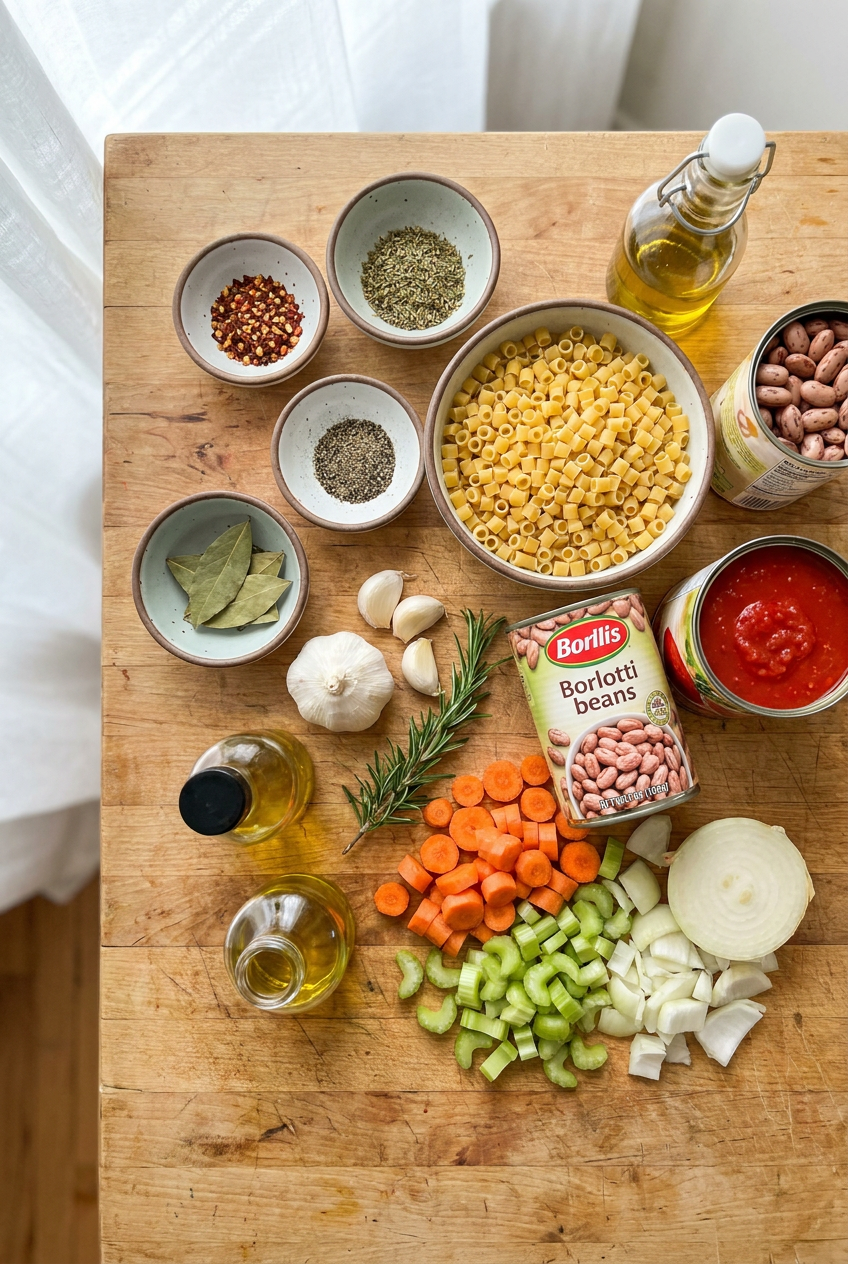
Main Ingredients
- 2 tbsp extra-virgin olive oil, plus more for drizzling
- 4 oz pancetta, diced small
- 1 medium yellow onion, finely chopped
- 1 large carrot, peeled and finely diced
- 1 large celery rib, finely diced
- 4 cloves garlic, minced
- 2 tbsp tomato paste, preferably double-concentrated
- 1 (15-oz) can cannellini beans, drained and rinsed
- 1 (14-oz) can crushed tomatoes, preferably San Marzano
- 4 cups low-sodium chicken broth or vegetable broth
- 1 (2-inch) Parmesan rind, optional but recommended
- 1 sprig fresh rosemary, plus more for garnish
- 1 bay leaf
- 1 cup ditalini pasta or other small pasta
- Kosher salt and freshly ground black pepper, to taste
For Serving
- Freshly grated Parmigiano-Reggiano, as needed
- Crushed red pepper flakes, as needed
- Crusty Italian bread, sliced
Ingredient Notes
Pancetta is the secret to the soup’s deep savory base. This cured Italian pork belly renders its fat slowly, leaving behind tiny crispy bits that add a salty, porky punch in every bite. Look for it at the deli counter, diced into small cubes, or buy a chunk and chop it yourself. If pancetta is unavailable, you can substitute an equal amount of diced bacon or guanciale, though each will bring a slightly different character. Guanciale is lusciously fatty and peppery, while bacon adds a smoky note that still works beautifully.
Soffritto is the holy trinity of Italian cooking: onion, carrot, and celery. Dicing them finely and sweating them slowly allows their natural sweetness and aroma to bloom, creating the foundation of the soup. Do not rush this step. A large yellow onion works best for its balance of sweetness and bite, while a fresh, firm carrot and a crisp celery rib add earthiness and a subtle herbal note. If your celery is limp, the flavor won’t be as vibrant, so choose the freshest you can find.
Tomato paste adds concentrated tomato flavor without excess liquid. Cooking it with the soffritto for a minute caramelizes its sugars and removes any raw tinny taste. I recommend double-concentrated tomato paste sold in tubes because it’s more intense and you can easily use small amounts. If you only have the canned variety, it will still work beautifully. Crushed tomatoes form the body of the broth. San Marzano tomatoes are ideal for their naturally sweet, low-acid profile, but any quality canned crushed tomato will do. Steer clear of tomato puree that can be too thin or tomato sauce that may include unwanted seasonings.
Cannellini beans are the classic choice for pasta e fagioli. Their thin skin and buttery, almost creamy flesh meld perfectly into the soup. You can absolutely use canned beans for convenience, just be sure to drain and rinse them well to remove excess sodium and any metallic flavor. If you prefer to cook dried beans from scratch, that is a wonderful option that gives you even more control over the texture. Parmesan rind is one of those little treasures that frugal Italian cooks never throw away. It infuses the broth with a deep nutty, savory richness as it simmers. Save your rinds in a bag in the freezer and toss one into any soup or stew you make. Remove it before serving, and if you are lucky, you might find a bit of softened cheese clinging to it that you can scrape back into the pot.
Ditalini pasta is the traditional short tube shape that nests perfectly in your spoon alongside the beans. Other great options include small shells, elbow macaroni, or even broken spaghetti. The key is to choose a pasta that will cook in roughly eight to ten minutes so it is done at the same time as the rest of the soup. If you are making a homemade Classic Pasta e Fagioli Soup and plan to have leftovers, you might cook the pasta separately and add it to each bowl to avoid sogginess.
How to Make Perfect Classic Pasta e Fagioli Soup
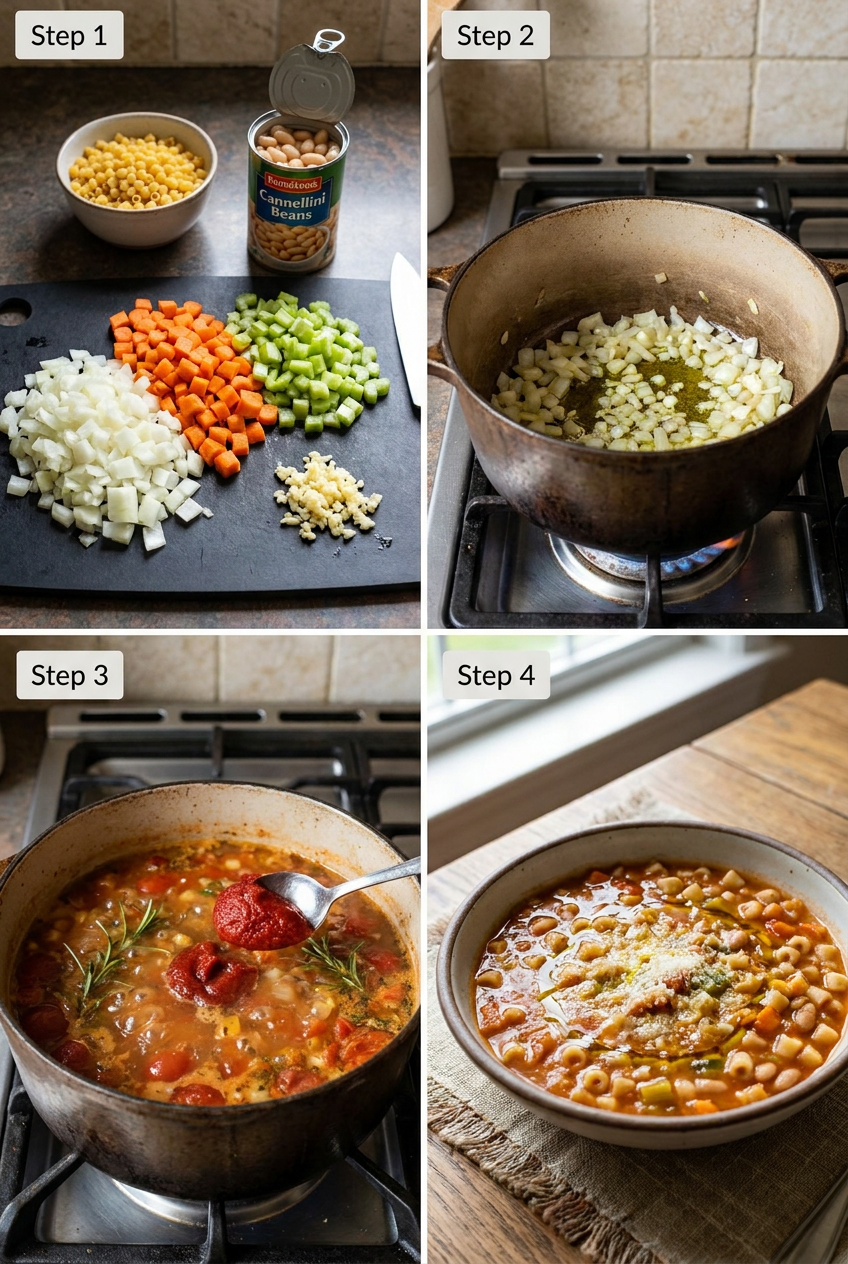
Phase 1: Build the Flavor Base
Render the Pancetta
Place your Dutch oven or heaviest pot over medium heat and pour in the two tablespoons of olive oil. Once it shimmers, scatter the diced pancetta across the bottom. You will hear a gentle sizzle that grows steadily as the fat starts to render. Stir it every minute or so to make sure every piece browns evenly. After about five or six minutes, the pancetta should turn deeply golden and crisp around the edges, while the bottom of the pot will be coated in a glistening layer of flavorful fat. Use a slotted spoon to transfer the pancetta to a small plate, keeping all that wonderful rendered goodness right where it is. This is the foundation on which the whole soup is built, so do not be tempted to pour it off.
Pro tip: If you do not have pancetta, diced bacon works wonderfully. Just be aware that bacon will introduce a smoky note that shifts the flavor slightly away from the traditional Italian profile, though it is still delicious.
Phase 2: Sweat the Soffritto
Sweat the Soffritto
With the heat still at medium, add the chopped onion, diced carrot, and diced celery to the pot. Season lightly with a pinch of salt and a few cracks of black pepper. The vegetables will immediately start to sizzle and release moisture. Stir them often with a wooden spoon, scraping up any browned bits from the bottom. You are looking for them to soften significantly and for the onion to turn translucent without taking on much color. This should take about six to eight minutes. If the vegetables start to brown too quickly, lower the heat a touch. When the soffritto is glossy and tender, add the minced garlic and the two tablespoons of tomato paste. Stir continuously for about one minute. You will notice the tomato paste darkening slightly and the garlic releasing its heady fragrance. This brief toasting removes any raw edge and locks the flavor into the vegetables.
Pro tip: Resist the urge to rush the soffritto. This step is not just about softening vegetables, it is about coaxing out their natural sweetness, which will give your soup a roundness that no amount of salt can replicate. Much like a Moroccan chicken tagine, the low-and-slow start is everything.
Phase 3: Simmer the Broth
Build the Broth
Now pour in the crushed tomatoes and the four cups of chicken broth. Drop in the bay leaf, the fresh rosemary sprig, and the Parmesan rind if you are using it. Give everything a good stir, then raise the heat to high and bring the pot to a boil. As soon as it is bubbling enthusiastically, reduce the heat to medium low so that the surface is at a vigorous simmer but not a rolling boil. Let it cook uncovered for ten minutes, stirring now and then. This short simmer allows the herbs and the rind to infuse the liquid with their essence. The kitchen will start to smell like an Italian grandmother’s Sunday kitchen, warm and aromatic. If you glance at the pot, you will see that the broth has taken on a rich, brick-red hue and the rosemary has softened.
Pro tip: A Parmesan rind is optional but definitely transformative. If you do not have one, a small piece of Pecorino Romano rind can also work, or simply add an extra pinch of salt and a little more grated cheese at the end.
Phase 4: Add Pasta and Beans
Add Beans and Pasta
Stir the drained and rinsed cannellini beans into the bubbling broth, followed by the one cup of ditalini pasta. Keep the soup at a steady simmer, not a furious boil, and stir occasionally to prevent the pasta from sticking to the bottom. Set a timer for about eight minutes, then start tasting the pasta. You want it to be al dente, with a slight firmness at the center, because it will continue to soften in the hot broth. The soup will visibly thicken as the pasta releases its starch. If at any point it seems too thick, simply add a splash of broth or hot water, a little at a time, until it reaches the consistency you love. Pasta e fagioli should be somewhere between a brothy soup and a stew, rich and spoon-coating but not gloppy.
Pro tip: Pasta cooking times vary, so always check the package and start tasting a minute or two before the suggested time. Overcooked pasta will turn mushy and absorb too much liquid, so stay attentive.
Phase 5: Finish with Love
Finish and Serve
Remove the pot from the heat. Use a spoon or tongs to fish out the spent rosemary sprig, the bay leaf, and the Parmesan rind. If there is any soft cheese clinging to the rind, scrape it back into the soup with a knife, it is pure gold. Stir the reserved crispy pancetta back into the pot, watching the little golden specks distribute throughout. Now ladle the soup into wide, shallow bowls. Drizzle a generous ribbon of good extra-virgin olive oil over the surface of each serving, and scatter plenty of freshly grated Parmigiano-Reggiano on top. Add a pinch of crushed red pepper flakes if you like a little heat. Serve immediately with thick slices of crusty Italian bread.
Pro tip: For an extra touch of richness, stir a small knob of cold butter into the soup off the heat just before ladling. It melts into the broth and gives it a silky finish that is nothing short of luxurious.
Pro Tips and Easy Variations for Your Classic Pasta e Fagioli Soup
Pro Tips
- Save your Parmesan rinds in the freezer. It is one of the easiest habits to adopt and it pays off every time you make a soup, stew, or braise. Throw a rind in during simmering and it will release a savory depth that salt alone cannot provide. I keep a zip-top bag going in my freezer and it is never empty for long.
- Cook the pasta directly in the soup for the best texture. The starch that the pasta releases while cooking acts as a natural thickener, giving the broth a velvety body that clings to every bean and vegetable. If you must cook it separately for later storage, stir a spoonful of the starchy pasta water back into the soup before serving.
- Always start with low-sodium broth. This gives you full control over the salt level, especially since ingredients like pancetta, Parmesan, and canned beans already contribute saltiness. You can always add more, but you cannot take it out. Taste as you go and season at the end.
- Let the soup rest for five minutes off the heat before serving. This short pause allows the flavors to settle and the broth to thicken just slightly without overcooking the pasta. It also means you are not scorching your tongue on the first bite, which is always a plus.
- Use a heavy-bottomed pot like a Dutch oven. It distributes heat evenly and prevents the soffritto from scorching during the crucial early stage. A thin, lightweight pot can cause hot spots that burn the tomato paste or garlic in seconds.
- Taste and adjust the acidity. Depending on the brand of tomatoes you use, the soup can sometimes lean a little acidic. If that happens, a tiny pinch of sugar or an extra drizzle of olive oil can round it out beautifully.
Delicious Variations
- Vegetarian pasta e fagioli. Omit the pancetta entirely and use a good vegetable broth. To make up for the lost umami, keep the Parmesan rind in or add a tiny splash of soy sauce during the simmer. You will still have a deeply flavorful soup that even meat lovers will devour.
- Spicy sausage version. Remove the pancetta and brown eight ounces of crumbled sweet or spicy Italian sausage in the pot first. Keep the sausage in the soup and build the rest of the recipe as written. The fennel and spice in the sausage add a whole new dimension.
- Greens added at the end. Stir in a few handfuls of chopped kale, spinach, or escarole during the last few minutes of cooking. The greens wilt into the hot broth and add a fresh, slightly bitter counterpoint that balances the richness beautifully.
- Extra hearty grain swap. For a twist, replace the ditalini with farro, pearl barley, or even small cubes of stale bread. You still get that satisfying chew and starchy body but in a more rustic, ancient grain kind of way.
If you love the idea of simple, comforting dishes that fill your home with incredible aromas, you might also adore the bright, lemony lift of my blueberry lemon ricotta pancakes for a morning or brunch treat that is equally soul-warming in a different key.
Serving Suggestions for a Perfect Italian Dinner
A bowl of this classic pasta e fagioli soup recipe is practically a meal in itself, but the right accompaniments turn it into a true Italian dinner that lingers in memory. Thick slices of crusty bread are non-negotiable. I like to toast or grill pieces of ciabatta until they are golden and then rub the cut side of a raw garlic clove across the surface while they are still warm. The garlic melts into the bread and adds an irresistible fragrance that complements the rosemary in the soup. For a drink pairing, a medium-bodied Italian red wine like a Chianti or a Montepulciano d’Abruzzo is wonderful, with just enough acidity to cut through the richness. If you prefer white, a crisp Verdicchio or even a dry Pinot Grigio works surprisingly well.
This soup belongs on the table during cozy fall and winter evenings, but honestly, I make it anytime the weather turns even slightly chilly or when I just need a bowl of comfort. It is brilliant for feeding a crowd because you can double the recipe with no extra effort, just use a larger pot and extend the simmer by a few minutes. To make it a more substantial spread, start with a simple antipasto platter of olives, marinated artichokes, and slices of prosciutto, and end with a light dessert like a citrus sorbet or biscotti dipped in Vin Santo. Leftovers make the most incredible next-day lunch, packed into a thermos or reheated gently on the stove. However you serve it, put the pot on the table and let everyone help themselves, there is something deeply communal about a shared soup that makes the whole meal feel special.
Nutrition Information
(Approximate per serving, 4 servings total) Calories: 480, Fat: 19g, Carbohydrates: 52g, Protein: 23g, Fiber: 8g, Sugar: 9g, Sodium: 720mg. Nutritional values are estimates only and will vary based on specific ingredients and portion sizes.
Storage and Make-Ahead Instructions
- Refrigerator: Store cooled soup in an airtight container for up to 4 days. The pasta will continue to absorb liquid, so the soup will thicken considerably. That is normal and even delicious in its own stew-like way. You will simply need to add a little broth or water when reheating to loosen it
Classic Pasta e Fagioli Soup
classic pasta e fagioli soup recipe made easy at home. A hearty, rustic Italian soup that marries tender pasta and creamy beans in a rich tomato broth, finishIngredients
Method
- Heat the olive oil in a large Dutch oven or heavy pot over medium heat. Add the diced pancetta and cook, stirring occasionally, until the fat has rendered and the pancetta is golden and crispy, about 5–6 minutes. Remove with a slotted spoon and set aside, leaving the rendered fat in the pot.
- Add the onion, carrot, and celery to the pot. Season lightly with salt and pepper. Cook over medium heat, stirring often, until the vegetables are softened and the onion is translucent, about 6–8 minutes. Stir in the minced garlic and tomato paste, cooking for 1 minute until fragrant and the paste coats the vegetables.
- Pour in the crushed tomatoes, chicken broth, and add the bay leaf, rosemary sprig, and Parmesan rind. Bring to a boil over high heat, then reduce to a vigorous simmer. Cook for 10 minutes, stirring occasionally, to let the flavors meld.
- Stir in the drained cannellini beans and the ditalini pasta. Continue to simmer, stirring occasionally, until the pasta is al dente and the beans are heated through — about 8–9 minutes. The soup will thicken; if it becomes too thick, add a splash of broth or water to reach desired consistency.
- Remove the pot from heat. Discard the rosemary sprig, bay leaf, and Parmesan rind. Stir the reserved crispy pancetta back into the soup. Ladle into warm bowls, drizzle generously with extra-virgin olive oil, and top with plenty of grated Parmigiano-Reggiano and a pinch of crushed red pepper flakes, if desired.
Disclosure: This post may contain affiliate links. If you purchase through our links we may earn a small commission at no extra cost to you.
If you made this Classic Pasta e Fagioli Soup, please leave a comment below and let me know how it turned out.