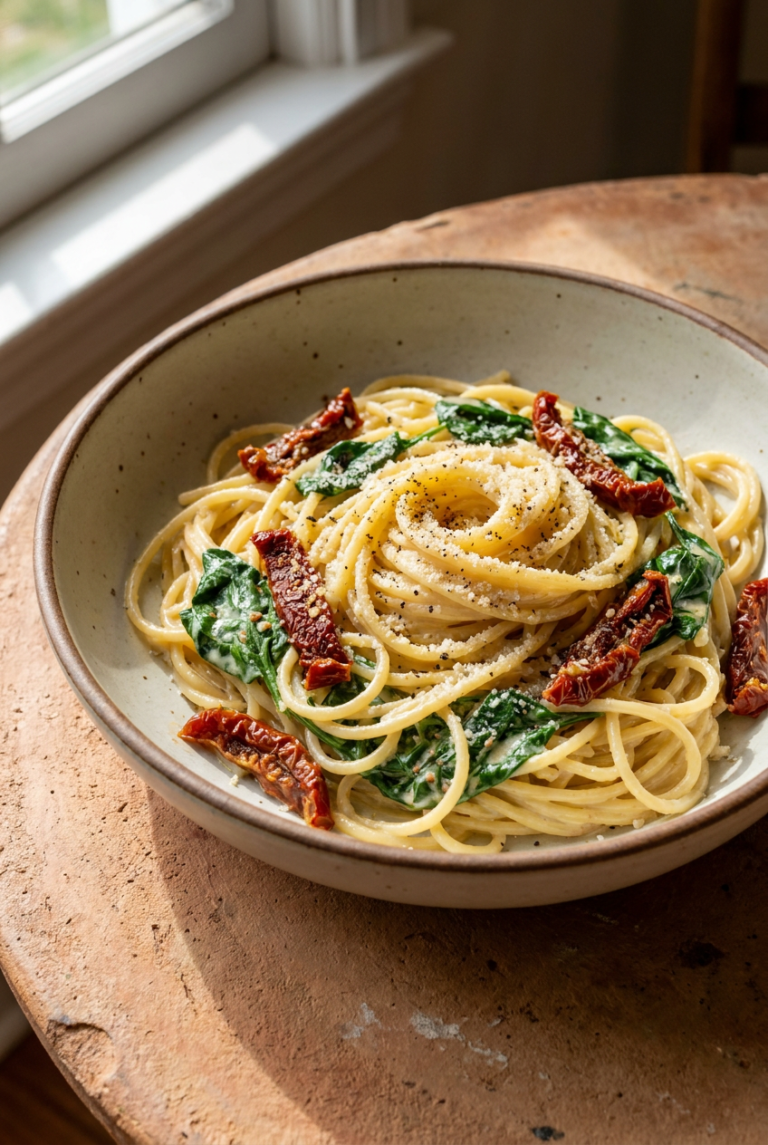
Classic Bucatini all’Amatriciana Recipe, Easy Italian Dinner in 45 Minutes
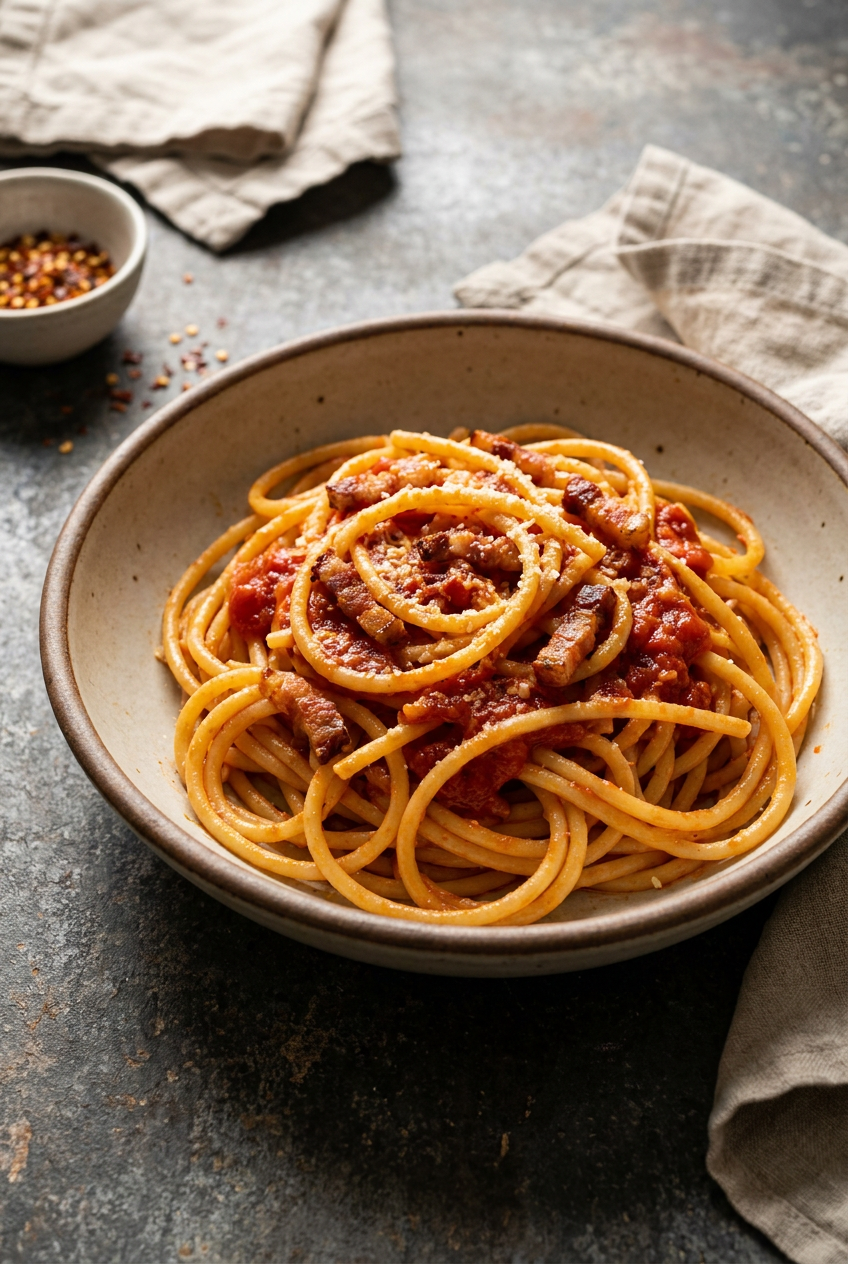
Table of Contents
- Classic Bucatini all’Amatriciana: A bold and savory Roman pasta with crispy guanciale, tangy tomatoes, and sharp pecorino cheese.
- Why You Will Love This Classic Bucatini all’Amatriciana Recipe
- Your Simple Ingredients for the Perfect Classic Bucatini all’Amatriciana
- How to Make Perfect Classic Bucatini all’Amatriciana
- Pro Tips and Easy Variations for Your Classic Bucatini all’Amatriciana
- Serving Suggestions for a Perfect Dinner
- Nutrition Information
- Storage and Make-Ahead Instructions
- Your Classic Bucatini all’Amatriciana Questions Answered
- More Incredible Italian Recipes to Try
- The Story Behind This Classic Bucatini all’Amatriciana
- Pin This Recipe for Later
Classic Bucatini all’Amatriciana: A bold and savory Roman pasta with crispy guanciale, tangy tomatoes, and sharp pecorino cheese.
I still remember the first time I tasted a true Amatriciana in a tiny, crowded trattoria just steps from the Trevi Fountain. The sauce was a vivid, deep crimson, clinging to each fat strand of bucatini in a way that looked almost gravity defying. I asked the waiter, a no-nonsense Roman with flour dusted across his apron, what made it so impossibly good. He simply shrugged and said, “Just guanciale, tomato, pecorino, and time.” That honesty has stayed with me, and I have spent years in my own kitchen chasing that same perfect balance. This classic bucatini all’amatriciana recipe is the closest I have come, a dish that transforms a handful of humble ingredients into something that tastes like a Roman holiday.
What makes this version stand apart from countless others is an unwavering respect for simplicity combined with precise technique. We slowly render the guanciale until it is shatteringly crisp, then use that fragrant fat as the foundation for a sauce of hand-crushed San Marzano tomatoes. There are no shortcuts, no garlic, no onion, just the pure, bold flavors that have defined this dish for centuries. Much like the layered, aromatic depth of a Moroccan chicken tagine, this pasta proves that when you treat a few quality ingredients with patience, the result is far greater than the sum of its parts. The real secret lies in the final toss off the heat, where starchy pasta water and sharp pecorino emulsify into a silky, glossy coating that wraps each strand of bucatini.
This recipe is for anyone who craves genuine Italian flavor without an all-day commitment. The sauce comes together in the time it takes to boil water, making it ideal for a busy weeknight when you want something deeply satisfying. At the same time, it is elegant enough to serve when friends come over, paired with a bold red wine and a simple green salad. If you have never cooked with guanciale before, or if you want to master the art of a perfectly emulsified tomato sauce, this classic bucatini all’amatriciana recipe will guide you step by step. One bite, with its interplay of rich pork, tangy tomato, and sharp cheese, and you will understand why Romans guard this dish so fiercely.
Why You Will Love This Classic Bucatini all’Amatriciana Recipe
- Authentic Roman flavor without a plane ticket. The combination of crispy guanciale, San Marzano tomatoes, and sharp pecorino romano tastes exactly like what you would find in a family-run osteria in the Eternal City. Every bite transports you there.
- Surprisingly quick to prepare. From start to finish, you are looking at about 45 minutes, and much of that is hands off simmering time. It is faster than ordering delivery yet feels entirely special.
- A sauce that feels both rustic and elegant. Hand-crushed tomatoes create a chunky, textured sauce that clings beautifully to the pasta strands. The glossy, emulsified finish makes it look like restaurant quality food with minimal effort.
- Uses only a handful of ingredients you can find. With just five core components, plus pantry staples, this is a recipe that highlights quality over quantity. Once you source good guanciale and pecorino, the rest follows naturally.
- The satisfying chew of bucatini. Bucatini, with its hollow center, captures the sauce inside and out, offering a uniquely delightful texture. Every bite delivers a perfect ratio of pasta, tomato, and porky goodness.
- Endlessly adaptable to your pantry. While authentic ingredients are ideal, you can use high quality pancetta and even spaghetti in a pinch. The core technique remains the same, allowing you to adjust to what you have on hand.
Your Simple Ingredients for the Perfect Classic Bucatini all’Amatriciana
Main Ingredients
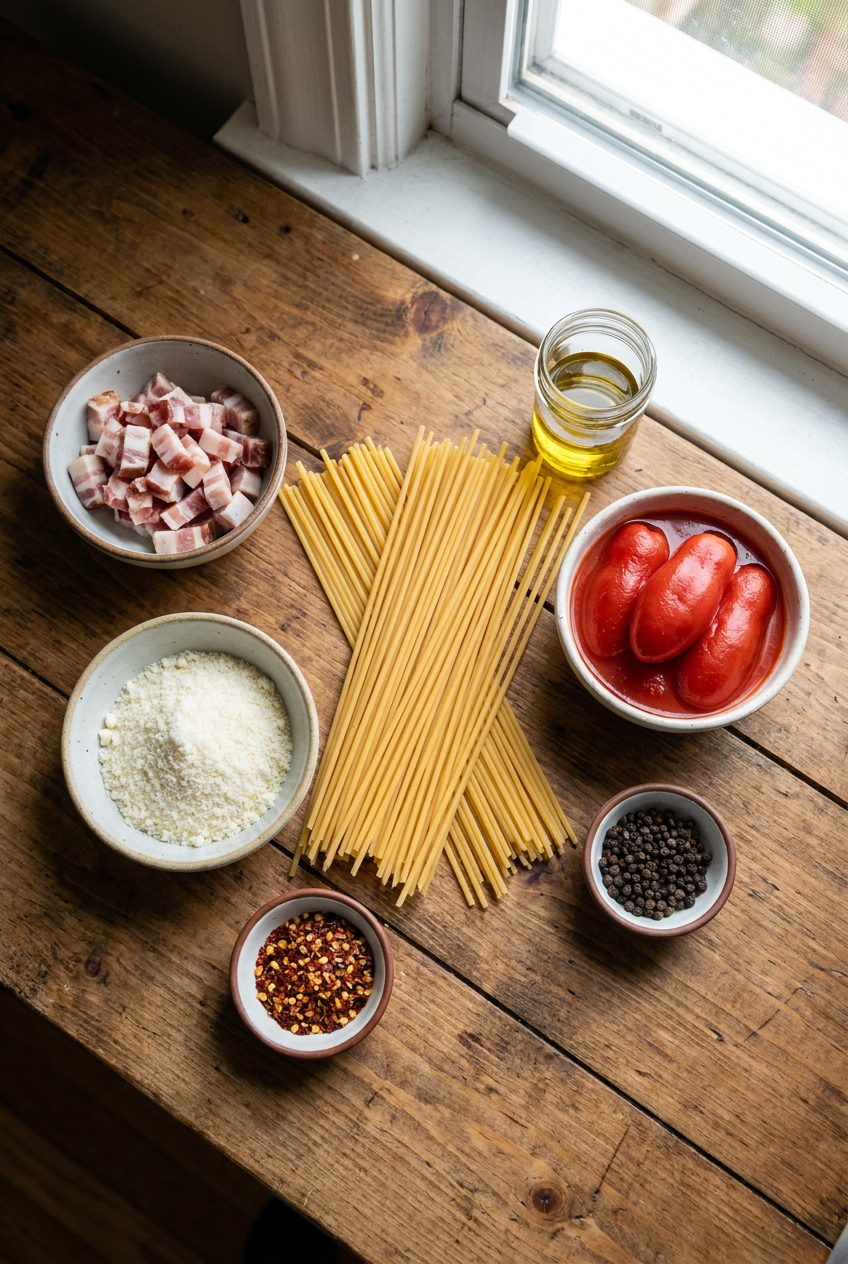
- 1 lb bucatini pasta, or spaghetti
- 6 oz guanciale, cut into thin 1-inch strips
- 1 can (28 oz) San Marzano whole peeled tomatoes, crushed by hand with juices
- 1/2 cup Pecorino Romano cheese, finely grated, plus more for serving
- 1 teaspoon red pepper flakes, adjust to taste
- 1/4 cup dry white wine, optional, for deglazing
- Kosher salt, to taste, for pasta water, use sparingly in sauce
Ingredient Notes
Bucatini. This pasta looks like thick spaghetti with a hole running through the center, which traps the sauce for an incredible mouthful. Look for bronze-die cut bucatini, as its rough, porous surface clings to the sauce much better than smooth, Teflon-drawn varieties. If you absolutely cannot find it, a high quality thick spaghetti is the best substitute, but you will miss the unique hollow bite.
Guanciale. This cured pork jowl is the soul of Amatriciana. Unlike bacon or pancetta, guanciale has a delicate, sweet richness and a higher fat content that renders into a velvety, flavorful base for the sauce. Seek it out at Italian specialty delis or well-stocked butcher counters. It is worth the effort for the genuine depth of flavor. In a pinch, unsmoked pancetta can step in, but avoid smoky bacon which will overpower the entire dish.
San Marzano whole peeled tomatoes. These plum tomatoes, grown in the volcanic soil near Naples, are sweeter and less acidic than standard canned tomatoes, with a dense, meaty texture. Using whole tomatoes that you crush by hand, rather than pre-crushed or diced, gives you control over the sauce’s texture and avoids any bitterness from processed tomato paste. Always crush them with your hands, discarding any hard stem ends, for a rustic, uneven sauce that clings to the pasta.
Pecorino Romano. This sharp, salty sheep’s milk cheese is non-negotiable. Its intense tang cuts through the richness of the guanciale and brightens the whole dish. Buy a wedge and finely grate it yourself; pre-grated cheese contains anti-caking agents that prevent it from melting smoothly into the sauce. Never substitute Parmesan here, as its milder, nuttier profile lacks the boldness needed for balance.
Red pepper flakes. The heat is meant to be a subtle warmth that enhances the guanciale, not a fiery blast. Start with a teaspoon and adjust to your palate. The dish is not traditionally spicy, but the pepper provides an important backbone that lifts all the other flavors.
Dry white wine. This is optional, but even a splash of something like a Pinot Grigio or Verdicchio adds a bright, acidic note that deglazes the pan and builds another layer of flavor. If you skip it, simply proceed directly to adding the tomatoes, the sauce will still be delicious.
How to Make Perfect Classic Bucatini all’Amatriciana
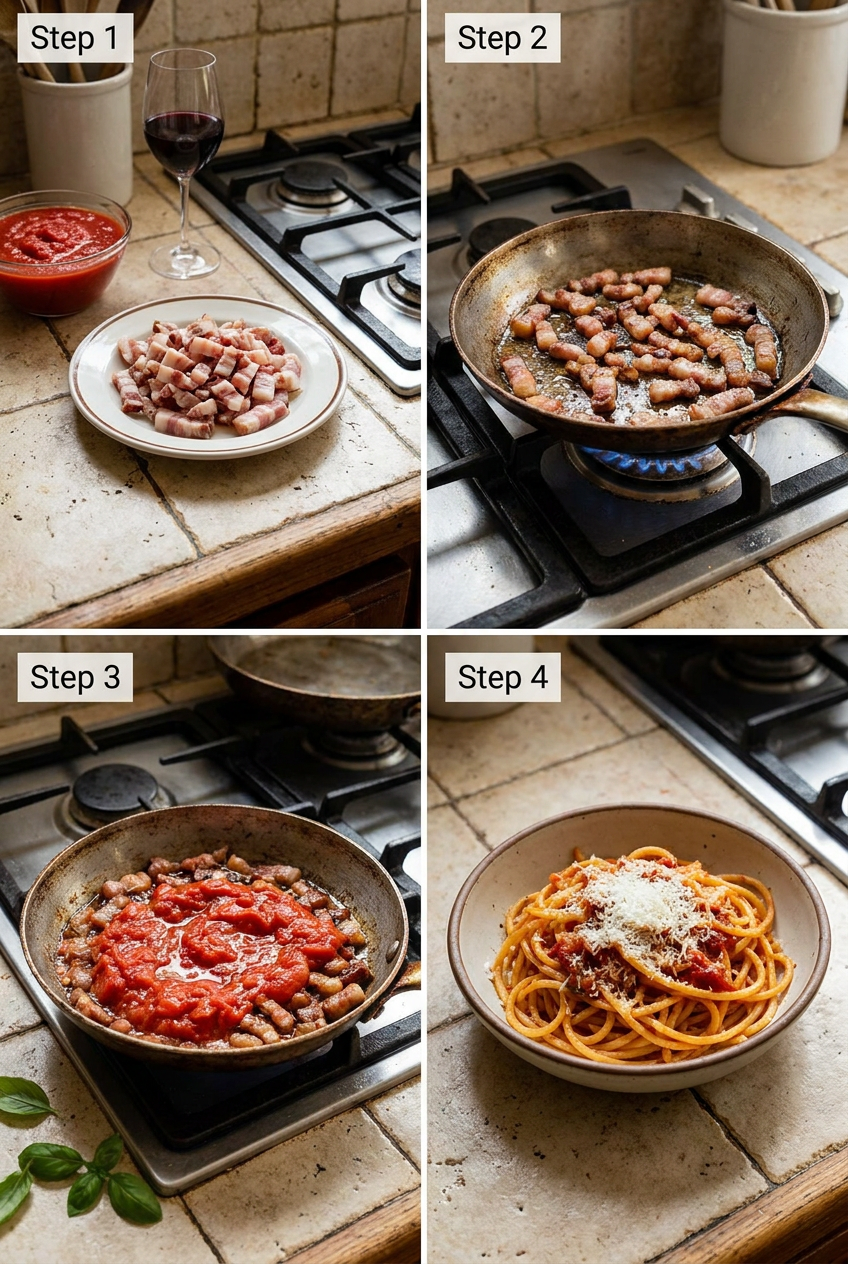
The process is beautifully straightforward, but each step has a purpose. Paying attention to the little details transforms a good plate of pasta into a spectacular one. I will walk you through every moment, from rendering the guanciale to that final, glorious toss.
Step 1: Prepare Ingredients
Fill a large pot with at least 4 quarts of water and bring it to a rolling boil over high heat. Add a generous amount of salt, the water should taste like the sea. While the water comes to temperature, prepare the guanciale by slicing it into thin strips about 1 inch long and ¼ inch wide. This shape encourages even rendering and creates crispy bits that hold their texture. Open the can of San Marzano tomatoes and pour them, along with all their juices, into a large bowl. Using clean hands, crush the tomatoes until they break down into small, uneven pieces, removing any tough stem ends or hard cores you find. A helpful tip: use whole peeled San Marzano tomatoes for the sweetest, most vibrant flavor.
Step 2: Render the Guanciale
Place the guanciale strips in a large, cold skillet. Turn the heat to medium and let them cook slowly, stirring occasionally with a wooden spoon. You will hear a gentle sizzle as the fat begins to melt and the strips start to turn translucent, then gradually golden, and finally deep amber with crispy edges. This process takes about 8 to 10 minutes. Keep the heat moderate; rushing this can burn the fat and impart a harsh, bitter taste. When the guanciale is perfectly crisp and surrounded by a pool of rendered fat, use a slotted spoon to transfer the crispy bits to a plate, leaving the aromatic fat behind in the skillet.
Step 3: Deglaze the Pan (Optional)
With the skillet still over medium heat, pour in the dry white wine. Immediately use a wooden spatula to scrape up any browned bits stuck to the bottom of the pan. The wine will bubble vigorously and release a fragrant, steamy aroma. Let it cook until it has reduced by roughly half and no longer smells of raw alcohol, about 2 minutes. This step adds a subtle brightness and depth, but if you prefer to keep the dish more traditional, skip the wine and go straight to the tomatoes.
Step 4: Add Tomatoes and Simmer
Carefully pour the hand-crushed tomatoes and all their juices into the skillet. Stir in the red pepper flakes. As the mixture comes to a gentle simmer, you will see the vibrant red tomatoes begin to deepen in color. Cook, stirring occasionally with a wooden spoon and using the spoon to further break down any large tomato pieces, until the sauce thickens noticeably and the flavors meld together, about 15 minutes. Taste the sauce at this point. It may need only a tiny pinch of salt, because the guanciale and pecorino are both quite salty. For a velvety texture, use a wooden spoon to break down the tomatoes as they cook, encouraging a rustic, chunky consistency.
Step 5: Cook the Pasta
Once the sauce has been simmering for about 10 minutes, drop the bucat
Classic Bucatini all'Amatriciana
Ingredients
Method
- Bring a large pot of generously salted water to a boil. While water heats, cut guanciale into thin strips and hand-crush the tomatoes in a bowl, discarding any hard cores.
- In a large skillet over medium heat, cook the guanciale strips slowly, stirring occasionally, until fat renders and they turn golden and crispy, about 8–10 minutes. Remove guanciale with a slotted spoon and set aside, leaving the rendered fat in the pan.
- If using wine, pour it into the hot skillet and scrape up any browned bits from the bottom. Let it bubble and reduce by half, about 2 minutes.
- Pour the crushed tomatoes into the skillet and stir in the red pepper flakes. Bring to a gentle simmer and cook, stirring occasionally, until the sauce thickens slightly, about 15 minutes. Taste and adjust seasoning — it may need only a tiny pinch of salt because the guanciale and cheese are salty.
- Meanwhile, cook bucatini in the boiling water according to package directions until al dente. Reserve about 1 cup of pasta cooking water, then drain the pasta well.
- Add the drained bucatini to the simmering sauce along with half of the reserved guanciale and a splash of pasta water. Toss vigorously with tongs over medium heat for 1–2 minutes until the sauce clings to the pasta. Remove skillet from heat.
- Sprinkle the grated pecorino over the pasta and toss again. Plate in warm bowls, top with the remaining crispy guanciale and extra pecorino. Serve immediately.
Disclosure: This post may contain affiliate links. If you purchase through our links we may earn a small commission at no extra cost to you.
If you made this Classic Bucatini all’Amatriciana, please leave a comment below and let me know how it turned out.