Homemade Pappardelle with Wild Mushroom Ragù Recipe, Easy Italian Dinner in 55 Minutes
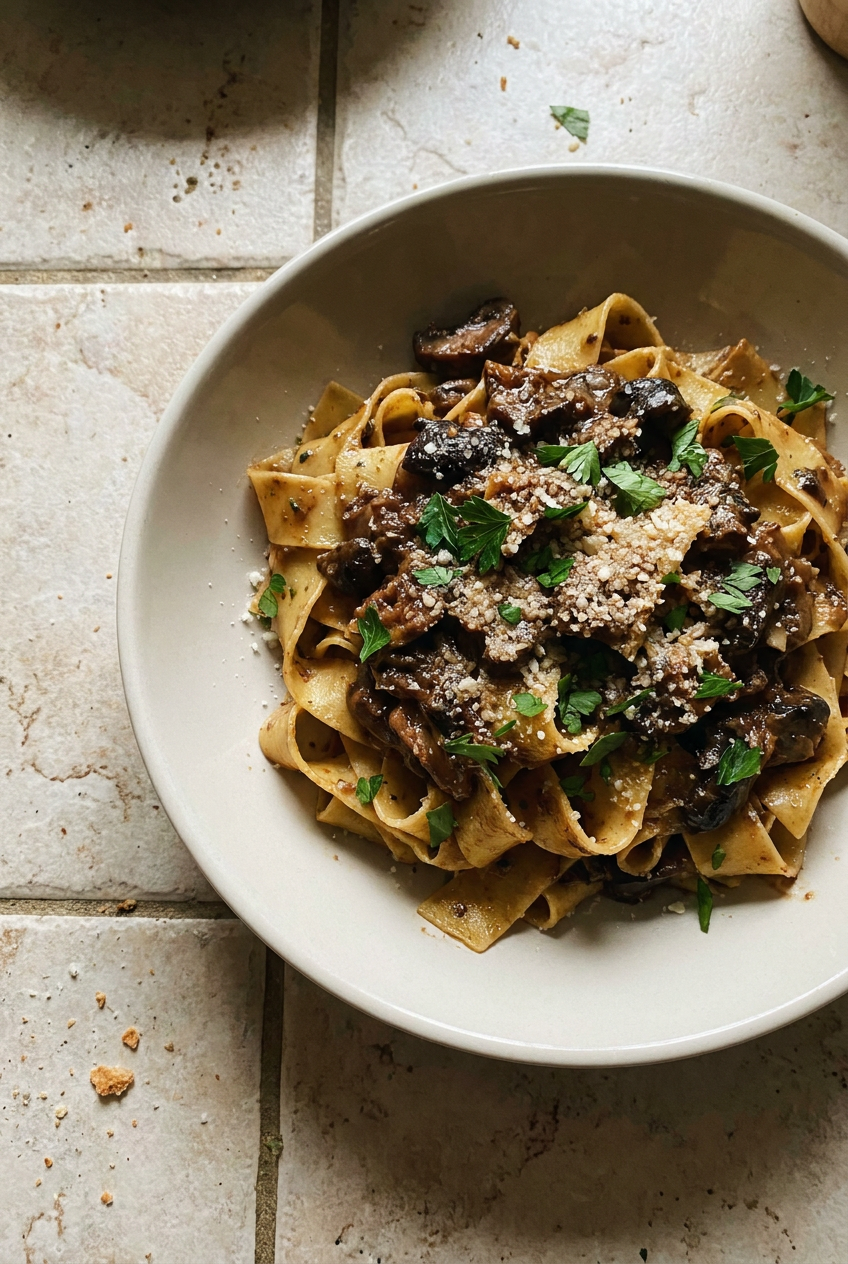
Table of Contents
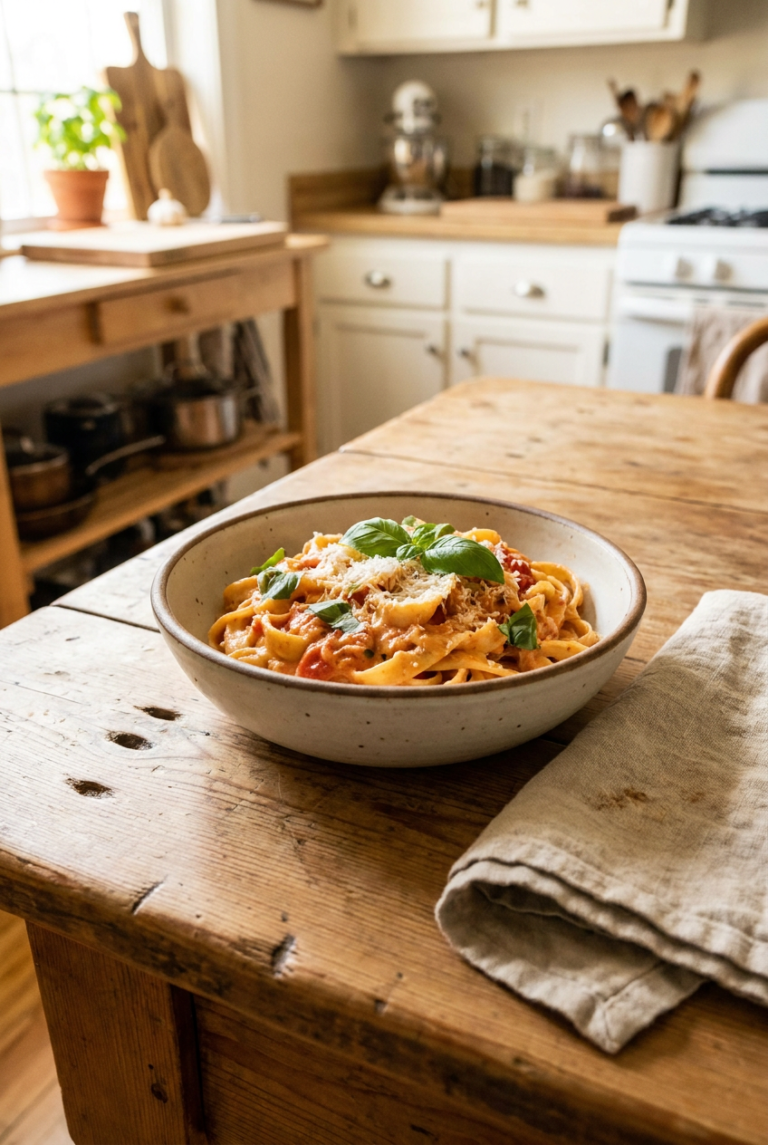
- Homemade Pappardelle with Wild Mushroom Ragù Recipe: Silky fresh egg pasta draped in a rich, earthy wild mushroom ragù that tastes like a Tuscan countryside evening
- Why You Will Love This Homemade Pappardelle with Wild Mushroom Ragù Recipe
- Your Simple Ingredients for the Perfect Homemade Pappardelle with Wild Mushroom Ragù
- How to Make Perfect Homemade Pappardelle with Wild Mushroom Ragù
- Pro Tips and Easy Variations for Your Homemade Pappardelle with Wild Mushroom Ragù
- Serving Suggestions for a Perfect Italian Dinner
- Nutrition Information
- Storage and Make-Ahead Instructions
- Your Homemade Pappardelle with Wild Mushroom Ragù Questions Answered
- More Incredible Italian Recipes to Try
- The Story Behind This Recipe
- Pin This Recipe for Later
Homemade Pappardelle with Wild Mushroom Ragù Recipe: Silky fresh egg pasta draped in a rich, earthy wild mushroom ragù that tastes like a Tuscan countryside evening
I still remember the first time I tasted true homemade pappardelle. It was in a tiny stone farmhouse near Siena, where the owner’s nonna came out of the kitchen, flour still dusting her apron, and placed a wide shallow bowl before me. The ribbons of pasta, irregular and tender, swam in a sauce that smelled of the forest after rain. That dish changed everything I thought I knew about Italian cooking. This homemade pappardelle with wild mushroom ragù recipe is my attempt to capture that golden hour, when the sun dips low over the hills and every bite feels like a slow exhale. There is something deeply grounding about rolling out your own pasta, and when you toss those silky strands with a cream enriched ragù of caramelized mushrooms, you create more than a meal. You bring a piece of the Tuscan countryside right to your table.
What makes this particular recipe stand out is the balance between the delicate handmade pasta and a sauce that is deceptively simple yet intensely flavored. The dough uses nothing more than flour, eggs, a touch of olive oil, and salt, resulting in a noodle that is both tender and sturdy enough to hold the robust mushroom ragù. And the ragù itself relies on a critical technique: searing the mushrooms undisturbed until they develop a deep golden crust, then deglazing with dry white wine before swirling in heavy cream and aged Parmesan. It is this sequence that builds layers of flavor, transforming a handful of ingredients into a dish that feels luxurious. If you have ever felt intimidated by fresh pasta, know that you can absolutely do it, and the effort rewards you tenfold. For days when you crave a similarly soul warming meal but with a different flavor profile, a Moroccan chicken tagine brings that same deep, spiced comfort.
Who is this dish for? It is for the home cook who wants to treat a loved one on a quiet anniversary, for the friend who offers to bring dinner and wants it to feel like a gift, for the solo cook who finds meditation in the rhythmic push and pull of a rolling pin. It works beautifully for a cozy Friday night when you pour a glass of Chianti, put on some Italian folk music, and let the scent of butter and mushrooms fill the kitchen. Because the components come together quickly once the dough is made, you can shape the pasta ahead of time and simply cook it off before serving. It is the kind of recipe that makes people think you trained in a trattoria kitchen, when the truth is you just followed a few clear steps and trusted your senses. This is a plate that invites you to slow down, to twirl those wide noodles, and to savor something made entirely from your hands.
Why You Will Love This Homemade Pappardelle with Wild Mushroom Ragù Recipe
- Silky, fresh pasta at home. Making pappardelle from scratch gives you wide ribbons that are impossible to buy. The egg rich dough cooks in just two to three minutes and has a tender bite that dried pasta never mimics.
- A mushroom ragù that tastes like a forest floor. Searing the mixed mushrooms properly develops an earthy, meaty depth. A splash of wine and a pour of cream turn them into a sauce that clings to every fold of pasta.
- Feels fancy but follows simple steps. The whole process is broken into manageable stages: rest the dough, sear the mushrooms, roll and cut. You will feel like a pro even if this is your first fresh pasta.
- Perfect for gatherings or quiet nights. This recipe scales well for a dinner party, but it is just as special when you make it for two. The aroma alone makes everyone gather in the kitchen.
- Endlessly adaptable to what is in season. Use whatever mushrooms look best at the market, or fold in fresh herbs. The base recipe is a canvas for your own touches.
- An edible hug in a bowl. The combination of warm, cream coated noodles and savory mushrooms is pure comfort food that still feels light and elegant.
Your Simple Ingredients for the Perfect Homemade Pappardelle with Wild Mushroom Ragù
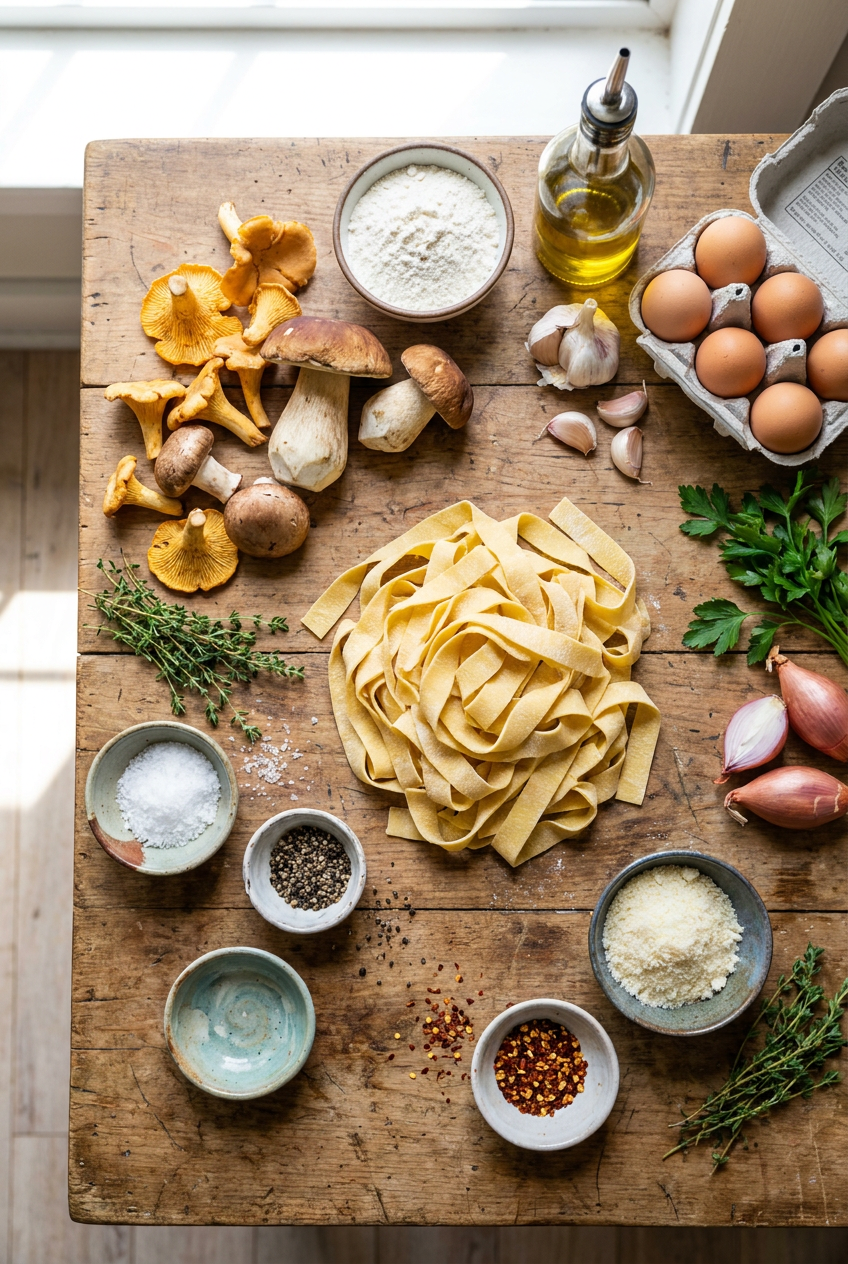
Homemade Pappardelle Dough
- 2 cups all-purpose flour (plus extra for dusting)
- 3 large eggs (room temperature)
- 1 tablespoon extra-virgin olive oil
- 1/2 teaspoon salt
Wild Mushroom Ragù
- 3 tablespoons unsalted butter
- 1 pound mixed wild mushrooms (cleaned, sliced; such as cremini, shiitake, oyster)
- 3 cloves garlic (minced)
- 1/2 cup dry white wine
- 1 cup heavy cream
- 1/2 cup grated Parmigiano-Reggiano (plus more for serving)
- 1/4 cup fresh parsley (chopped)
- Salt and black pepper to taste
Ingredient Notes
All-purpose flour. This is the backbone of fresh pasta. It provides enough gluten to give the dough structure and chew, while remaining easy to work with by hand. Look for unbleached flour with a moderate protein content. If you prefer a slightly more tender bite, you can substitute up to half the amount with fine semolina flour, though all-purpose is ideal for beginners.
Eggs. Room temperature eggs emulsify better with the flour, creating a smoother dough. The yolks add richness and color, while the whites give structure. Use the freshest eggs you can find from a local source, as their flavor will shine through in the finished pasta. The eggs must be fully cooked to a safe internal temperature of 160 degrees Fahrenheit, which fresh pasta achieves in the boiling time given.
Mixed wild mushrooms. A combination of cremini for meatiness, shiitake for an earthy note, and oyster mushrooms for a delicate texture builds complexity. When shopping, choose mushrooms that are firm and dry, not slimy. If wild varieties like chanterelles or morels are available and in your budget, they elevate the ragù even further. For a budget friendly option, stick with cremini and add a handful of rehydrated dried porcini; the soaking liquid can replace part of the cream.
Heavy cream. This provides the luxurious body of the sauce without masking the mushroom flavor. It simmers gently and thickens just enough to coat the pasta. In a pinch, you can use half and half, but you must reduce it over low heat carefully to avoid curdling.
Parmigiano-Reggiano. Use only authentic Parmigiano-Reggiano, not pre-grated substitutes. Grating it fresh off the block ensures it melts beautifully into the warm cream. Its nutty, salty crystals are essential for seasoning the sauce, so taste before adding extra salt.
Dry white wine. A crisp, unoaked white wine like Pinot Grigio or Sauvignon Blanc deglazes the pan and lifts the fond from the mushrooms. The alcohol cooks off, leaving a subtle acidity that balances the richness of the cream. If you prefer not to use wine, substitute an equal amount of vegetable broth with a teaspoon of lemon juice.
How to Make Perfect Homemade Pappardelle with Wild Mushroom Ragù
Phase 1: Creating the Pasta Dough
On a clean work surface, mound the flour and create a wide well in the center. Crack the eggs directly into the well, then add the olive oil and salt. Using a fork, gently whisk the eggs, slowly pulling in flour from the inner walls of the well. You will see a shaggy mass form as the flour hydrates. This technique mirrors the gentle incorporation needed when making a batter like that for fluffy Japanese souffle pancakes, where careful handling preserves tenderness. Once most of the flour is integrated, scrape up any stray bits and begin kneading by hand. Knead for a full 8 to 10 minutes, pressing and folding until the dough becomes smooth and elastic. When you poke it, it should spring back. If the dough feels dry, wet your hands with water and continue kneading; if sticky, dust with a tiny bit of flour. Wrap the dough tightly in plastic wrap and let it rest at room temperature for 30 minutes. This relaxes the gluten and will make rolling effortless.
Phase 2: Building the Wild Mushroom Ragù
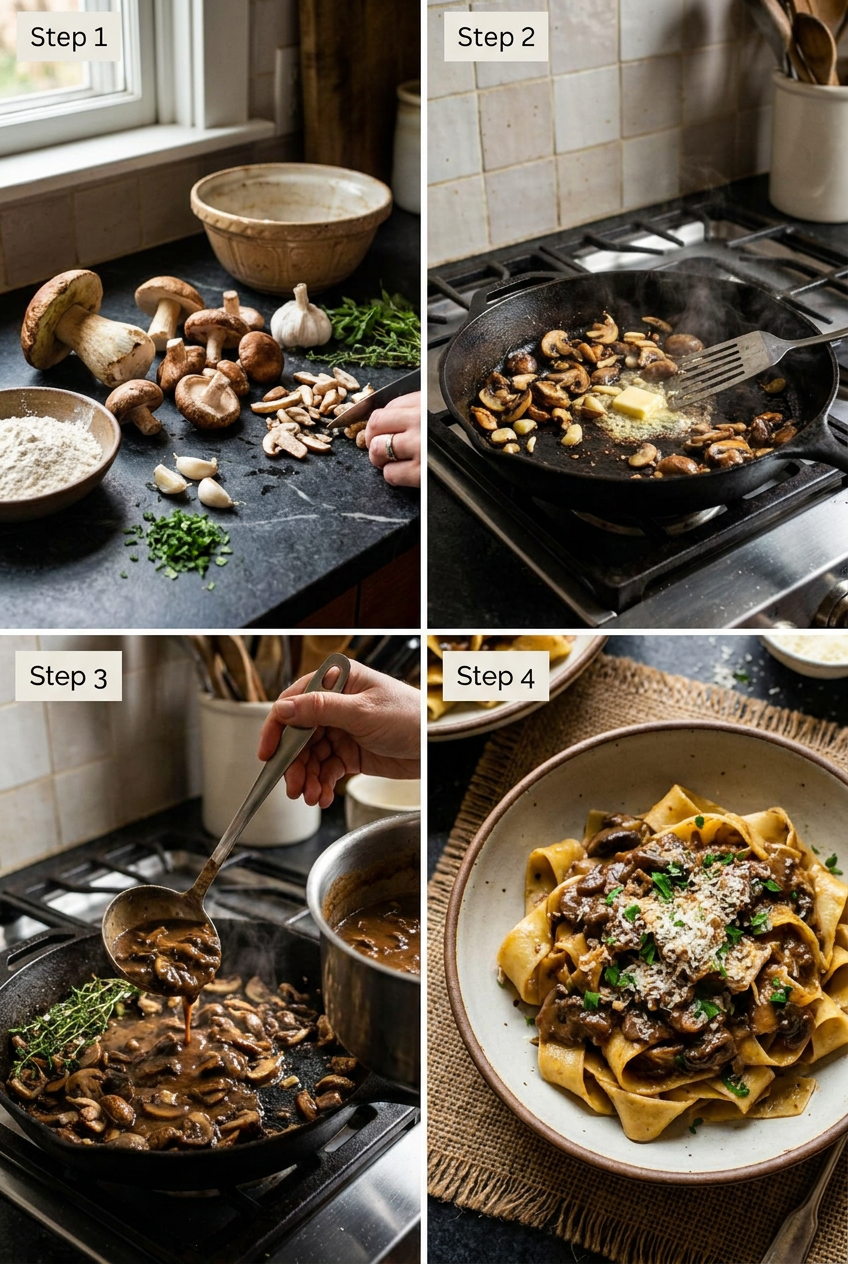
While the dough rests, set a large skillet over medium-high heat and melt 2 tablespoons of the butter. Add the sliced mushrooms in a single layer, working in batches if your pan is small, and resist the urge to stir for the first 2 to 3 minutes. You will hear a steady sizzle and see the edges begin to turn golden. This browning is where the deep, savory flavor comes from. After that initial sear, stir and continue to cook until the mushrooms release their liquid and it completely evaporates, about 5 to 7 minutes more. The pan should be almost dry with a glossy sheen. Reduce the heat to medium, add the minced garlic, and cook for just 1 minute until fragrant. Pour in the white wine and scrape the bottom of the skillet to lift any browned bits. Let the wine bubble and reduce by half, roughly 2 minutes. The kitchen will smell incredible at this point, earthy and bright.
Phase 3: Finishing the Sauce and Rolling the Pasta
Pour the heavy cream into the skillet with the mushrooms and bring it to a gentle simmer. Allow it to bubble softly for 3 to 4 minutes, stirring occasionally, until the sauce thickens enough to coat the back of a spoon. Stir in the grated Parmigiano-Reggiano and the remaining tablespoon of butter, then season with salt and pepper. Keep the sauce warm on the lowest heat while you roll out the pasta. Divide the rested dough into four equal pieces and keep the unused portions wrapped. Flatten one piece into a rough rectangle. If using a pasta machine, run it through the widest setting, fold the sheet in thirds, and repeat several times until smooth. Then gradually work down to setting 6 or until the sheet is about 1/16 inch thin. Dust the sheet lightly with flour and cut it into 3/4 inch wide ribbons. If cutting by hand, loosely fold the sheet and use a sharp chef’s knife, then immediately unfold the ribbons and toss them with a little semolina or more flour to prevent sticking. The pappardelle should look like silky, wide noodles with a slight translucence.
Phase 4: Cooking and Marrying the Pasta and Sauce
Bring a large pot of water to a rolling boil and salt it generously until it tastes like the sea. Drop in the fresh pappardelle and cook for just 2 to 3 minutes. Taste a strand at the 2 minute mark; it should be al dente with no raw flour taste. The eggs must reach an internal temperature of 160 degrees Fahrenheit, which fresh pasta achieves quickly. Before draining, scoop out 1 cup of the starchy pasta water. Drain the pasta and immediately transfer it to the skillet with the warm mushroom ragù. Gently toss over low heat, adding a splash of reserved pasta water as needed to loosen the sauce until it glossy coats every ribbon. Divide among warmed bowls, shower with extra Parmesan and a scattering of fresh parsley, and serve right away.
Pro Tips and Easy Variations for Your Homemade Pappardelle with Wild Mushroom Ragù
Pro Tips
- Knead until the dough springs back. Under-kneaded pasta will turn gluey when cooked. Take the full 10 minutes and test by pressing a finger into the dough; it should bounce back immediately, indicating the gluten network is strong.
- Brown mushrooms in small batches. Overcrowding the pan steams the mushrooms and prevents that golden crust. Use a wide skillet and give each piece space to make contact with the hot metal. The fond that forms on the pan is pure flavor.
- Keep rolled sheets well floured. Fresh pasta becomes sticky fast. Dust each sheet lightly before folding or stacking, and toss the cut ribbons with semolina or more flour to keep them separate until they hit the water.
- Salt the pasta water generously. This is the only chance to season the pasta itself. The water should remind you of the ocean. Undersalted water will yield bland pappardelle no matter how good the sauce is.
- Warm your serving bowls. Rinse bowls with hot water and dry them just before plating. This tiny step keeps the pasta hot longer and prevents the sauce from tightening up on a cold surface.
- Taste and adjust at every stage. Check the seasoning of the mushrooms after adding cream and cheese. Often the Parmesan brings enough salt, but a final pinch of pepper can lift everything.
Delicious Variations
- Lemon Zest and Black Pepper Pappardelle. Add 1 teaspoon of fresh lemon zest and a generous crack of black pepper to the finished dish. The bright citrus notes cut through the richness and echo the flavors of our blueberry lemon ricotta pancakes, offering a lovely bridge between sweet and savory.
- Pancetta and Thyme Ragù. Start by rendering 4 ounces of diced pancetta until crispy, then use the fat to sear the mushrooms. Stir in fresh thyme leaves with the garlic for an herbaceous, salty depth.
- Vegan Creamy Mushroom Ragù. Replace the butter with a high quality olive oil, swap heavy cream for full fat coconut milk or a cashew cream, and use a vegan Parmesan alternative. The wine and garlic still deliver big flavor.
- Whole Wheat Pappardelle. Substitute half of the all-purpose flour with whole wheat flour for a nuttier, more rustic pasta. You may need an extra egg yolk to keep the dough supple.
- Truffle Oil Finish. Drizzle a very small amount of good truffle oil over each bowl just before serving. Use a light hand so it enhances rather than overpowers the earthy mushrooms.
Serving Suggestions for a Perfect Italian Dinner
This homemade pappardelle with wild mushroom ragù recipe stands beautifully as the star of the meal, but a few simple sides round it out into a memorable Italian dinner. I love to pair it with a peppery arugula salad simply dressed with lemon juice, extra virgin olive oil, and large shavings of Parmesan. The crisp, clean bite of the greens offsets the creamy sauce. For drinks, a glass of Chianti Classico or a medium bodied Pinot Noir complements the earthy mushrooms without overwhelming the delicate pasta. When presenting the dish, use wide, shallow bowls that show off the wide ribbons, and give each portion a final grating of cheese and a sprinkle of parsley. The colors are warm cream and flecks of green, inviting on any table.
This recipe is ideal for a romantic dinner for two, a birthday celebration, or any time you want to slow down and share a soulful meal. To scale it for a crowd, simply double the pasta dough and sauce. Roll the pasta in advance and keep it lightly floured on sheet trays, then cook it off just before serving. If you want to turn this into a complete multi course meal, start with a light antipasto of marinated olives and crostini, and finish with a simple panna cotta or fresh fruit. The entire experience feels elegant yet unforced, perfect for a long, laughter-filled evening around the table.
Nutrition Information
(Approximate per serving, 4 servings total) Calories: 620, Fat: 38g, Carbohydrates: 52g, Protein: 18g, Fiber: 3g, Sodium: 520mg. Nutritional values are estimates only.
Storage and Make-Ahead Instructions
- Refrigerator: Store leftover cooked pasta and sauce together in an airtight container for up to 3 days. The sauce will thicken as it chills. Reheat gently with a splash of milk or cream to bring back its silky texture.
- Freezer: Freeze uncooked pappardelle nests on a floured baking sheet until solid, then transfer to a freezer bag for up to 2 months. Cook directly from frozen, adding 1 minute to the boiling time. The texture remains surprisingly tender.
- Reheating: Warm the combined leftovers in a skillet over low heat with a tablespoon of water or cream. Stir frequently until hot, and avoid high heat which can cause the sauce to separate.
- Make-Ahead: Prepare the pasta dough up to a day ahead and store it wrapped in the refrigerator. Let it come back to room temperature for 15 minutes before rolling. The mushroom ragù can be made fully in advance and reheated on the stove while the pasta cooks.
Your Homemade Pappardelle with Wild Mushroom Ragù Questions Answered
Can I make the pasta dough in a food processor?
Yes, combine the flour, eggs, oil, and salt in the bowl and pulse until a ball forms, then turn it out and knead briefly by hand. It is faster but watch carefully so you do not over-process and heat the dough, which can toughen it.
What if I do not have wild mushrooms?
Use cremini or button mushrooms and add 1 ounce of rehydrated dried porcini for an earthy punch. The soaking liquid from the dried mushrooms can replace up to half of the cream for a more intense flavor.
Can I dry this pasta for later use?
Absolutely. Hang the cut pappardelle on a drying rack or lay it in loose clusters on a floured towel for 12 to 24 hours until completely hard. Store the dried pasta in an airtight container for up to a month and cook it from dried, adding a couple extra minutes to the boiling time.
How do I know when the fresh pasta is done?
Taste a strand after 2 minutes of boiling. It should be tender with a slight firm bite, and the color will change to a vibrant yellow. There should be no raw flour taste. Use an instant read thermometer if you want to be sure the eggs reach 160 degrees Fahrenheit.
Can I use half-and-half instead of heavy cream?
Yes, but you must simmer it gently over lower heat to prevent curdling. The sauce will be a bit thinner, so you may want to reduce it a little longer and use a touch more Parmesan for body.
Is this recipe suitable for freezing after cooking?
While you can freeze the assembled dish, the cream sauce may separate slightly upon thawing. For best results, freeze the uncooked pasta and sauce separately, then combine freshly cooked pasta with reheated sauce.
How do I prevent my pasta sheets from sticking together?
Dust each rolled sheet generously with flour and use semolina or more flour to toss the cut ribbons. Do not stack floured sheets for a long period; keep them spread out on a floured surface until boiling.
What wine is best for the sauce?
A dry, unoaked white like Pinot Grigio or Sauvignon Blanc works beautifully. You can also use a dry vermouth. Avoid oaky Chardonnay, which can overwhelm the delicate mushroom flavor.
Can I make this recipe gluten free?
You can try a good quality gluten free flour blend for the pasta, though the texture will differ. The mushroom ragù is naturally gluten free when made without flour-based thickeners, so you can serve it over store bought gluten free pasta if homemade proves tricky.
How do I get the pappardelle to not clump when serving?
After draining, immediately toss the pasta with the warm sauce in the skillet, adding a little pasta water to keep it loose. Portion into warmed bowls right away. If you must hold it briefly, drizzle with a tiny bit of olive oil and keep covered.
More Incredible Italian Recipes to Try
If you fell in love with the process of making fresh pasta, I have a feeling you will also adore a classic, slow simmered Bolognese sauce served over tagliatelle. Much like this mushroom ragù, a true Bolognese relies on patient reduction and layering of simple ingredients to create profound depth. For another comforting dinner that fills the kitchen with an irresistible aroma, a creamy risotto with sautéed mushrooms and a shower of Parmesan captures that same earthiness in a completely different texture. Both dishes reward the attentive cook and make any evening feel special.
Beyond pasta, Italian cuisine offers so many treasures that embrace the philosophy of humble ingredients treated with care. A simple but stunning caprese salad with ripe summer tomatoes, milky mozzarella, and fresh basil can be a revelation. Or explore the world of slow braised meats with a tender osso buco that falls off the bone, its sauce enriching a bed of saffron risotto. If your love for homemade pasta leads you to breakfast, our blueberry lemon ricotta pancakes bring that same joy of from-scratch cooking to the morning table, soft and bright. And for those evenings when you want a different kind of slow comfort, that Moroccan chicken tagine I mentioned earlier is another masterpiece of warming spices and tender meat.
The Story Behind This Homemade Pappardelle with Wild Mushroom Ragù
Pappardelle has deep roots in Tuscany, where the wide ribbon pasta was originally made to stand up to rich, hearty sauces born from the land. The name comes from the Italian verb “pappare,” which means to gobble up, and that is exactly what you want to do with it. Traditionally, cooks used only flour and eggs, rolling the dough by hand with a long mattarello until it was thin enough to see the grain of the wood beneath. The pasta was then cut into broad strips that captured every bit of ragù, often made with wild boar or hare in the colder months.
My version replaces the meat with a blend of wild mushrooms, making it a celebration of the autumn foraging season that still continues in the wooded hills of central Italy. The dish reminds me that some of the most satisfying recipes come from what the earth provides and the patience to transform it. When I make this at home, I think of the generations of nonnas who taught their children not with written recipes but by showing them the feel of a well-kneaded dough and the exact moment a mushroom release its liquid. This homemade pappardelle with wild mushroom ragù recipe is my way of keeping that quiet, beautiful knowledge alive.
Pin This Homemade Pappardelle with Wild Mushroom Ragù Recipe for Later
Love this recipe? Save it to your favorite Pinterest board so you can find it again easily. Share it with friends and family who would enjoy making it too.
I truly hope this recipe brings a little bit of Tuscany into your kitchen and fills it with warmth. If you try it, I would love to hear how it turned out. Leave a comment below and tell me what mushroom blend you used or whether you dared to try your hand at homemade pasta for the first time. Every twist of those silky ribbons is worth it.
Homemade Pappardelle with Wild Mushroom Ragù
Ingredients
Method
- On a clean work surface, mound the flour and make a well in the center. Crack the eggs into the well, add olive oil and salt. Using a fork, gently whisk the eggs, gradually incorporating flour from the walls of the well until a shaggy dough forms. Knead by hand for 8–10 minutes until smooth and elastic. Wrap in plastic and rest at room temperature for 30 minutes.
- While the dough rests, melt 2 tablespoons of butter in a large skillet over medium-high heat. Add the mushrooms in a single layer (work in batches if needed) and sauté without stirring for 2–3 minutes to get a golden crust. Stir and cook until tender and any liquid evaporates, about 5–7 minutes. Reduce heat to medium, add garlic and cook 1 minute until fragrant. Pour in the wine and let it reduce by half, about 2 minutes.
- Pour in the heavy cream and simmer gently for 3–4 minutes until slightly thickened. Stir in the grated Parmesan, remaining 1 tablespoon butter, and season with salt and pepper. Keep warm on low heat.
- Divide the rested dough into 4 equal pieces. Working with one piece at a time (keep the rest covered), flatten into a rectangle. Using a pasta machine or rolling pin, roll into thin sheets (setting 6 on a machine, or about 1/16 inch thick). Dust with flour and cut the sheets into 3/4-inch-wide ribbons. Toss the pappardelle with a little semolina or flour to prevent sticking.
- Bring a large pot of generously salted water to a boil. Cook the fresh pappardelle for 2–3 minutes until al dente and the eggs in the dough are fully cooked (safe internal temperature 160°F/71°C). Reserve 1 cup of pasta water, then drain the pasta.
- Add the drained pappardelle to the skillet with the mushroom ragù. Toss gently over low heat, adding a splash of reserved pasta water if needed to loosen the sauce until it coats each ribbon. Divide among warmed bowls, top with extra Parmesan and parsley, and serve immediately.
Disclosure: This post may contain affiliate links. If you purchase through our links we may earn a small commission at no extra cost to you.
If you made this Homemade Pappardelle with Wild Mushroom Ragù, please leave a comment below and let me know how it turned out.