Creamy Lemon Ricotta Pasta Recipe, Easy Italian Dinner in 25 Minutes
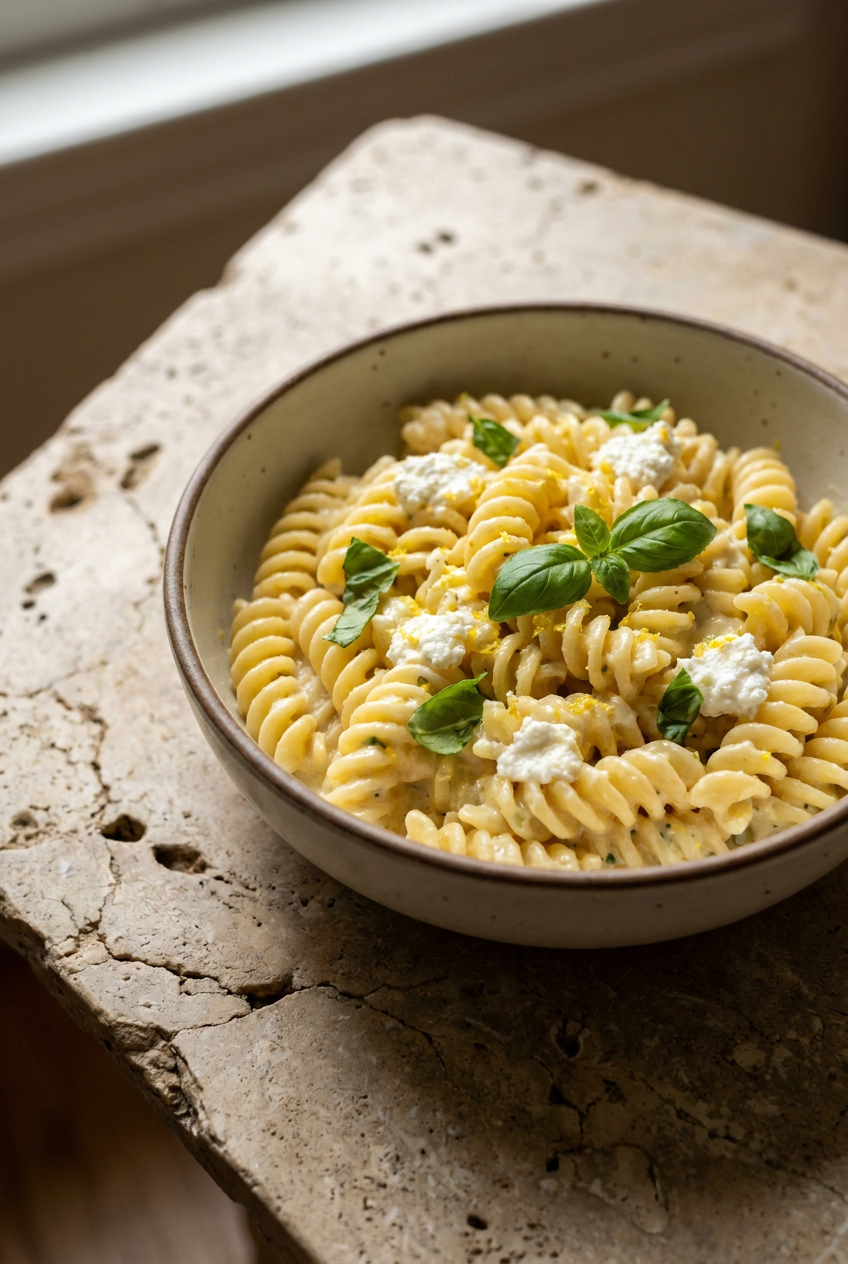
Table of Contents
- Creamy Lemon Ricotta Pasta: A bright, velvety pasta that comes together in 25 minutes with fresh lemon, creamy ricotta, and a garlicky olive oil kiss.
- Why You Will Love This Creamy Lemon Ricotta Pasta Recipe
- Your Simple Ingredients for the Perfect Creamy Lemon Ricotta Pasta
- How to Make Perfect Creamy Lemon Ricotta Pasta
- Pro Tips and Easy Variations for Your Creamy Lemon Ricotta Pasta
- Serving Suggestions for a Perfect Dinner
- Nutrition Information
- Storage and Make-Ahead Instructions
- Your Creamy Lemon Ricotta Pasta Questions Answered
- More Incredible Italian Recipes to Try
- The Story Behind This Recipe
- Pin This Recipe for Later
Creamy Lemon Ricotta Pasta: A bright, velvety pasta that comes together in 25 minutes with fresh lemon, creamy ricotta, and a garlicky olive oil kiss.
I still remember the first time I made this creamy lemon ricotta pasta recipe on a sweltering Tuesday night when the fridge held little more than a tub of ricotta, a couple of lemons, and a wedge of Parmesan. I did not expect much honestly, just a simple plate to quiet my hunger. What happened instead was something quietly magical. The ricotta melted into a silky, almost buttery sauce that caught every strand of spaghetti, while the lemon cut through the richness with just the right sharpness. It was bright, deeply comforting, and tasted like something I had worked much harder to achieve. That is the kind of dish this is. It feels like a restaurant secret you stumbled upon by accident, yet you can pull it off in less time than it takes to set the table.
What sets this easy Creamy Lemon Ricotta Pasta apart from other ricotta pasta ideas is an intentional restraint and a focus on texture. Some versions blend ricotta with heavy cream, which can dull the lemon and make the sauce too thick. Here, the only liquid comes from good olive oil, fresh lemon juice, and that starchy, salty pasta water you will learn to treasure. The result is a sauce that coats each strand thinly and evenly, almost like a warm vinaigrette infused with cheese. We also cook the garlic very gently in olive oil first, just until it releases its perfume, then pull the pan from the heat so nothing scorches. That infused oil becomes the foundation, and it makes the finished dish taste layered and complete, not like a hurried cream sauce. If you have ever enjoyed pillowy fluffy Japanese souffle pancakes and appreciated how a few simple pantry ingredients can turn into something airy and special, you will understand exactly why I love this pasta so much. It is that same kind of alchemy.
This recipe is for anyone who wants a dinner that feels thoughtful without requiring hours of prep. It is a lifesaver on busy weeknights, but elegant enough for a quiet date night at home or a last minute dinner with friends. I have served it alongside a crisp white wine and a simple salad, and it always draws the same reaction: people ask for the recipe. Because it leans on bright flavors and a creamy texture without being heavy, it is equally welcome in early spring when lemons are at their peak or in the middle of summer when you crave something satisfying but not too rich. All you really need is a box of spaghetti, a few fresh ingredients, and the willingness to let good ingredients do their work.
Why You Will Love This Creamy Lemon Ricotta Pasta Recipe
- It comes together in under half an hour. From the moment you set the water to boil to the first twirl of your fork, you are looking at about 25 minutes. Most of that time is hands off while the pasta cooks, giving you just enough room to pour a glass of wine and gather your thoughts.
- The texture is impossibly silky. Room temperature whole milk ricotta emulsifies into a smooth, creamy coating that never feels heavy or sticky. The starch from the reserved pasta water helps create a sauce that clings to each strand like it was always meant to be there.
- The lemon flavor is bright but never sour. By using both the zest and the juice, you get that floral, aromatic lemon oil from the skin and the sharp, clean tang from the fruit. Together they lift the entire dish and keep it from tasting one note.
- It uses mostly pantry and fridge staples. Aside from fresh basil and lemons, everything else is likely already in your kitchen. That means you can make this homemade Creamy Lemon Ricotta Pasta whenever a craving strikes, no special shopping trip required.
- It feels special enough for company. Despite its simplicity, the finished bowl looks and tastes elegant. A final flurry of Parmesan, a crack of black pepper, and a drizzle of olive oil turn it into a dish you would happily serve at a dinner party.
- It is wonderfully versatile. You can add shrimp, grilled chicken, or a handful of arugula, or swap the spaghetti for short pasta. This recipe acts as a beautiful blank canvas that still shines on its own.
Your Simple Ingredients for the Perfect Creamy Lemon Ricotta Pasta
Main Ingredients
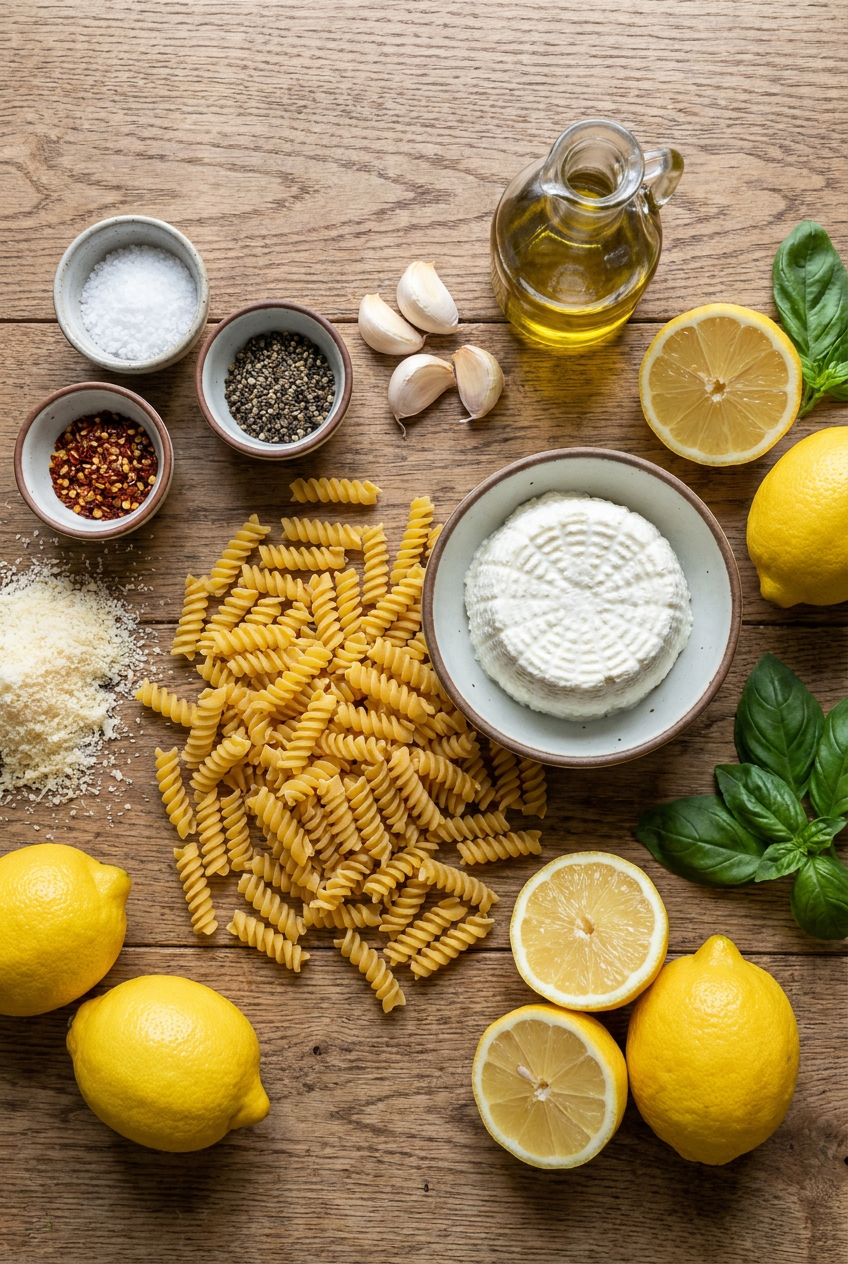
- 1 lb spaghetti or linguine
- 1 cup whole milk ricotta, room temperature
- 2 large lemons, zested and juiced (about 1/4 cup juice)
- 1/2 cup finely grated Parmesan, plus more for serving
- 3 cloves garlic, minced
- 1/3 cup extra virgin olive oil
- 1/2 tsp fine sea salt, plus more for pasta water
- 1/4 tsp freshly cracked black pepper
- 1 cup reserved pasta water, as needed
- 1/2 cup fresh basil leaves, torn, plus more for garnish
Ingredient Notes
Whole milk ricotta is the heart of the creaminess in this best Creamy Lemon Ricotta Pasta recipe. It has a higher fat content and a denser texture than part skim versions, which means it melts into the sauce without turning watery or grainy. Look for ricotta that feels thick and creamy with very little liquid on top, and always let it sit on the counter for about 30 minutes before you begin. A cold, fridge temperature cheese can seize up when it hits the warm pasta, creating lumps rather than a smooth sauce. If you absolutely must substitute, use a high quality full fat cottage cheese pureed in a blender until completely smooth, but the flavor will be slightly tangier and less sweet.
Fresh lemons are non negotiable here. Bottled lemon juice lacks the bright, aromatic oils from the peel and often carries a slightly metallic aftertaste that will ruin the delicate balance of this dish. You will use both the zest and the juice. The zest contains the lemon’s essential oils, which perfume the entire sauce in a way juice alone cannot. When you buy lemons, choose heavy ones with thin, glossy skins; they yield more juice and have less bitter white pith. Microplane them directly over the bowl of ricotta so you capture every fragrant spray of oil.
Parmesan adds saltiness and a savory depth that rounds out the ricotta and lemon. Use a block of Parmesan and finely grate it yourself. Pre shredded cheese often contains anti caking agents that prevent it from melting smoothly into the sauce. A microplane or the smallest holes on a box grater work best. If you need a substitute, Pecorino Romano will be saltier and sharper, so reduce the added salt slightly.
Good extra virgin olive oil is both a cooking medium and a finishing element. Since the garlic is warmed gently in the oil, you will taste its flavor distinctly. A grassy, peppery olive oil pairs beautifully with the lemon, while a milder oil might fade into the background. Use a quality you enjoy drizzling over salads or bread.
Reserved pasta water is the ingredient that brings everything together. As the spaghetti cooks, it releases starch into the water. That starchy, salty liquid acts as a natural emulsifier, helping the oil, cheese, and ricotta combine into a cohesive sauce rather than a separated mess. Always scoop out a generous cup before draining, it is better to have extra than to run short mid toss.
How to Make Perfect Creamy Lemon Ricotta Pasta
Phase 1: Boil the Pasta
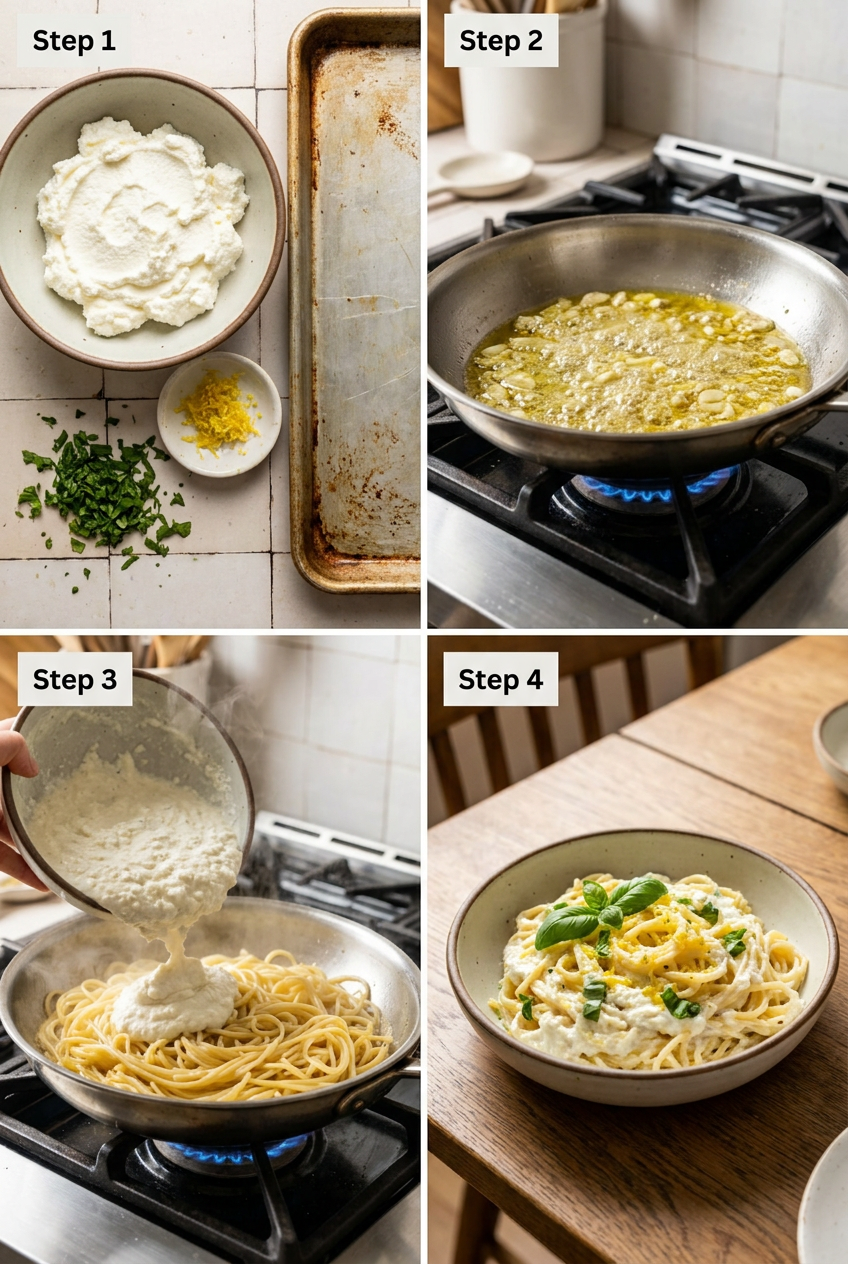
Fill your largest pot with water and bring it to a rolling boil. Season the water generously with salt, you want it to taste like a clean sea. This is your only opportunity to flavor the pasta itself, so do not be shy. Add the spaghetti and cook until it is al dente, meaning it still has a slight firmness at the center when you bite into it. A minute or two before the package suggests is usually right because the pasta will finish cooking in the sauce. Just before draining, dip a heatproof measuring cup into the water and scoop out at least one full cup. Set it aside. Drain the pasta but do not rinse it, the starch clinging to the strands will help the sauce adhere.
Phase 2: Build the Fragrant Oil Base
While the pasta is cooking, pour the olive oil into a large skillet and set it over medium low heat. Once the oil is warm but not smoking, add the minced garlic. You should hear a very gentle sizzle. Stir the garlic slowly with a wooden spoon and watch for the moment it turns pale gold and smells sweet and nutty. This takes about one minute. The moment you can clearly smell garlic wafting from the pan, pull it off the heat completely. Garlic left too long becomes bitter and acrid, and that harshness will dominate the sauce. If your pan seems very hot, lift it off the burner for a few seconds before returning it to keep the temperature gentle. This infused oil is the quiet backbone of the entire dish.
Phase 3: Whisk the Creamy Ricotta Mixture
In a medium bowl, combine the room temperature ricotta, all the lemon zest, the fresh lemon juice, the finely grated Parmesan, the half teaspoon of salt, and the cracked black pepper. Use a whisk and beat the mixture until it is smooth and uniform. It will be thick but creamy, almost like a lemony cheesecake batter. Make sure there are no lumps of ricotta hiding. If the mixture feels too stiff, you can add a tiny splash of cold water to loosen it slightly, but do not add any pasta water yet. You want the ricotta to be fully blended so it melts evenly when it touches the warm pasta later.
Phase 4: Marry the Pasta and the Sauce
Return the skillet with the garlic oil to the lowest possible heat setting. Add the drained spaghetti directly to the skillet and use tongs to toss the strands in the oil. The pasta should look glossy and feel fragrant. Now pour the ricotta mixture over the pasta in several dollops. Begin tossing immediately with tongs, lifting and turning the spaghetti so the cheese mixture warms gently and starts to melt. At this stage, the sauce will look thick and slightly uneven. This is where the reserved pasta water becomes your best tool. Add about a quarter cup of the starchy water and keep tossing. The sauce will loosen and transform into something glossy and silky, coating every strand in a pale yellow sheen. Keep adding pasta water a tablespoon or two at a time, tossing constantly, until you achieve a sauce that flows softly but clings to the pasta without pooling at the bottom. The entire process takes only a couple of minutes, but the motion of the tongs is what emulsifies the oil, cheese, and water into one cohesive sauce. If you need a visual for perfectly cooked pasta, think of a dish like Moroccan chicken tagine where the sauce thickens just enough to hug the ingredients but still remains fluid.
Phase 5: Finish with Fresh Basil and Serve
Remove the skillet from the heat immediately once the sauce reaches that silky consistency. Fold in the torn fresh basil leaves, reserving a few for the top. The residual heat will gently wilt the basil and release its peppery, sweet aroma without turning it brown. Divide the pasta among four warmed plates or shallow bowls. Finish each portion with an extra fine grating of Parmesan, a light scattering of lemon zest, a crack of black pepper, and a thin drizzle of olive oil. Serve right away, as this is a dish that waits for no one.
Pro Tips and Easy Variations for Your Creamy Lemon Ricotta Pasta
Pro Tips
- Warm your serving bowls. A chilled plate will steal heat from the sauce almost immediately, causing it to thicken and lose its silkiness. Run your bowls under hot water and dry them just before plating.
- Use room temperature ricotta without fail. Cold ricotta will shock the warm pasta, leading to a lumpy, uneven texture. Set it on the counter at least 30 minutes before you start cooking.
- Always taste and adjust lemon at the end. Lemons vary in acidity and brightness. Before you plate, take a small bite. If the sauce tastes flat, a tiny extra squeeze of lemon juice will wake it up instantly.
- Do not overcook the garlic. The difference between sweet, nutty garlic and bitter, acrid garlic is about 30 seconds. Stay close to the pan and remove it from the heat the second the smell fills your kitchen.
- Use tongs, not a spoon. Tongs let you lift and turn the pasta, which creates the agitation needed to emulsify the oil and water. A spoon just stirs, and you will end up with a separated sauce.
- Rescue a broken sauce with cold water. If the sauce suddenly looks oily and the cheese has separated, add a splash of cold reserved pasta water and toss rapidly. The temperature change and starch often bring it back together.
Delicious Variations
- Lemon Ricotta Pasta with Shrimp. Pat a pound of large shrimp dry, season with salt, and sauté in a little olive oil until pink. Toss them into the pasta just before adding the basil. The sweet shellfish pairs beautifully with the lemony creaminess.
- Short Pasta with Peas and Mint. Swap spaghetti for rigatoni or fusilli. Stir in a cup of thawed frozen peas with the ricotta mixture, and replace half the basil with fresh mint for a sweeter, more springlike dish that feels like blueberry lemon ricotta pancakes in pasta form, bright and comforting.
- Spicy Lemon Ricotta Pasta. Add half a teaspoon of red pepper flakes to the garlic oil just before you remove it from the heat. The gentle heat lingers under the lemon and gives the dish a pleasant warmth.
- Arugula and Toasted Pine Nut Version. Fold two generous handfuls of baby arugula into the hot pasta so it wilts slightly. Top with toasted pine nuts for a peppery, crunchy contrast to the creamy sauce.
Serving Suggestions for a Perfect Dinner
This Italian Dinner recipe shines when paired with sides that echo its bright, simple flavors. A crisp arugula salad dressed only with fresh lemon juice, a drizzle of olive oil, and shaved Parmesan makes an ideal companion. The peppery greens cut through the richness of the ricotta and mirror the lemon notes in the pasta. For drinks, pour a chilled glass of Vermentino or Pinot Grigio, both have enough acidity to stand up to the lemon and enough body to sit alongside the creamy sauce. If you prefer something without alcohol, sparkling water with a slice of lemon and a sprig of basil feels refreshing and keeps things light.
This dish suits so many occasions. It is casual enough for a Tuesday dinner but feels thoughtful enough for a backyard dinner with friends. Because it scales so easily, you can double the recipe for a crowd, just make sure you toss the pasta in batches if your skillet is small so every strand gets coated properly. For a complete meal, serve it alongside a simple protein like grilled chicken breasts or a piece of pan seared fish. Or keep it vegetarian and let a wedge of crusty bread do the work of mopping up any leftover sauce in the bowl.
Nutrition Information
(Approximate per serving, 4 servings total) Calories: 430, Fat: 18g, Carbohydrates: 49g, Protein: 18g, Fiber: 3g, Sodium: 520mg. Nutritional values are estimates only.
Storage and Make-Ahead Instructions
- Refrigerator: Store any leftovers in an airtight container for up to 4 days. The pasta will absorb some of the sauce and firm up, but the flavor remains bright.
- Freezer: Freezing is not recommended. Ricotta tends to become grainy and separate upon thawing, resulting in a watery, unpleasant texture.
- Reheating: Gently rewarm leftovers in a skillet over low heat with a generous splash of water or milk. Stir often and remove from heat as soon as the sauce loosens and everything is heated through. The microwave, used in short bursts with added liquid, can work in a pinch but the texture will not be as silky.
- Make-Ahead: You can prepare the ricotta mixture up to a day in advance and store it covered in the refrigerator. Bring it to room temperature before tossing with the hot pasta. The garlic oil can also be made ahead and stored at room temperature. Boil fresh pasta when you are ready to eat for the best texture.
Your Creamy Lemon Ricotta Pasta Questions Answered
Can I make the sauce ahead of time?
Yes, the ricotta mixture can be whisked together a day in advance and kept covered in the refrigerator. Just remember to take it out at least 30 minutes before you cook the pasta so it comes back to room temperature and melts smoothly into the sauce.
What is the best pasta shape for this recipe?
Long strands like spaghetti, linguine, or fettuccine work beautifully because the thin sauce coats them evenly. Short, textured shapes like rigatoni or fusilli will also hold the sauce well, especially if you like a bit more bite and sauce trapped in the hollows.
My sauce turned out grainy. What went wrong?
Grainy sauce usually means the ricotta was too cold when it hit the hot pasta, causing the proteins to tighten and separate. Always use room temperature ricotta and toss gently over low heat. If it has already happened, a splash of cold pasta water and a vigorous toss can sometimes smooth it out.
Can I use low fat ricotta?
I do not recommend it. Low fat ricotta has more moisture and less fat, which often leads to a watery, less creamy sauce. Whole milk ricotta gives you that luxurious, velvety result that makes this creamy lemon ricotta pasta recipe so special.
How do I keep the pasta from sticking while I make the sauce?
After draining, immediately add the hot pasta to the garlic infused oil in the skillet and toss to coat. The oil acts as a light barrier, preventing the strands from clumping together while you finish the sauce.
Can I double the recipe?
Yes, but use a very large skillet or toss the pasta and sauce in the still warm pot you used for boiling. You may need to add more pasta water to achieve the right consistency, and work in batches if your pan is not big enough to move everything freely.
What can I use instead of basil?
Fresh flat leaf parsley is a wonderful substitute and offers a clean, grassy note. Mint or a mix of mint and parsley works beautifully if you want a slightly sweeter, more aromatic finish.
Is this dish suitable for a dinner party?
Absolutely. It comes together quickly and looks beautiful on the plate. Warm the serving bowls, keep the garnishes ready, and serve immediately. Your guests will think you spent much more time on it than you actually did.
More Incredible Italian Recipes to Try
If the vibrant, no fuss nature of this creamy lemon ricotta pasta recipe spoke to you, then you will likely fall for other simple Italian classics that put fresh ingredients at the center. A plate of classic spaghetti aglio e olio is a perfect next step; it is all about gently toasted garlic, good olive oil, and a kiss of chili flake, and it takes nearly the same amount of time. Similarly, pasta al limone, which relies solely on lemon, Parmesan, and butter, feels like a cousin to this dish and is just as comforting in its streamlined approach.
For days when you have a bit more time but still crave that authentic Italian soul, consider a slowly simmered Bolognese or a creamy mushroom risotto. Both demand patience but reward you with deep, layered flavors. If breakfast caught your eye when I mentioned those airy fluffy Japanese souffle pancakes, you might also enjoy a tender skillet frittata packed with whatever vegetables you have on hand. These recipes all share a common thread: they let good ingredients lead, and they make you feel like a very capable home cook.
The Story Behind This Creamy Lemon Ricotta Pasta
This dish does not come from a single famous region of Italy but rather from the spirit of cucina povera, the tradition of making something wonderful from humble, everyday ingredients. Ricotta, which literally means recooked, is a byproduct of cheesemaking, created from the whey left over after producing something like mozzarella. Southern Italian cooks learned to use it in countless ways, and combining it with pasta and whatever bright flavor was on hand, often lemons from the backyard tree, became a natural fit. The result was a dish that felt rich and creamy without any actual cream, and it could be pulled together in the time it took to boil water.
Over the years, this type of pasta has shown up on trattoria menus and in home kitchens, each version a little different. Some cooks add butter, some use mascarpone, but my favorite interpretation keeps things restrained. I learned this particular rhythm from watching an Italian neighbor who never measured anything and simply whisked the ricotta with a fork in the same bowl she served from. She taught me that the real secret is tasting and adjusting, adding a bit more salt or an extra squeeze of lemon until the flavor feels like sunlight. That philosophy is what I hope you take away from this recipe: trust your taste, and let the ingredients speak.
Pin This Creamy Lemon Ricotta Pasta Recipe for Later
Love this recipe? Save it to your favorite Pinterest board so you can find it again easily. Share it with friends and family who would enjoy making it too.
I truly hope this creamy lemon ricotta pasta recipe becomes a staple in your kitchen the way it has in mine. When you try it, I would love to hear how it turned out. Leave a comment below and tell me what variation you made, or tag me in your photos. Until next time, happy cooking.
Creamy Lemon Ricotta Pasta
Ingredients
Method
- Bring a large pot of generously salted water to a rolling boil. Cook spaghetti until al dente according to package directions. Reserve 1 cup of pasta water, then drain.
- While pasta cooks, warm olive oil in a large skillet over medium-low heat. Add minced garlic and cook until fragrant but not browned, about 1 minute. Remove from heat.
- In a medium bowl, combine the ricotta, lemon zest, lemon juice, Parmesan, salt, and pepper. Whisk until smooth and creamy.
- Return the skillet with garlic oil to low heat. Add the drained spaghetti and toss to coat in the oil. Pour the ricotta mixture over the pasta and toss quickly, adding pasta water a few tablespoons at a time, until a silky, thin sauce clings to each strand.
- Remove from heat. Fold in torn basil leaves, then divide among bowls. Top with extra Parmesan, lemon zest, black pepper, and a drizzle of olive oil. Serve immediately.
Disclosure: This post may contain affiliate links. If you purchase through our links we may earn a small commission at no extra cost to you.
If you made this Creamy Lemon Ricotta Pasta, please leave a comment below and let me know how it turned out.